
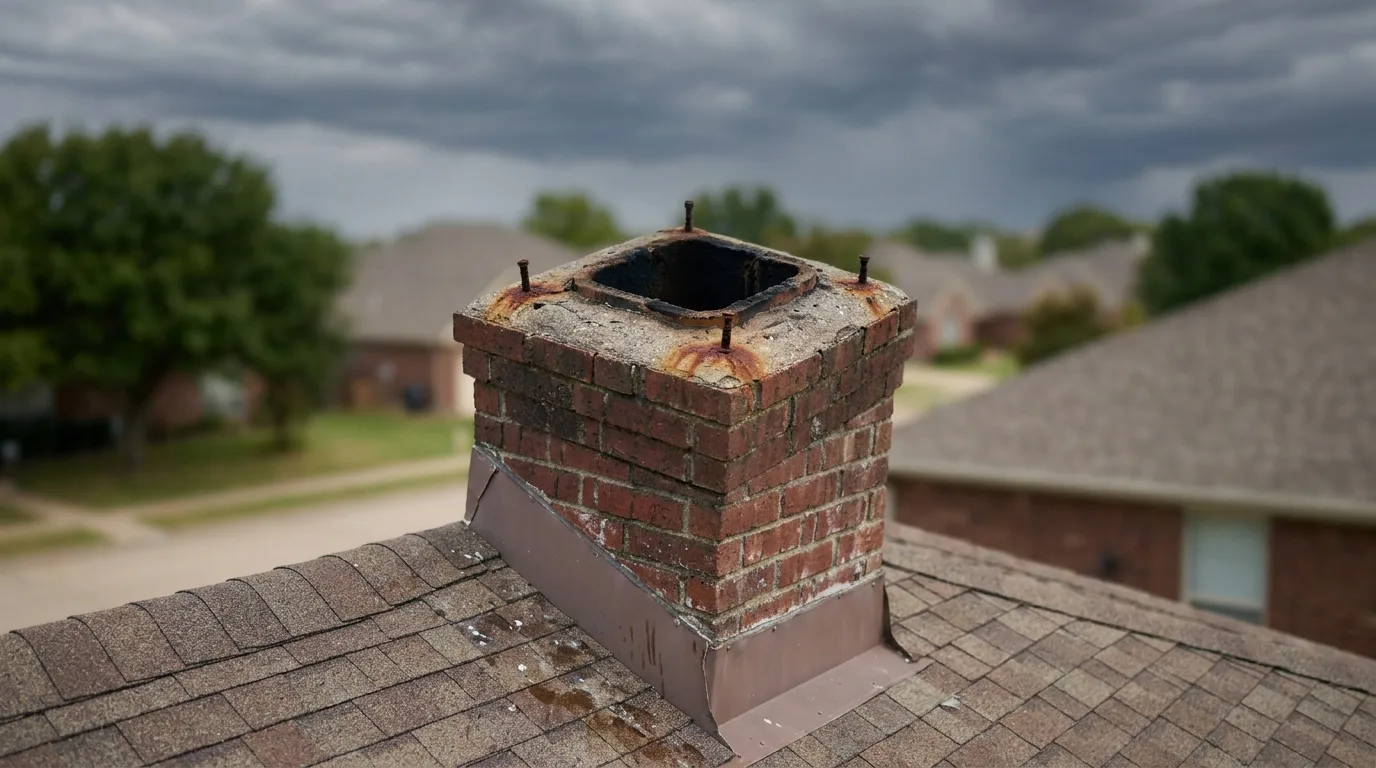
Your chimney cap blew off. Don’t run a fire until it’s replaced or the opening is covered.
An open flue lets in rain, animals, and debris. It also removes your spark arrestor.
Stay off the roof yourself. If you need a fast, permanent fix, Chimney Sweep Pro can help — (682) 354-6644.
Don’t use the fireplace with the flue exposed. Don’t climb onto the roof to check it yourself.
A missing cap needs to be covered or replaced. That’s a job for someone with the right harness and roof experience.
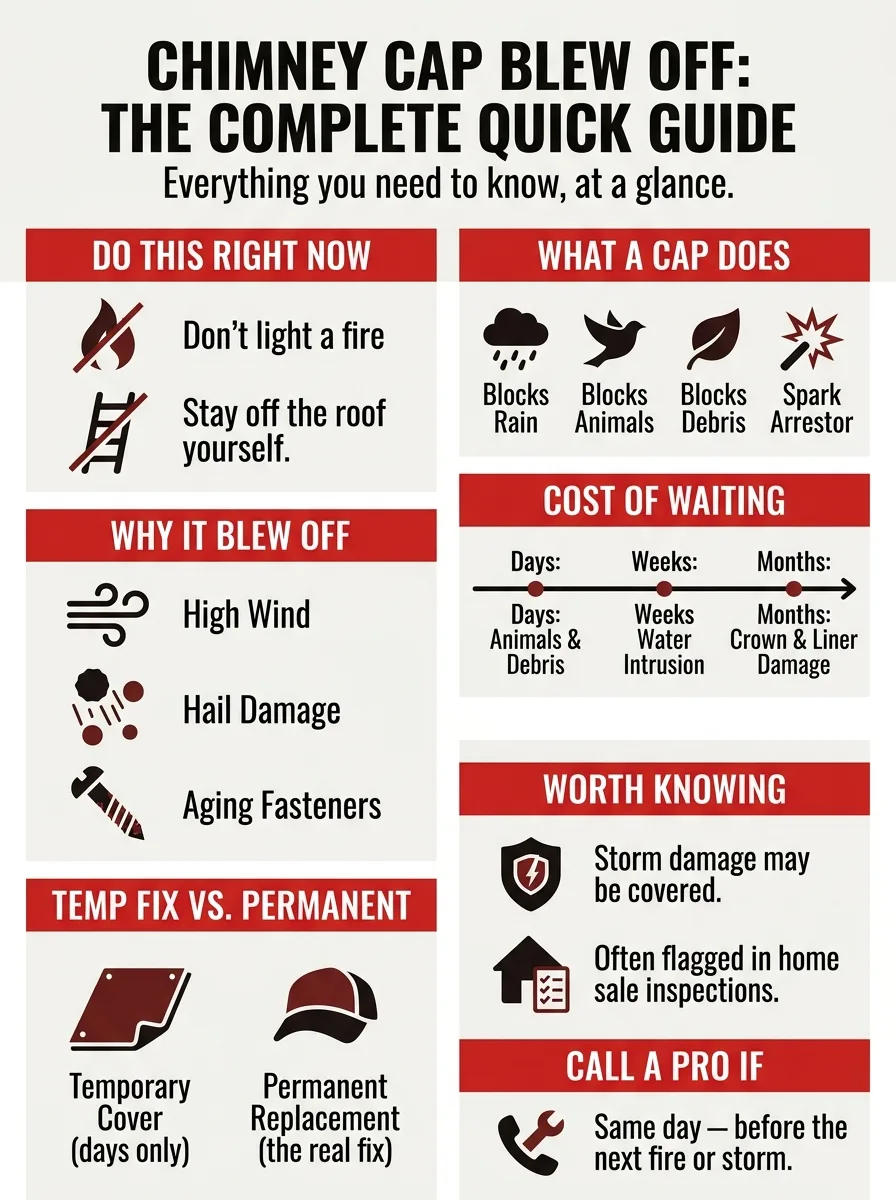
What to Do Right Now
Stop using the fireplace. An exposed flue has no spark arrestor, so embers can reach your roof.
Don’t attempt to inspect or cover the opening yourself. Roof access without fall protection is dangerous.
A missing cap often means the crown or flashing around it needs a look too. Call a professional to assess and cover the opening the same day if possible.
Why This Happens
High wind is the most common cause in Fort Worth. Spring storms bring gusts strong enough to lift a cap that wasn’t properly secured.
Hail is the second most common cause. It dents the cap and weakens the mounting screws over several storms before one gust finishes the job.
Age plays a role too. Fasteners corrode over years of weather exposure, and mesh screening rusts and thins.
A cap that blows off in a moderate storm was often already weakened. It wasn’t freshly damaged by that one event.
What a Chimney Cap Actually Does
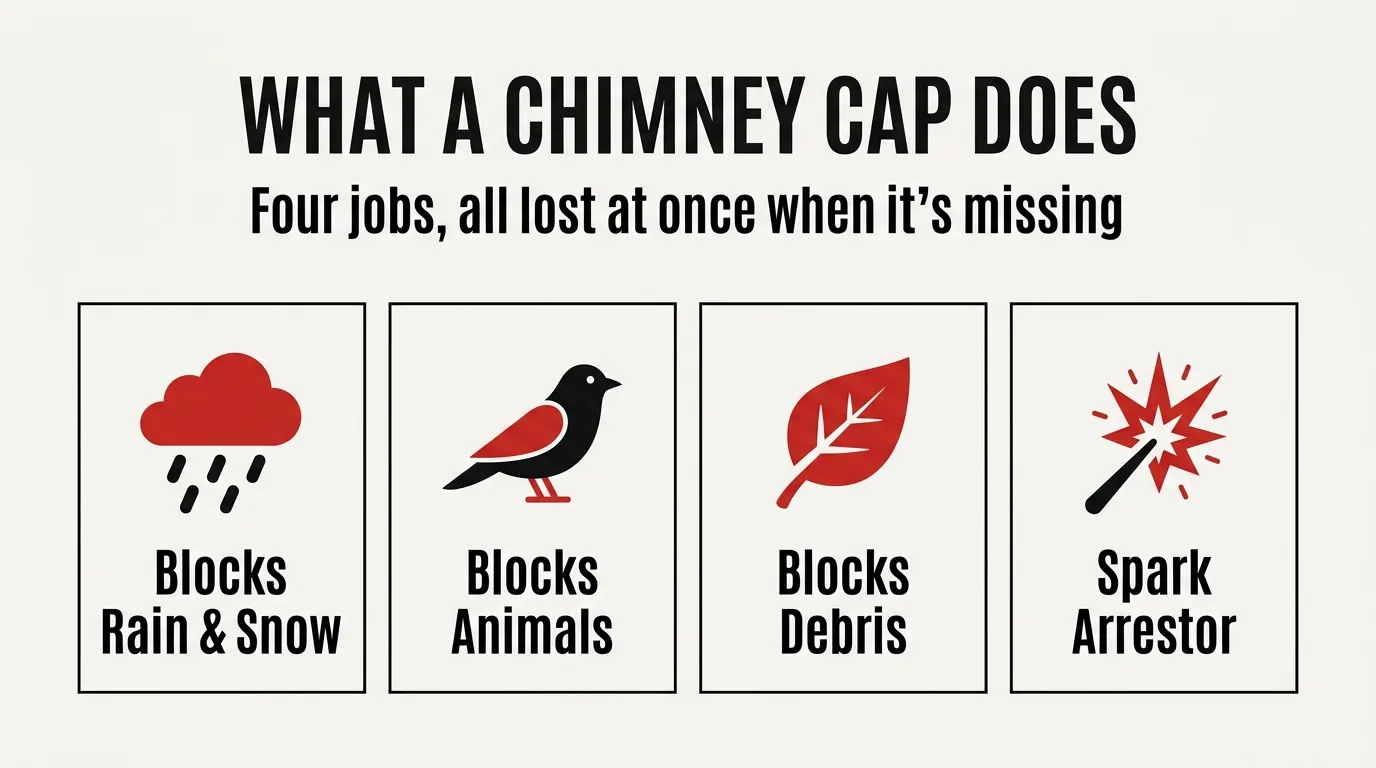
A cap does four jobs at once. It blocks rain and snow, blocks animals, blocks debris, and acts as a spark arrestor.
It blocks rain and snow from entering the flue. It stops birds, squirrels, and raccoons from getting in.
It keeps leaves and debris from clogging the chimney. Its mesh screening catches embers before they reach your roof — NFPA 211 sets the spec for how that mesh has to be sized.
Losing the cap means losing all four functions at once. It’s not just one small part missing.
How Fast Do You Actually Need to Replace It?
Same week, not eventually. A missing cap is an active risk, not a maintenance item to schedule later.
Every day it stays open adds exposure to animals, debris, and moisture. The urgency doesn’t come from one big event — it builds daily.
If a storm is forecast before you can get it replaced, ask about a temporary cover. Don’t wait for the next storm to make the decision for you.
What Happens If You Leave the Flue Uncovered
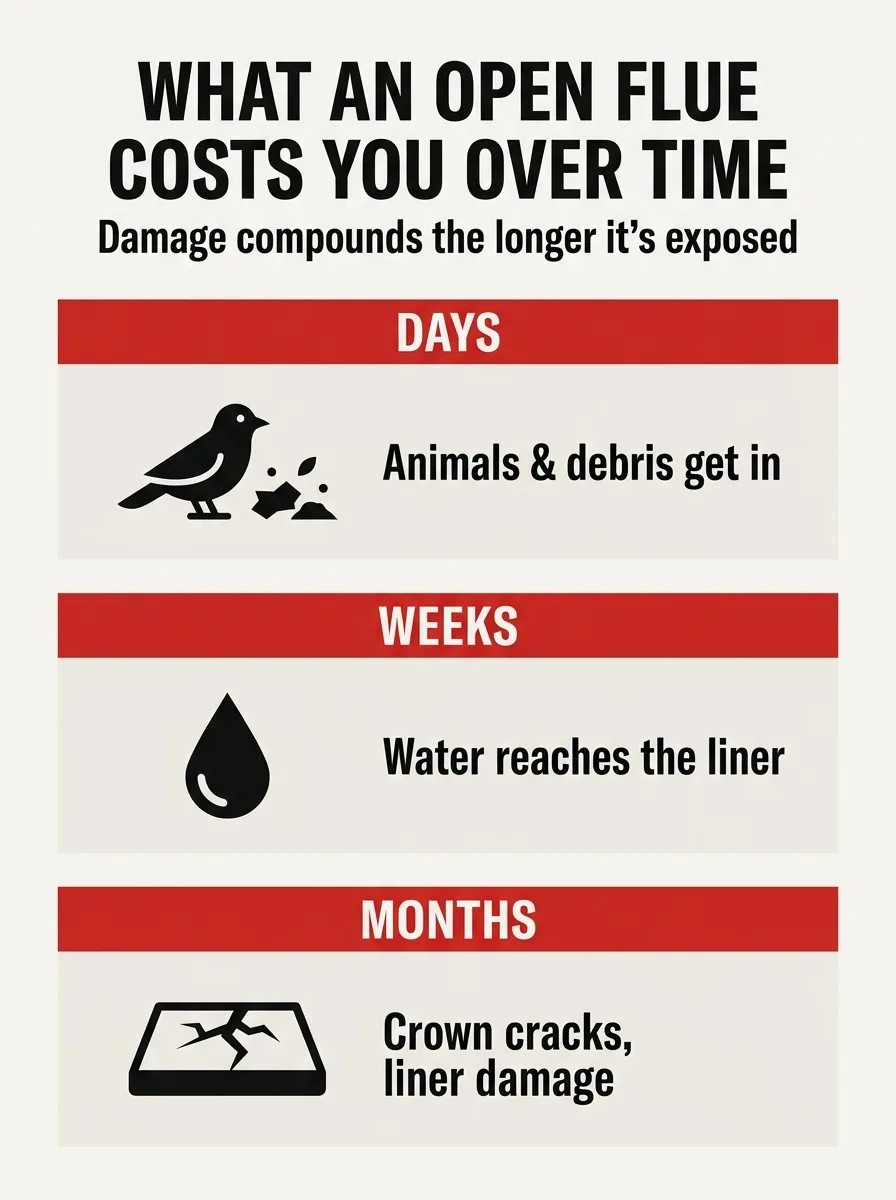
The damage compounds the longer it’s exposed. In the first few days, animals and debris are the main risk.
An open flue looks like shelter to birds and squirrels. Fort Worth’s frequent storms also blow in leaves and twigs fast.
Within a few weeks, water becomes the bigger concern. Fort Worth gets significant rainfall across the year.
Repeated exposure lets moisture reach the flue liner and firebox. Over a few months, that moisture can crack the crown and damage the liner.
A cap replacement can turn into a larger repair. That’s the real cost of waiting.
Can You Still Use the Fireplace?
No. Not until the opening is covered.
Without the spark arrestor, embers can escape. They can land on your roof or nearby vegetation.
This risk exists even for a single fire. It’s not only a concern with repeated use.
Temporary Protection vs. Permanent Replacement
A temporary cover can reduce water and debris intrusion for a few days. It buys time while you schedule a permanent fix.
It should be installed by a professional. A poorly secured temporary cover creates its own falling hazard, and it can blow off again in the next storm.
A permanent replacement is the real solution. Waiting weeks with only a temporary cover just extends your exposure to the staged damage above.
Why DIY Cap Replacement Is Risky
Replacing a cap yourself means climbing onto a sloped roof. Often that’s several stories up, without professional fall protection.
It also means sizing the new cap correctly. Flue dimensions vary by chimney.
A poorly fitted cap can blow off again in the next storm. That puts you back where you started.
What Size and Material Should the New Cap Be?
Size depends on your flue’s exact dimensions, not a standard size. A professional measures the flue opening before ordering a replacement.
Stainless steel resists rust and corrosion the longest. Galvanized steel is a lower-cost option, but it corrodes faster in humid climates like Fort Worth’s.
Copper caps last the longest of all, and they develop a natural patina over time. They also cost more upfront than steel options.
Chimney Cap vs. Chase Cover
If your chimney is a prefabricated metal flue, what blew off may be a chase cover, not a standard cap. A chase cover sits over the entire top of a factory-built chimney chase.
A standard cap covers only the flue opening itself. The replacement process is similar for both, but the part itself is different.
It helps to know which one you have before scheduling. A technician can confirm this quickly on-site.
Signs Your Old Cap Was Already Failing
A cap rarely blows off without warning signs first. Rust streaks on the chimney below the cap often appear months in advance.
Loose or rattling sounds on windy days mean the fasteners are already working loose. Visible gaps between the cap and the flue opening let water and debris in early.
Older caps in Fort Worth’s older neighborhoods show these signs first. Corrosion and fastener fatigue build up faster after more years of exposure to local storms and humidity.
What to Check After: Crown and Liner Damage
Before installing a new cap, check what the exposure may have already caused. The chimney crown is the concrete slab at the top of the chimney, and it can crack from repeated water exposure.
The flue liner can also show water staining or damage. This is more likely if the cap was missing for more than a few days.
A professional inspection catches both issues. That way, a new cap doesn’t go on top of an existing problem. Chimney Sweep Pro’s technicians are CSIA certified for exactly this kind of assessment.
Does Insurance Cover This?
Sometimes. It depends on your specific policy and the cause of the damage.
Storm and wind damage to a chimney cap is often covered under a standard homeowner’s policy. Check your policy or contact your insurance provider directly to confirm.
Ask what documentation they require. This varies by insurer.
Does a Missing Cap Affect a Home Inspection or Sale?
Yes, it can. A missing chimney cap is a common item flagged on a pre-sale home inspection report.
Buyers or their lenders may ask for it to be repaired before closing. It’s a small, inexpensive fix that can otherwise delay a sale.
Replacing it before listing avoids that back-and-forth. It also signals routine maintenance to a buyer.
Preventing This From Happening Again
A properly fitted and securely fastened cap is far less likely to blow off in a future storm. Stainless steel resists rust better than lower-grade materials over time.
Have the cap and its fasteners checked during your annual chimney inspection. That catches loosening or corrosion before it becomes a problem.
When to Call a Professional
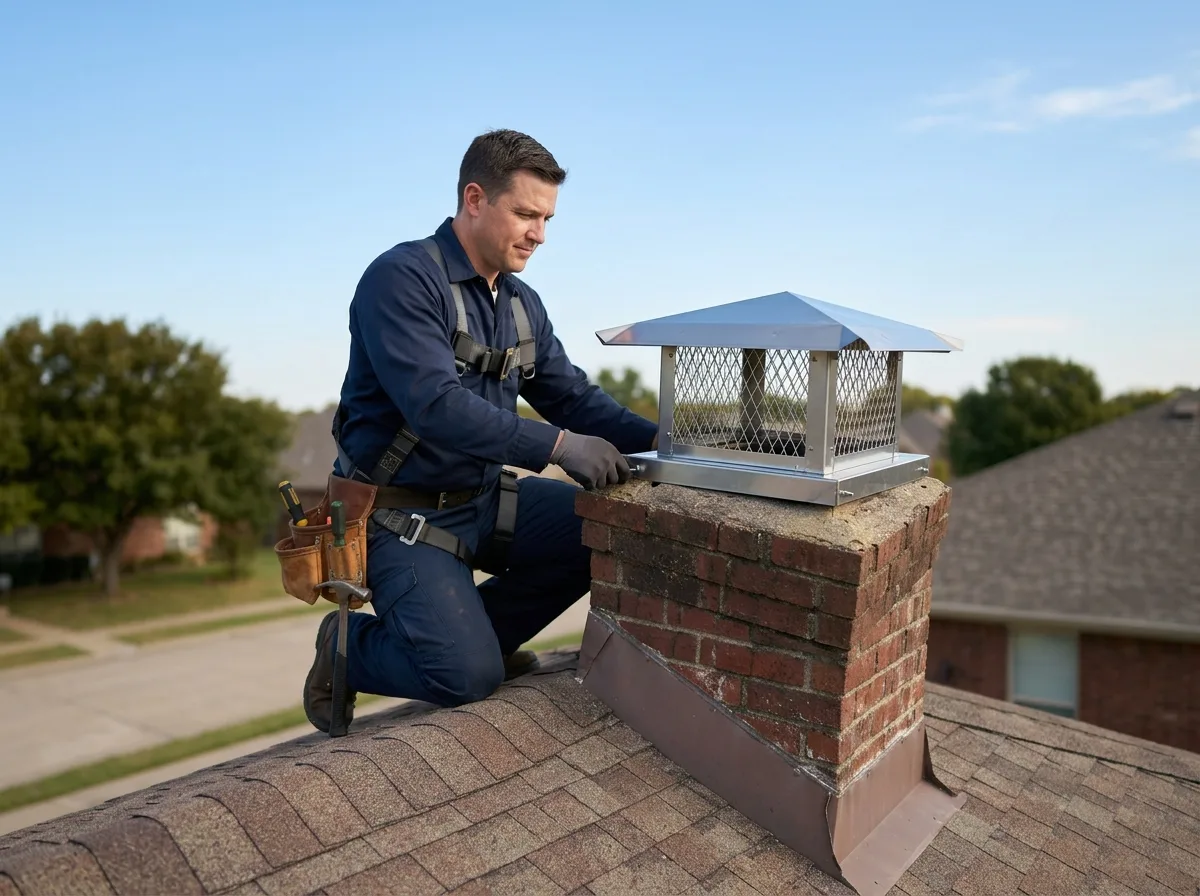
Call the same day you notice the cap is missing. Do this before your next fire or the next storm.
See chimney cap installation for a permanent replacement. If the opening was exposed for more than a few days, a chimney inspection checks the crown and liner for damage first.
If you’re already seeing water inside, see chimney leak repair. If an animal got in before the cap was replaced, see chimney animal removal.