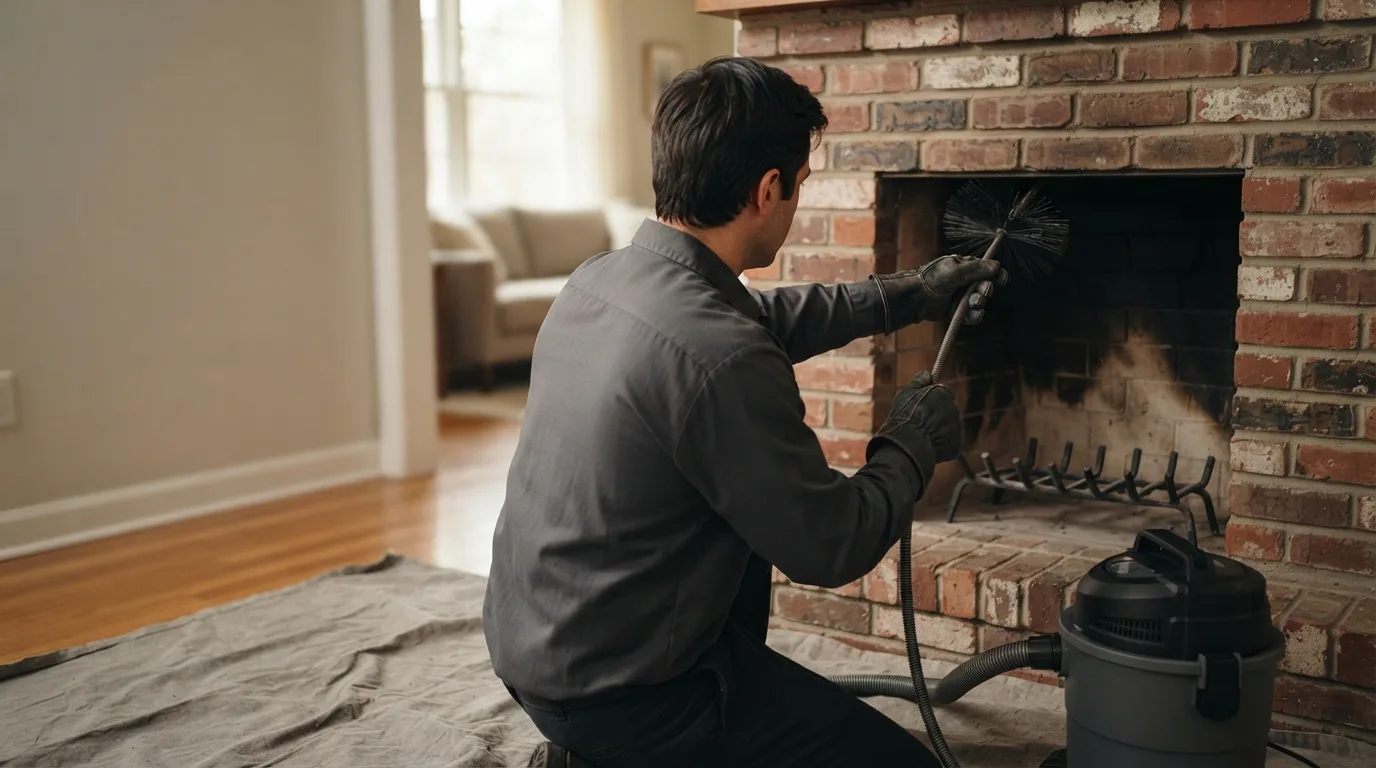
Chimney sweep in Fort Worth, TX
Every sweep includes a Level 1 inspection and a written report, so you know your chimney is clean and safe to burn.
to book a chimney sweep before your first fire of the season.
- CSIA Certified
- Licensed & Insured
- BBB Accredited
- NCSG Member
Signs Your Chimney Needs a Sweep
Chimney Sweep Pro clears the buildup behind these signs, and a campfire or tar smell is one of the most common.
Campfire or Tar Smell
A strong campfire or tar smell from the fireplace is one of the most common signs.
Soot or a Shiny Coating
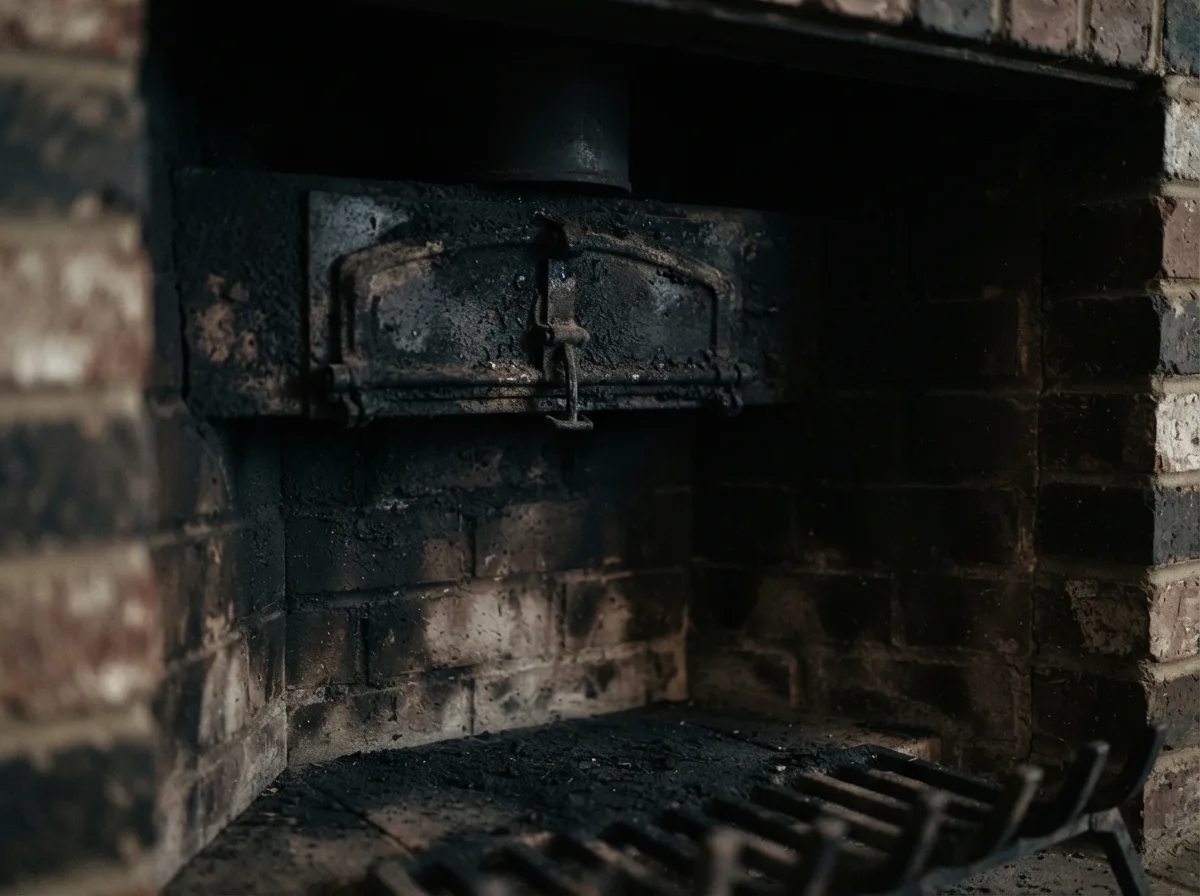
Dark soot, or a shiny coating, on the damper or flue walls. A shiny, hard coating is the most dangerous kind of buildup.
Weak Draft or Smoke in the Room
A weak draft, or smoke coming into the room. Do not light another fire until the cause is found.
More Than a Year Since Your Last Sweep
It has been more than a year since your last sweep.
Heavy Use or Unseasoned Wood
You use the fireplace heavily, or you burned wood that was not fully dry.
What a Chimney Sweep Includes
Chimney Sweep Pro cleans the whole flue and gives you a written record of what we found.
Containment Setup
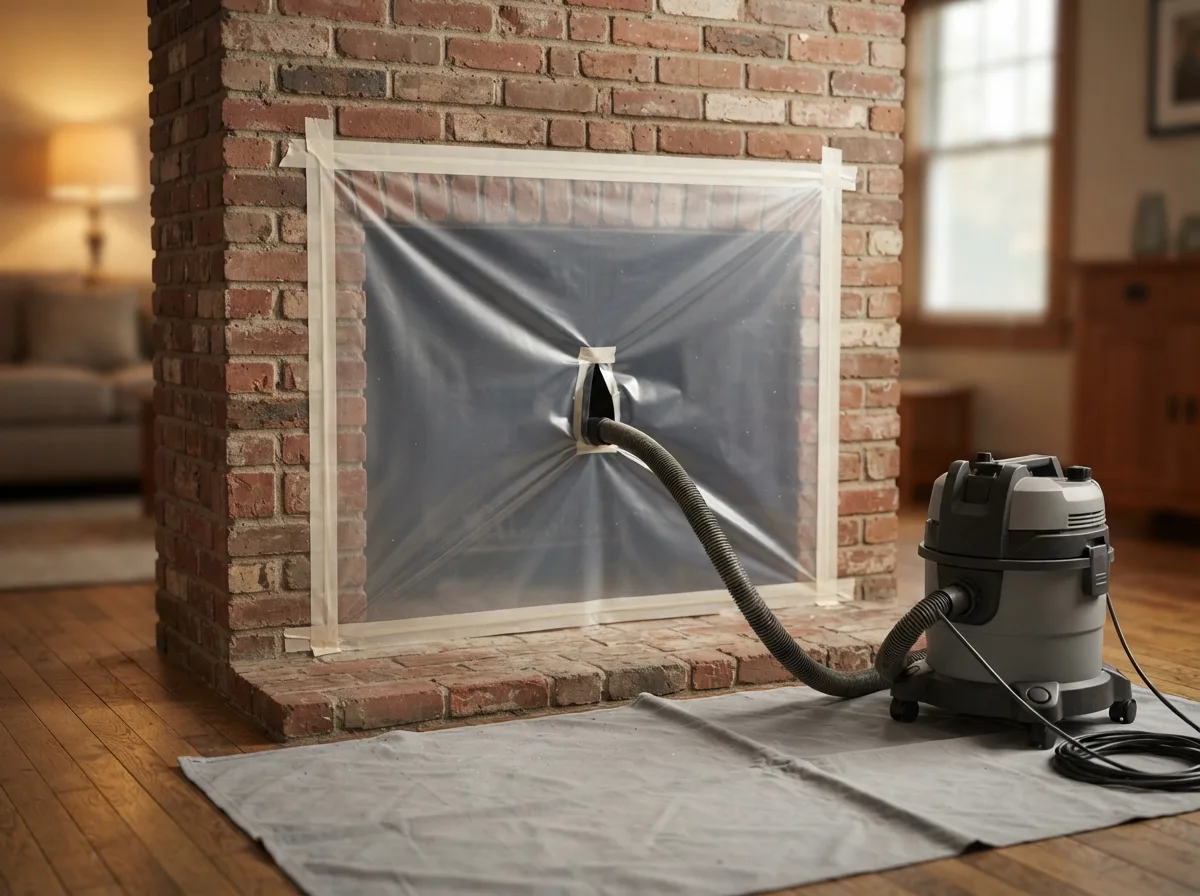
A HEPA-filtered vacuum and containment setup keep soot out of your home.
Full Rotary Flue Cleaning
We clean the full flue from the firebox to the crown.
Smoke Shelf and Smoke Chamber Cleaning
We clear the debris that settles behind the damper.
Level 1 Visual Inspection
We inspect all accessible components of your chimney.
Firebox and Damper Assessment
We check the firebox and the damper for damage.
Written Condition Report
You get a written record of what was found and what was cleaned.
A chimney sweep is the physical cleaning of the flue, removing creosote, soot, and blockages. The flue is the passage that carries smoke out of the house. The smoke shelf is the ledge behind the damper that catches debris. The smoke chamber is the sloped space above the firebox. The damper is the plate that opens and closes the flue.
A Level 1 inspection is a visual check of the parts of your chimney that can be reached without special tools.
Chimney Sweep Cost in Fort Worth
A chimney sweep at Chimney Sweep Pro costs $150-$300. A sweep with a Level 2 video inspection costs $250-$350.
Standard Sweep
$150-$300
Full flue cleaning from the firebox to the crown, with a Level 1 inspection and a written report.
Sweep With Level 2 Video Inspection
$250-$350
The standard sweep, plus a video scan of the flue's interior.
- Fireplace size: a larger fireplace and flue take more time to clean.
- Creosote buildup: heavier buildup takes more time to remove.
- Chimney type: masonry and prefab chimneys are cleaned differently.
- Number of flues: each flue is cleaned separately.
- Roof access: taller or steeper rooflines take more time.
Every tier includes everything listed above. Repairs and animal removal are priced separately. See chimney repair and chimney animal removal.
The technician confirms the price in writing before cleaning starts.
Chimney Sweep, Inspection, or Repair: Which Does Your Chimney Need?
A sweep cleans, an inspection checks, and a repair fixes damage. The table below shows which one fits your situation.
| Service | What It Does | When You Need It |
|---|---|---|
| Chimney sweep | Cleans soot, creosote, and blockages out of the flue | Soot or creosote buildup, a weak draft, or the start of fireplace season |
| Chimney inspection | Checks the condition of the whole chimney system | At least once a year, and before buying or selling a home or after a storm or chimney fire |
| Chimney repair | Fixes physical damage, such as cracked masonry or a failed damper | Cracks, failed mortar joints, a damaged crown, or smoke backing into a freshly swept chimney |
How Often Should You Sweep a Chimney?
Inspect your chimney at least once a year. Sweep it when soot or creosote reaches about 1/8 inch, or sooner if any glazed creosote is present. NFPA (the National Fire Protection Association) 211 calls for the annual inspection, and the 1/8 inch threshold comes from the Chimney Safety Institute of America. You can't judge 1/8 inch from below without a flashlight or camera, so the inspection comes first.
The Three Stages of Creosote
Creosote is the tar-like residue that wood smoke leaves on the flue walls. It builds in three stages.
| Stage | What It Looks Like | What It Means |
|---|---|---|
| Stage 1 | Loose, flaky soot | Brushes away easily in a standard sweep |
| Stage 2 | Crunchy, tar-like deposits | Takes more aggressive cleaning tools |
| Stage 3 | A hard, shiny, sticky glaze | The most dangerous stage, highly flammable, and the hardest to remove |
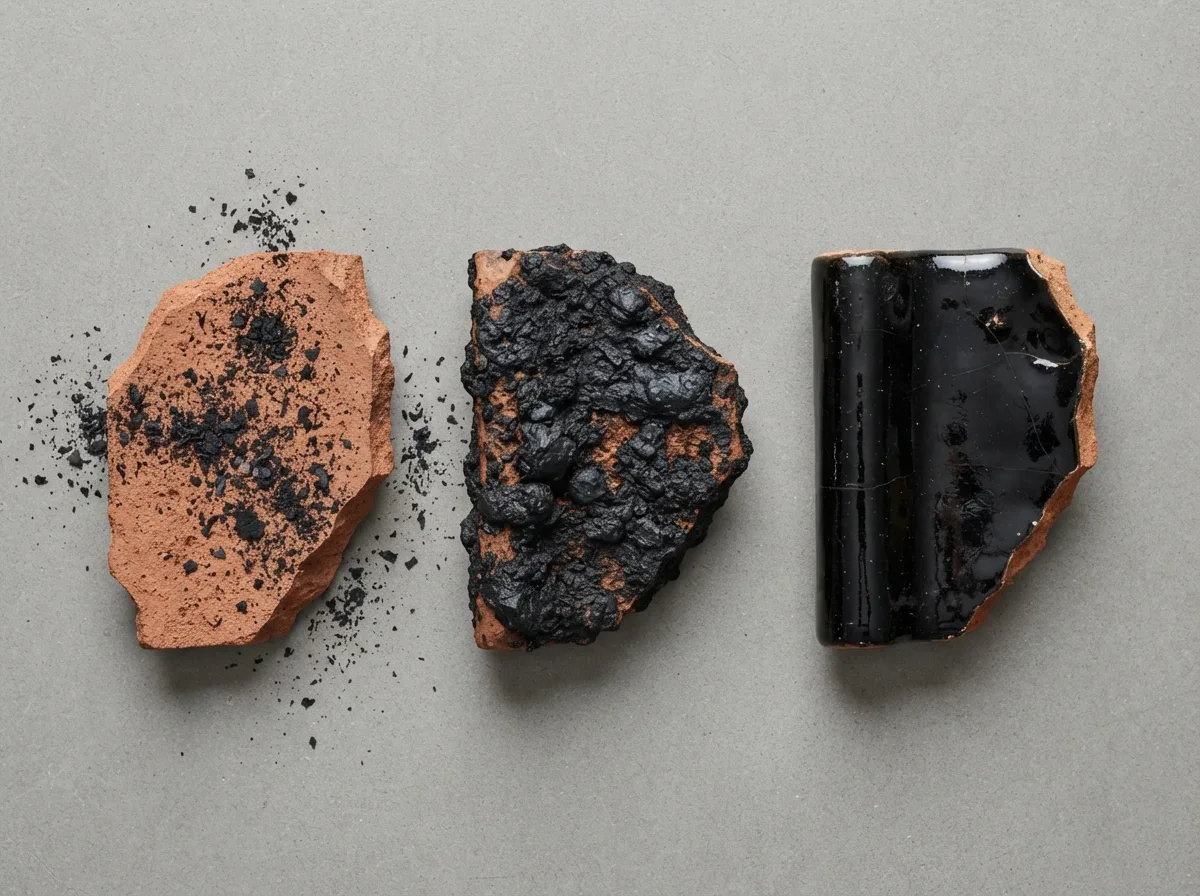
Creosote only builds. Each season adds another layer, and a soft layer left too long can harden into glaze.
Now:
Smoke backing into the room, or any sign of a chimney fire. Do not light another fire. If there is smoke inside or a carbon monoxide alarm, get everyone out and call 911.
Soon:
A shiny coating, a tar smell, or a weak draft.
Can Wait:
A routine sweep with no symptoms, ideally before the first fire of the season.
Sweeping a chimney is not a reasonable DIY job. You can't judge 1/8 inch or glazing from below without a light or camera, and work on the roof is a fall risk.
Your sweep records and the written condition report document how the chimney was maintained, which helps if you ever file a claim. Check your policy or ask your agent.
Not sure what your chimney needs? A chimney inspection checks the whole system and tells you which level fits your situation.
Ready to book your sweep?
The technician confirms your price in writing before cleaning starts.
How a Chimney Sweep Visit Works
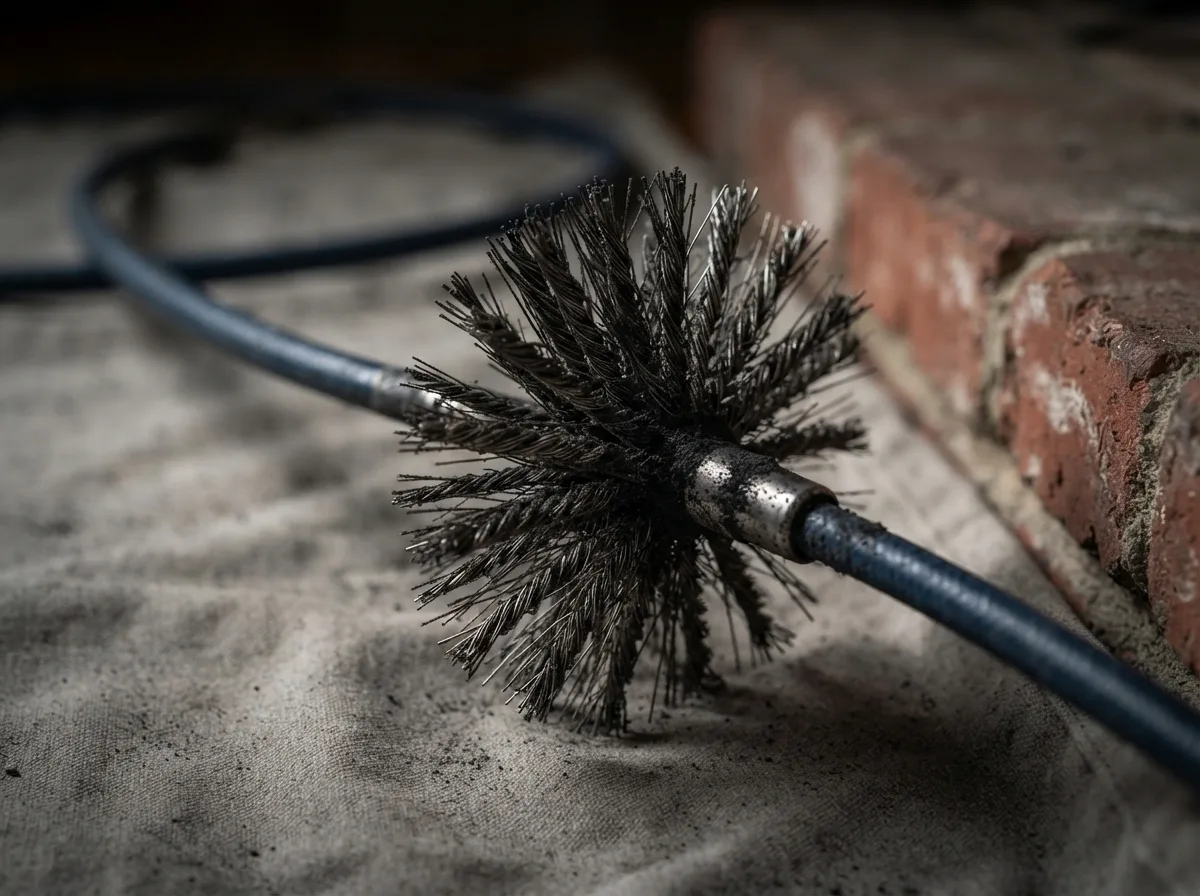
Set up containment.
A HEPA-filtered vacuum and containment setup keep soot out of your home.
Clean the full flue.
Rotary cleaning runs from the firebox to the crown.
Clean the smoke shelf and smoke chamber.
Debris that settles behind the damper is cleared.
Inspect the accessible components.
The Level 1 inspection covers the firebox, damper, smoke shelf, flue liner, and visible exterior crown.
Assess the firebox and damper.
The technician checks both for damage.
Deliver the written report.
You get a record of what was found and what was cleaned.
A sweep takes 45 to 90 minutes. If you choose the Level 2 video inspection, a camera also scans the full interior of the flue. If the inspection finds damage, any repair is quoted separately in writing.
Chimney Sweep for Fort Worth Homes
Sweep Before the First Fire of the Season
Fort Worth fireplaces sit unused through the long warm months and then see use in a short cold stretch. The best time to sweep is before the first fire of the season, not after. A sweep beforehand clears the soot and debris that settled over the summer.
Chimney Sweep Pro is based at 804 Mustang Dr, Saginaw, TX 76179, and sweeps chimneys in Fort Worth, Keller, Mansfield, Southlake, Arlington, Benbrook, North Richland Hills, Burleson, Haltom City, Saginaw, and Weatherford. Keller has its own page: chimney sweep in Keller, TX. See our chimney sweep services for our full range of chimney work.
Chimney Sweep Pro, 804 Mustang Dr, Saginaw, TX 76179, (682) 354-6644
Chimney Sweep FAQs for Fort Worth Homeowners
What sets Chimney Sweep Pro's chimney sweep apart?
Every sweep includes a Level 1 inspection and ends with a written condition report, so you get a record along with a clean flue. We also contain the mess with a HEPA-filtered vacuum and clean the whole flue, from the firebox to the crown.
How does the written condition report help me?
The report records what the technician found in your firebox, damper, smoke shelf, and flue, and what was cleaned. You can keep it for your own records, share it with an insurance agent, or hand it to a buyer if you sell your home.
What does a chimney sweep include?
A sweep includes containment setup with a HEPA-filtered vacuum, full rotary flue cleaning from the firebox to the crown, and smoke shelf and smoke chamber cleaning. It also includes a Level 1 visual inspection, a firebox and damper assessment, and a written report. NFPA 211 is the national fire code that defines what a Level 1 inspection covers.
How long does a chimney sweep take?
A chimney sweep usually takes 45 to 90 minutes. The time depends on your fireplace size, how much creosote has built up, and whether you add a Level 2 video inspection, which adds time.
How much does a chimney sweep cost in Fort Worth?
A chimney sweep costs $150-$300 with Chimney Sweep Pro, based on fireplace size and how much buildup the flue holds. A sweep with a Level 2 video inspection costs $250-$350. The technician confirms your price in writing before cleaning starts. Call (682) 354-6644 to book.
Which Fort Worth-area cities do you serve for chimney sweeping?
We sweep chimneys in Fort Worth, Keller, Mansfield, Southlake, Arlington, Benbrook, North Richland Hills, Burleson, Haltom City, Saginaw, and Weatherford. The service and the pricing tiers are the same in each city. Ask when you call if your city is not listed.
When is the best time to schedule a chimney sweep in Fort Worth?
Schedule your sweep before the first fire of the season. Fort Worth fireplaces sit unused through the warm months, and a sweep beforehand clears the soot, creosote, and debris that settled over the summer. A fresh sweep means your first fire burns in a clean flue.
How often should a chimney be swept?
Get your chimney inspected once a year at minimum, and have it swept once soot or creosote builds up to roughly 1/8 inch, or right away if you spot any glazed creosote. Heavy use reaches that point sooner. The Chimney Safety Institute of America publishes this guidance for homeowners.
What is creosote, and why does it matter?
Creosote is the tar-like residue that wood smoke leaves on the flue walls. It builds in three stages, from loose soot to a hard, shiny glaze, and the glazed stage is highly flammable and can start a chimney fire. Regular sweeping removes it before it reaches that stage.
What is the difference between a chimney sweep and a chimney inspection?
A sweep cleans soot, creosote, and blockages out of the flue. An inspection checks the condition of the whole chimney system. Every sweep includes a Level 1 inspection, while a Level 2 video inspection is a separate step. See chimney inspection for which level fits your situation.
What are the signs my chimney needs sweeping?
Watch for a strong campfire or tar smell, dark soot or a shiny coating on the damper, a weak draft, or smoke coming into the room. More than a year since your last sweep is also a sign. A shiny coating needs attention soon.
Chimney sweep in Fort Worth starts with one call.
Creosote only builds, and each season adds another layer.