
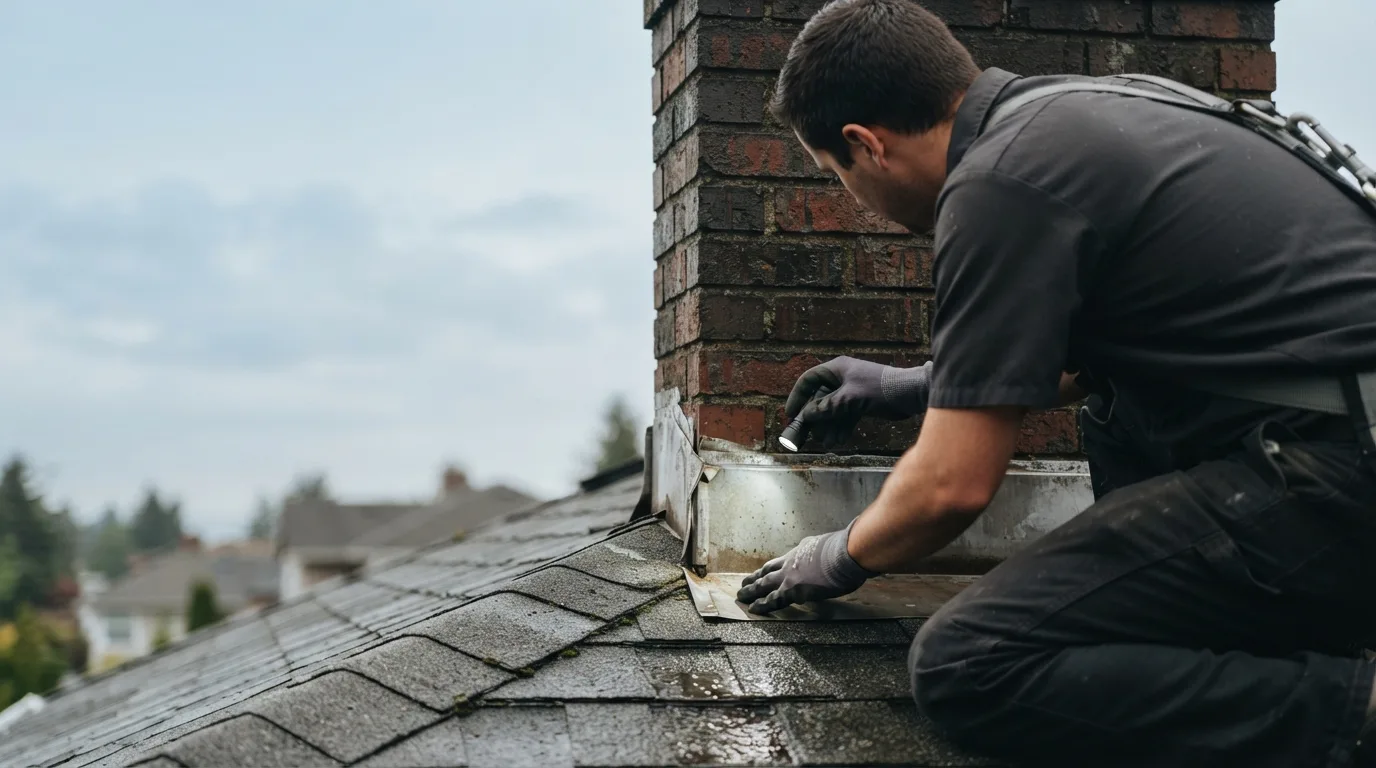
Chimney leak repair in Fort Worth, TX
Get the leak fixed at its real source, not just a patch over where the water shows up.
to schedule a leak diagnosis before any repair is quoted.
- CSIA Certified
- Licensed & Insured
- BBB Accredited
- NCSG Member
Signs Your Chimney Is Leaking
Chimney Sweep Pro fixes the leaks other repairs miss because we trace them to their real source.
Water Stains
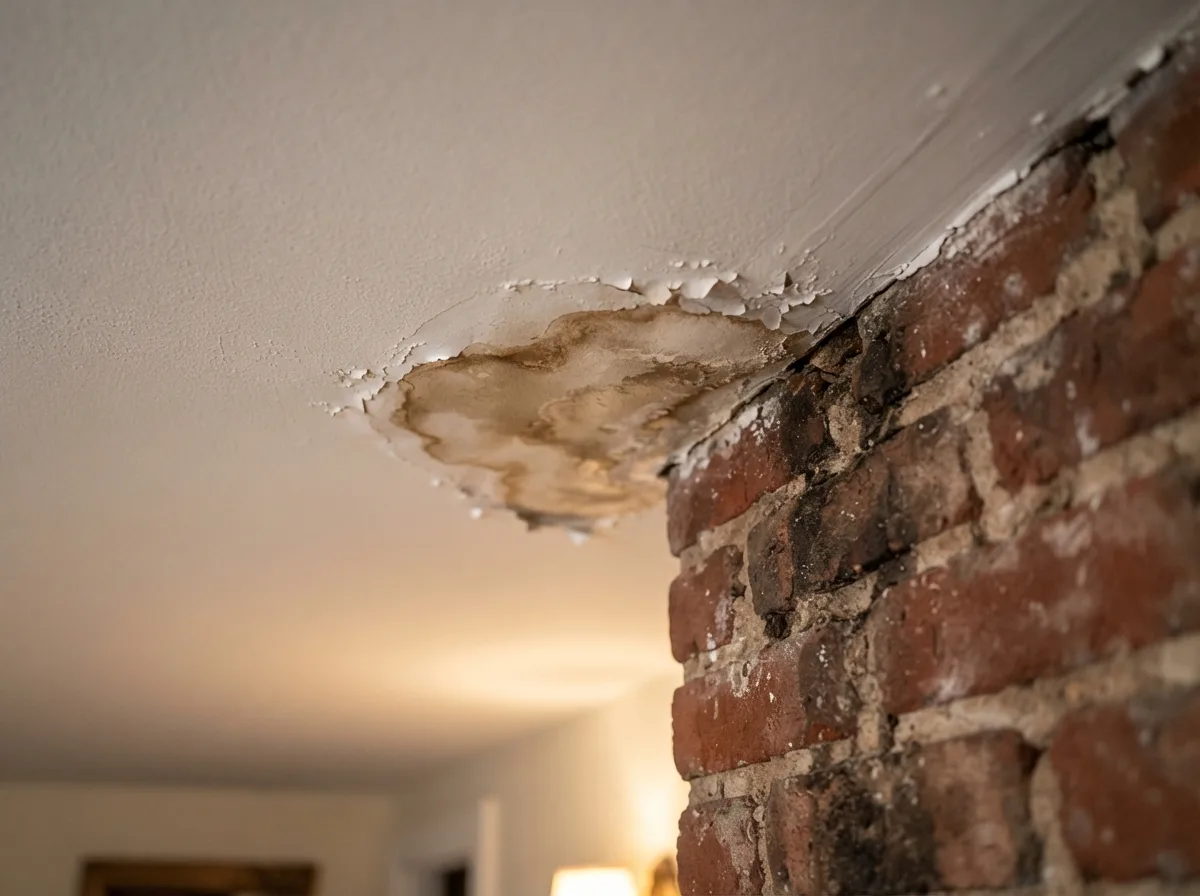
Water stains on the ceiling or wall near the chimney are often the first visible sign of a leak.
Musty or Damp Smell
A musty or damp smell from the fireplace can mean moisture is present even without a visible stain.
Dripping or Standing Water
Visible dripping or standing water in the firebox means the leak is actively occurring.
Rusted Damper
Rust on the damper or metal fireplace components means water has traveled the full length of the flue.
Crumbling Bricks
Crumbling bricks, peeling paint, or soft drywall near the chimney point to longer-term water damage.
What Chimney Leak Repair Includes
Chimney Sweep Pro diagnoses before we repair, so the fix targets the real source.
Full Diagnostic Inspection
We trace the leak to its true source before recommending any repair.
Photo Documentation
We photograph what we find so you can see the source for yourself.
Written Quote First
You get a written quote before any repair work begins.
Source-Specific Repair
We repair the specific source identified, not a general patch over the symptom.
Follow-Up Confirmation
We confirm the fix worked with a follow-up check after the repair.
Chimney Leak Repair Cost in Fort Worth
Chimney Sweep Pro prices chimney leak repair two ways, depending on the source.
Flashing or Crown-Level Leak
$300-$1,200
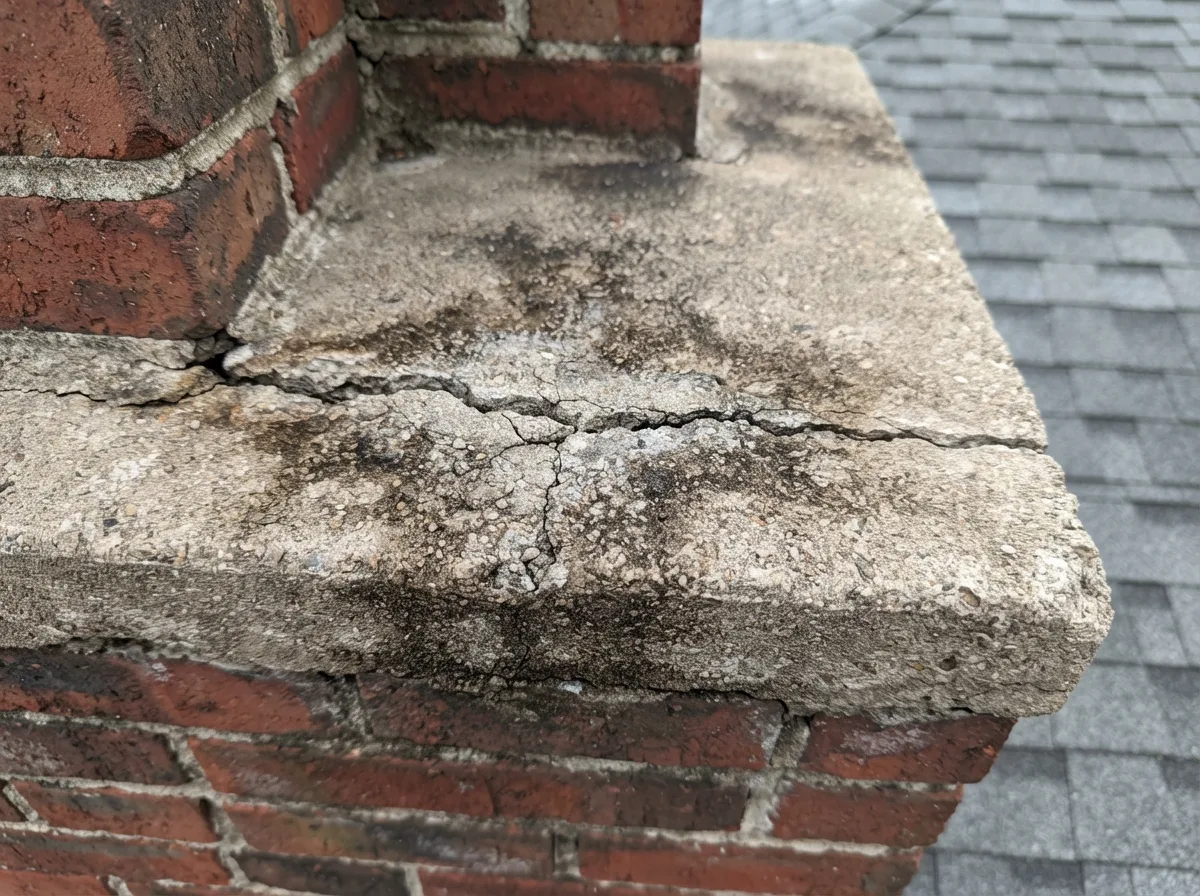
Repairing damaged flashing or sealing a cracked crown, the most common leak sources.
Masonry or Structural Leak
Up to $2,500
Repairing damaged brick, mortar, or masonry that's let water in over time.
What's Included:
- Full diagnostic inspection to trace the leak to its true source
- Photo documentation of what's found
- Written quote before any repair work begins
- Repair of the specific source identified
- Follow-up check to confirm the fix worked
What's Not Included:
- Full liner replacement, if the leak has damaged the flue liner (see chimney relining)
- Full chimney rebuild, if the diagnosis points to that level of damage
The technician traces the leak to its source before quoting. The final price is fixed at that point and given to you in writing before repair work starts.
Finding the Real Source: Leak Symptoms vs. Causes
Chimney Sweep Pro traces what you notice back to where the water is actually coming from.
| What You Notice | Likely Source | What It Means |
|---|---|---|
| Ceiling stain near the chimney | Flashing | Water entering where the chimney meets the roof, traveling down framing before showing on the ceiling |
| Water in the firebox after rain | Crown or cap | Water entering from the top of the chimney, where a damaged crown or missing cap lets rain straight down the flue |
| Damp smell with no visible stain | Masonry | Porous or cracked brick and mortar absorbing moisture before it becomes visible |
| Rust on the damper | Crown, cap, or flashing | Water reaching the damper means it's traveled the full length of the flue |
| Crumbling bricks or soft drywall | Masonry, long-term | Water has been entering for an extended period, affecting the structure itself |
Repair vs. Rebuild
A leak caused by a damaged crown or flashing is usually a straightforward repair. A leak that's gone unaddressed long enough to damage the masonry structure itself may point toward more extensive work, which your technician will explain clearly if the diagnosis finds it.
When the Leak Means You Need Relining Instead
If water has reached a cracked flue liner, repairing the leak's source doesn't fix the liner itself. A chimney relining addresses a damaged liner directly, and your technician will tell you clearly if that's what the diagnosis shows.
A chimney leak rarely stays the same size. Left unaddressed, it typically damages more masonry, spreads to framing and drywall, and raises the eventual repair cost.
Now:
Active dripping, standing water, or any sign the leak may be affecting the chimney's structure.
Soon:
Visible stains, a musty smell, or known crown or flashing damage.
Can Wait:
A very minor, already-diagnosed cosmetic issue your technician has confirmed isn't urgent.
Don't use the fireplace until the leak's source is identified, especially if you notice any smoke smell along with the water signs. Using a fireplace with an undiagnosed leak can let a small problem become a bigger one.
Flashing or crown damage caused by a storm is often covered under a homeowners policy. Leaks caused by long-term wear generally aren't. Check your policy or ask your agent.
Not sure if it's a leak or something bigger? A chimney inspection checks your full chimney system, including the crown, flashing, masonry, and liner, and tells you clearly what's causing the leak.
Ready to find your leak's real source?
The technician traces the leak first, then gives you the final price in writing before any repair starts.
How a Chimney Leak Repair Visit Works
Inspect and trace the water path.
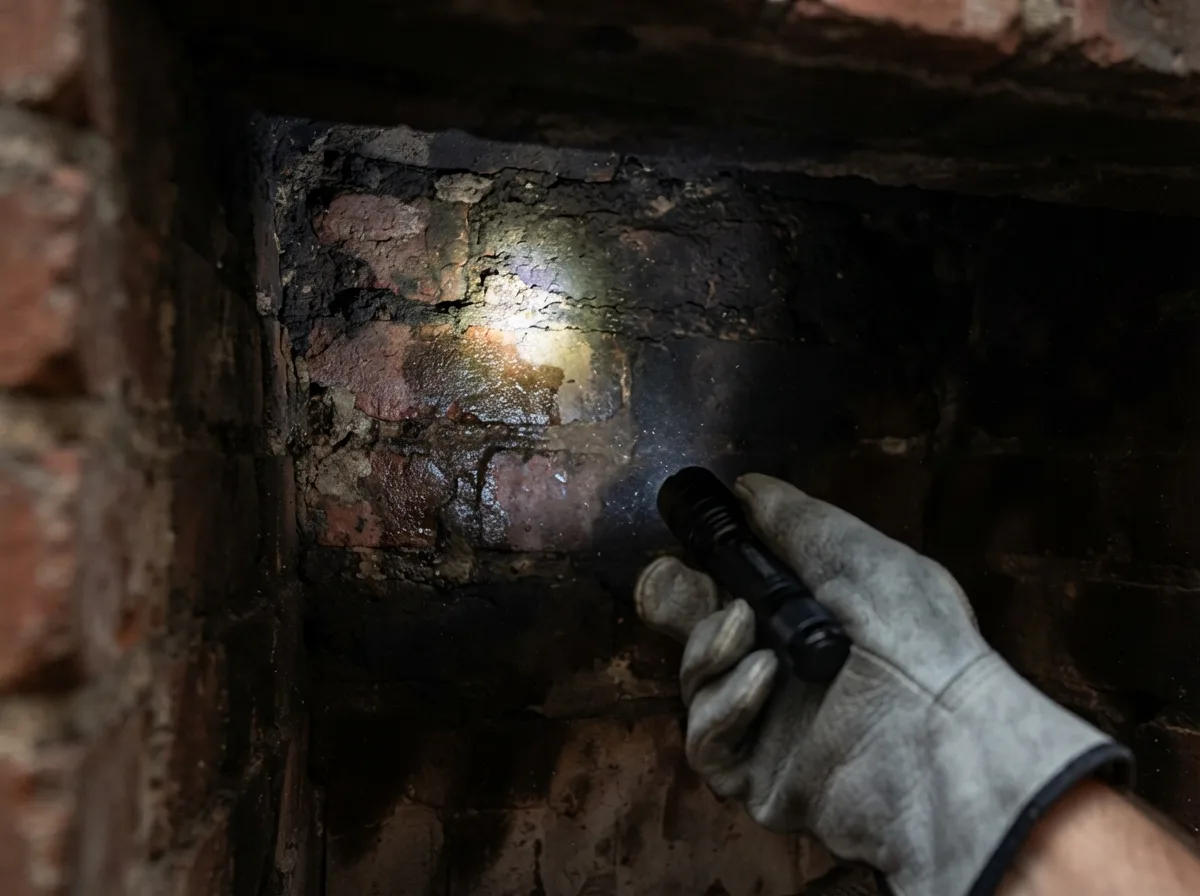
The technician visually inspects your chimney and traces where water is actually entering, which may be different from where the symptoms show.
Identify the true entry point.
The source is confirmed, whether it's the crown, flashing, masonry, or liner.
Document with photos.
Photos show the source and the extent of the damage.
Give a written quote.
You receive the final price in writing before any repair work begins.
Repair the specific source.
The repair targets the identified source, not just the visible symptom.
Confirm the fix.
The technician explains what was done and confirms the leak path is sealed.
Chimney Leak Repair for Fort Worth Homes
Chimney Sweep Pro accounts for Fort Worth's climate when we trace and repair your leak.
Freeze-Thaw Cycling and Older Masonry
Freeze-thaw cycling, where warm North Texas afternoons are followed by overnight temperatures below freezing, gradually cracks mortar joints and chimney crowns. This is especially common in pre-1980 masonry homes, where decades of this cycling have had time to compound.
Common Leak Sources in Older Neighborhoods
In neighborhoods like Fairmount, Ryan Place, and Ridglea Hills, many chimneys are old enough that crown and mortar damage are common leak sources found during diagnosis.
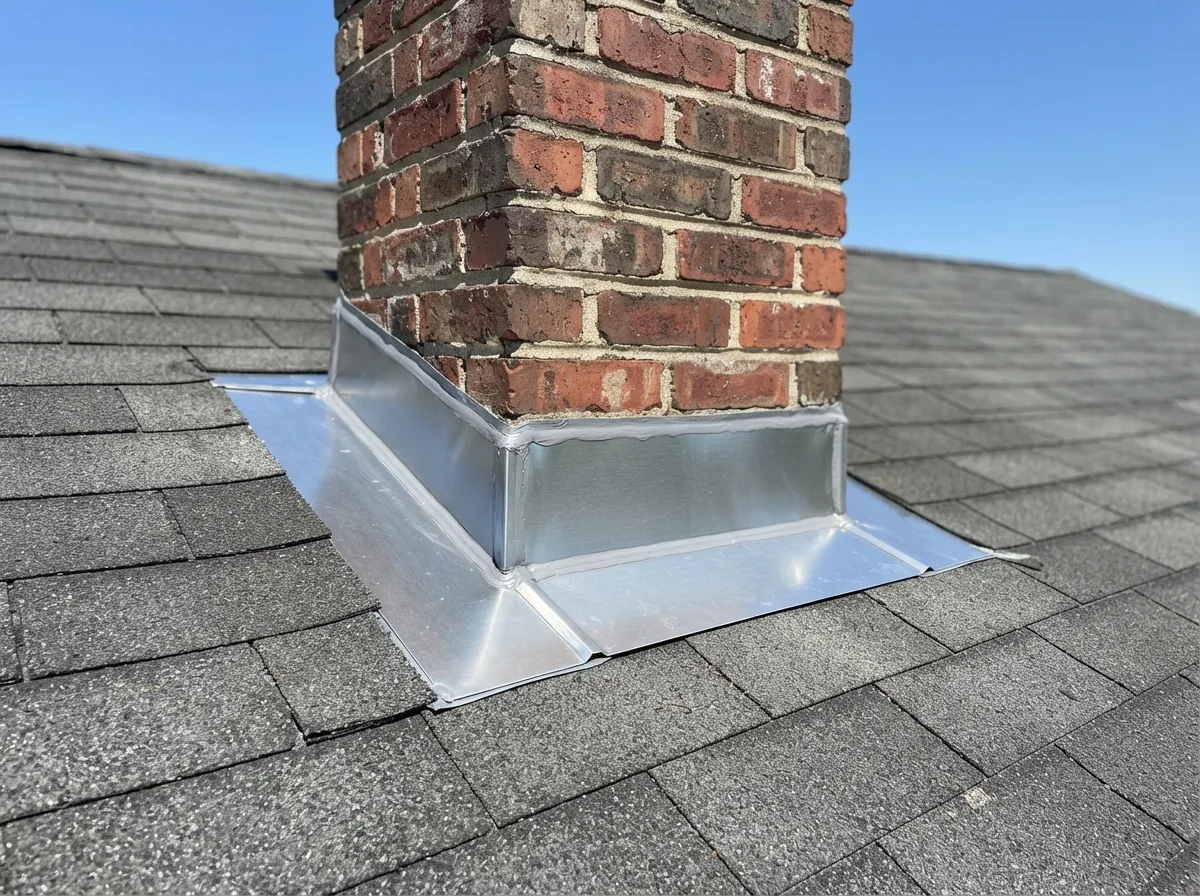
Chimney Sweep Pro repairs chimney leaks throughout Fort Worth and the surrounding area.
Chimney Sweep Pro, 804 Mustang Dr, Saginaw, TX 76179, (682) 354-6644
See our chimney inspection page if you want a full system check, or our chimney relining page if your leak has already damaged your flue liner.
Chimney Leak Repair FAQs for Fort Worth Homeowners
What makes your chimney leak repair different from a basic patch job?
We trace every leak to its true source before quoting a repair, instead of patching wherever the stain shows up. Water often travels along framing or masonry before becoming visible, so fixing the visible spot alone usually doesn't stop the leak.
How do you find out where a chimney leak is really coming from?
The technician visually inspects the crown, flashing, masonry, and liner, and traces the water's likely path from where it enters to where it shows up. Photos document what's found before any repair is quoted.
What does a chimney leak repair visit include?
A full diagnostic inspection, photo documentation of the source, a written quote before any work begins, repair of the specific source identified, and a follow-up check to confirm the fix worked.
How long does chimney leak repair take?
Most chimney leak repairs are completed in a single visit once the source is identified. Call (682) 354-6644 to schedule a diagnosis.
How much does chimney leak repair cost in Fort Worth?
Chimney Sweep Pro charges $300-$1,200 for flashing or crown-level leak repair, and up to $2,500 for leaks involving masonry or structural damage. The technician confirms your exact price in writing after diagnosing the source.
Which Fort Worth-area neighborhoods do you serve for chimney leak repair?
We repair chimney leaks throughout Fort Worth, including Fairmount, Ryan Place, and Ridglea Hills, among other surrounding areas. Older masonry homes in these neighborhoods often show crown and mortar damage as common leak sources.
What is the difference between a chimney leak and a roof leak?
A chimney leak enters through the chimney's crown, flashing, cap, or masonry, while a roof leak enters through the roofing material itself, sometimes traveling down toward the chimney before showing up as a stain. A proper diagnosis traces which one is actually happening, since the repairs are different.
What are the most common causes of a chimney leak?
The most common causes are a cracked or damaged crown, failed flashing where the chimney meets the roof, porous or cracked masonry, and a missing or damaged chimney cap. Each lets water in differently, which is why tracing the specific source matters.
What should I do if my chimney is actively leaking?
Avoid using the fireplace until the source is identified, especially if you notice any smoke smell along with the water signs. Active dripping or standing water should be treated as needing attention soon, not something to wait out.
How does a chimney leak lead to bigger structural damage if ignored?
Water entering repeatedly deteriorates mortar joints, weakens brick, and can eventually affect the chimney's structural stability. What starts as a small, inexpensive repair can become significantly more costly the longer it continues. The Chimney Safety Institute of America notes that water causes more damage to masonry chimneys over time than fire does.
Why does a chimney leak sometimes mean I need relining instead of a repair?
If water has reached and damaged your flue liner, repairing the leak's entry point stops new water from getting in, but it doesn't fix a liner that's already cracked or deteriorated. In that case, relining addresses the liner directly as a separate service.
Chimney leak repair in Fort Worth starts with finding the real source.
The longer a leak goes untraced, the more it typically costs to fix.