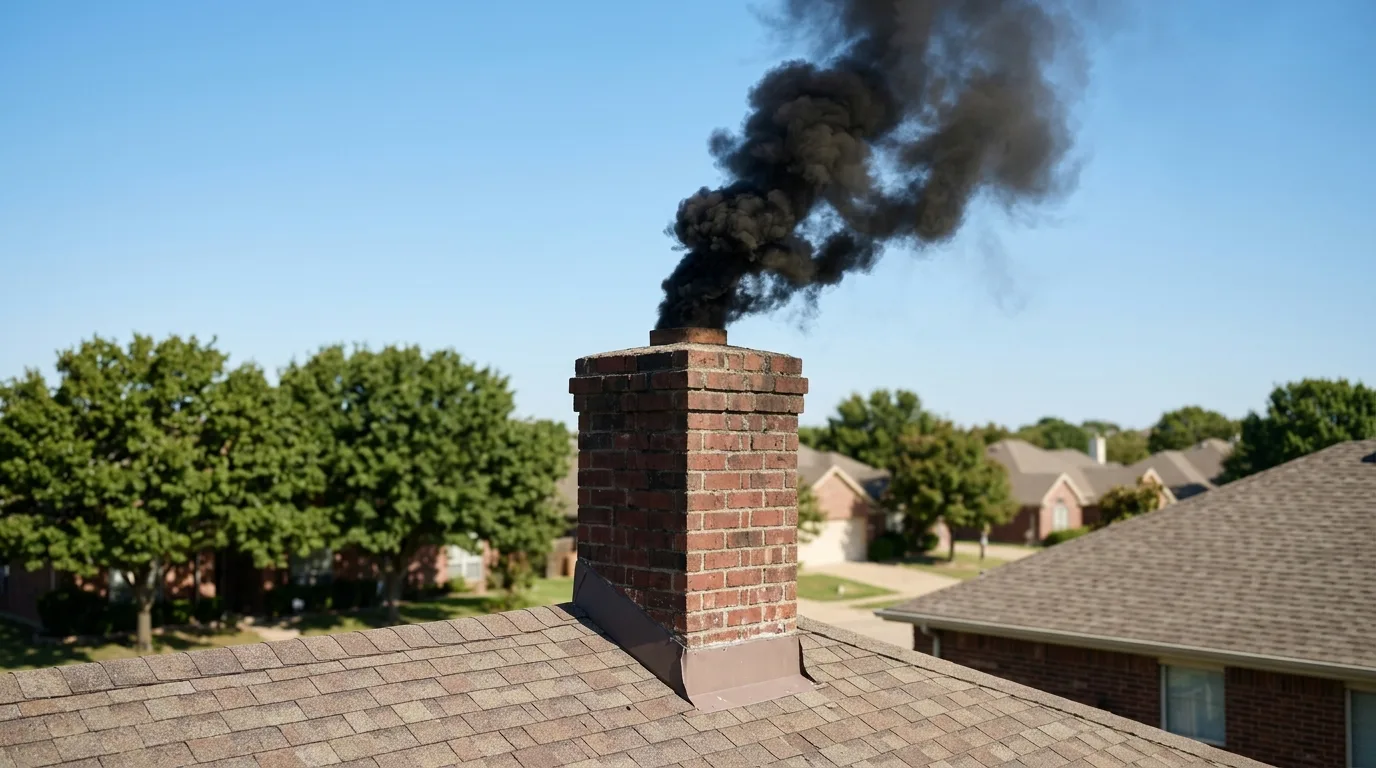
Black chimney smoke means incomplete combustion. Fuel isn’t burning fully. The unburned part turns into soot, and the soot leaves with the smoke.
A short puff of black smoke at start-up is normal. Smoke that keeps coming, or gets thicker, is not. If it doesn’t clear within a few minutes, Chimney Sweep Pro can check it — (682) 354-6644.
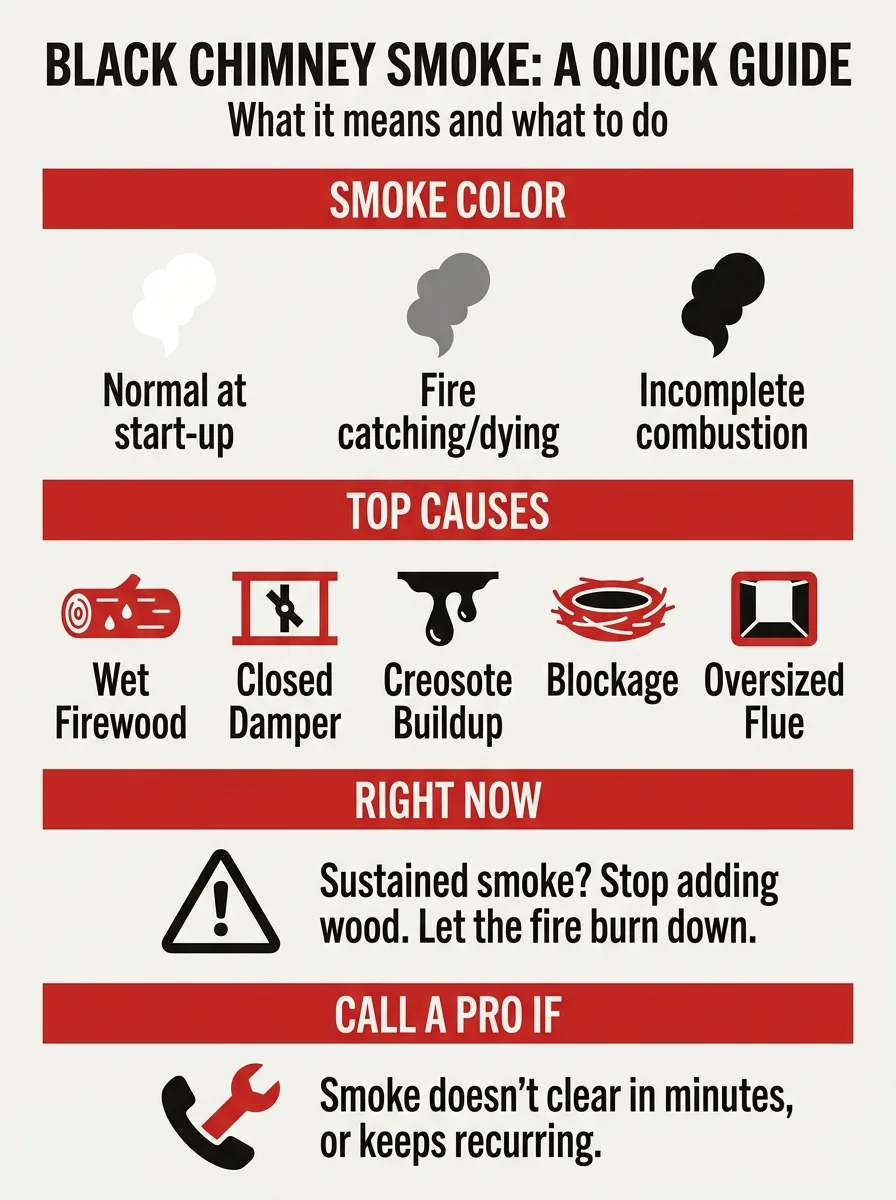
The most common causes are wet firewood, a closed damper, and a blocked flue. A quick check of your wood and airflow usually points to one of them.
Black, White, or Grey: What the Color Tells You
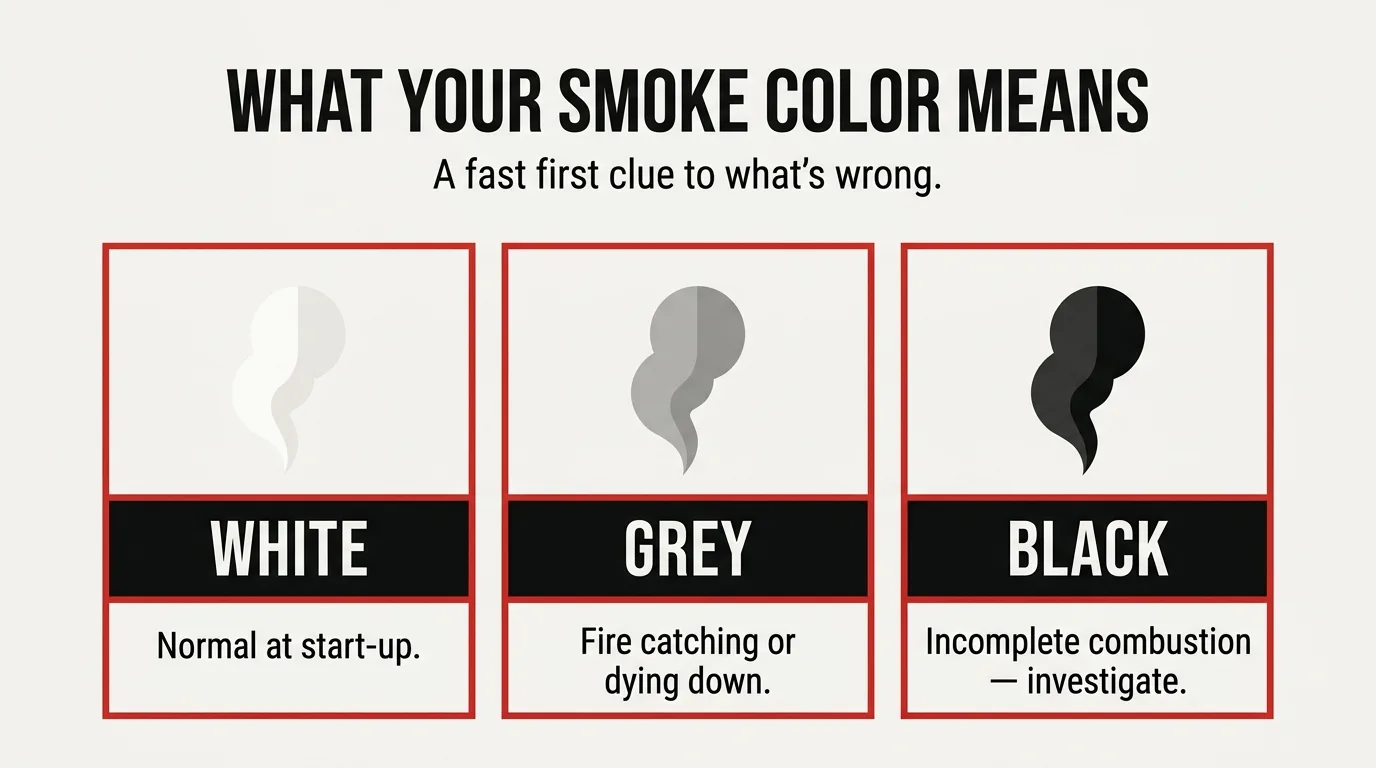
White smoke at start-up is normal. It’s water vapor leaving damp wood or a cold flue. Grey smoke often shows up when a fire is catching or dying down. Black smoke means soot from incomplete combustion. If it doesn’t clear quickly, something needs attention.
Common Causes of Black Chimney Smoke
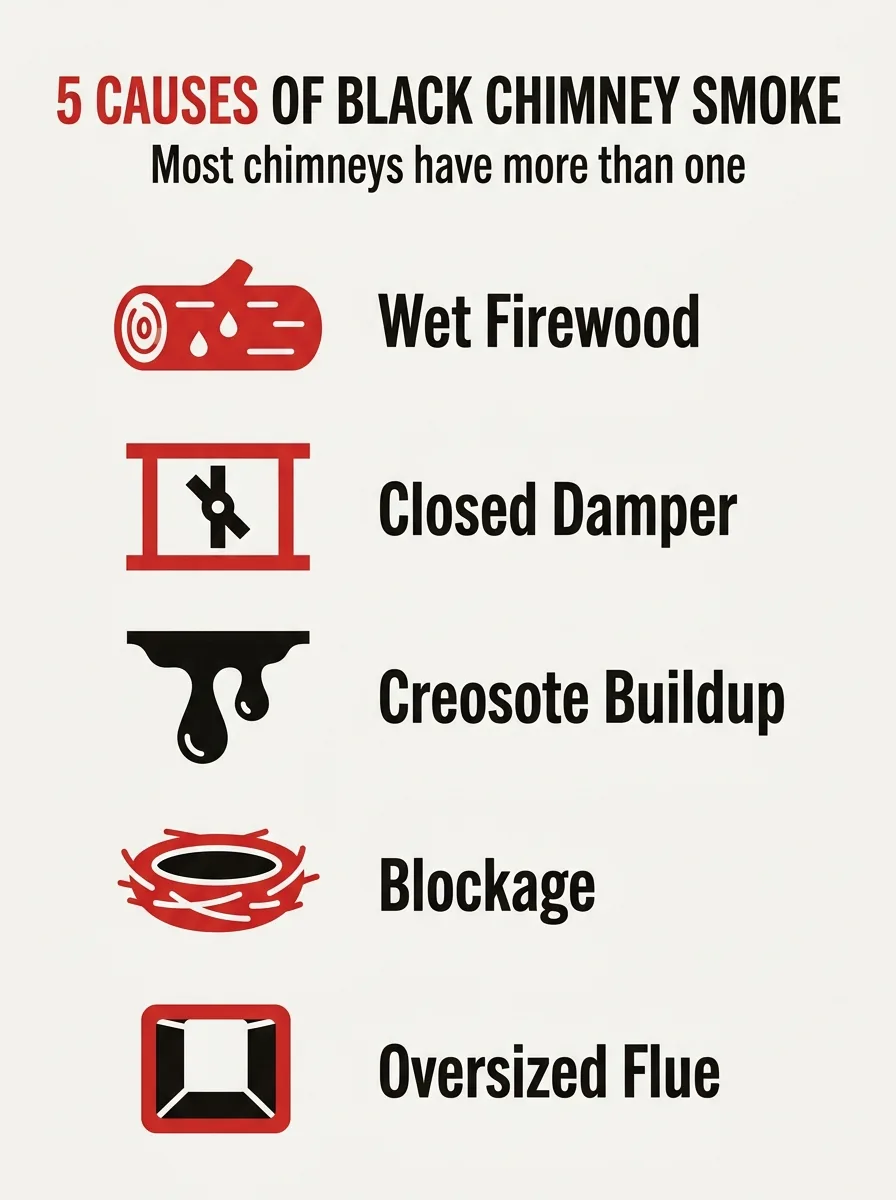
| Symptom | Likely cause | What to check |
|---|---|---|
| Black smoke throughout the burn, not just at start-up | Wet or unseasoned firewood | Wood should be dry and cracked at the ends, not heavy or hissing when burned |
| Smoke rolls back into the room instead of drawing up | Closed or partly closed damper | Confirm the damper is fully open before lighting a fire |
| Smoke gets worse over several uses | Creosote buildup narrowing the flue | Look for shiny black flakes or a sticky coating on the firebox walls |
| Smoke and debris both appear | Blockage from nesting material or storm debris | A flashlight check from the firebox, or a flue camera for anything higher up |
| Sluggish fire, heavy smoke even with dry wood | Oversized or poorly designed flue | Usually needs a professional flue assessment, not a quick fix |
Wet or unseasoned firewood. Wet wood burns cooler than dry wood. A cooler fire doesn’t fully consume the fuel. The unburned part becomes soot and black smoke. Seasoned firewood is dry, lighter than wet wood, and cracked at the cut ends. Wet wood hisses or sizzles when it burns.
Closed or partly closed damper. The damper controls airflow up the flue. A closed or partly closed damper starves the fire of oxygen. Low oxygen means incomplete combustion. Check that the damper is fully open before lighting a fire, and confirm it stays open while the fire burns.
Creosote buildup. Creosote is a byproduct of burning wood. It coats the inside of the flue over time. A narrower flue slows the smoke’s exit. Slower-moving smoke deposits more creosote, which narrows the flue further. This cycle produces more visible black smoke with each fire.
Blockage from debris or nesting material. Storm debris, leaves, and animal nests can enter an open or poorly capped chimney. A blockage forces smoke to move around it instead of straight up. That turbulence increases visible smoke and can also push smoke back into the room.
Oversized or poorly designed flue. A flue that’s too large for the fireplace cools the smoke too quickly. Cooler smoke rises more slowly. Slower smoke deposits more soot and creosote along the way. This cause is structural, not something firewood or damper adjustments will fix.
Most chimneys with black smoke have more than one of these factors at once. Wet wood burns worse in a chimney with weak draft already. Fixing one cause often improves the others.
How to Check If Your Firewood Is Dry Enough
A moisture meter gives the most reliable answer. Split a log and press the probes into the freshly exposed face, not the bark. A reading of 20% or below is ready to burn. Anything higher will smoke more than it should, no matter how well the rest of the chimney is working.
Without a meter, look and listen instead. Seasoned wood is grey rather than fresh-cut tan, has visible cracks radiating from the cut ends, and sounds hollow when two pieces are knocked together. Wet wood sounds dull, feels noticeably heavier for its size, and often shows mold or a musty smell.
Seasoning time depends on the wood. Oak, one of the denser hardwoods common in North Texas firewood supply, typically needs 12 months split and stacked off the ground before it’s ready. Softer woods can be ready in six. Wood stacked directly on soil pulls moisture back up from the ground, so a raised rack or pallet under the stack matters as much as the wait itself.
Gas Fireplace Black Smoke
Gas fireplaces produce black smoke less often than wood fireplaces. When it happens, the cause is usually a dirty burner, a misaligned log set, or a venting problem. Gas appliances vent differently than wood fireplaces. This isn’t a DIY fix. A technician needs to check the burner and the vent path together.
Start-Up Smoke vs. Sustained Smoke
A brief burst of black smoke in the first minute or two is common. The kindling is catching. The flue is still warming up. This settles once the fire is established.
Sustained black smoke is different. If it doesn’t taper off within a few minutes, or it gets heavier as the fire continues, one of the causes above is active. It needs attention before the next fire.
How Chimney Draft Affects Smoke Color
Draft is the upward pull of air through the flue, driven by the temperature difference between the warm air inside the chimney and the cooler air outside. A strong draft carries smoke up and out quickly. A weak draft lets it linger, cool, and deposit more of its soot along the way instead of clearing the flue.
A cold flue is the most common reason draft starts weak. The metal or masonry hasn’t warmed up yet, so the air inside is barely different in temperature from the air outside, and there’s little pull to work with. Burning a small bundle of crumpled newspaper near the damper for a minute or two before building the main fire warms the flue and establishes draft ahead of time. That’s why a fire lit into a cold flue often smokes heavier at start-up than one lit into a flue that’s already warm from recent use.
An oversized flue and a closed damper both work against draft the same way: too much space or too little airflow slows the air moving through the chimney, so smoke spends more time inside it and comes out darker.
Fire and Carbon Monoxide Risk
Creosote builds in three stages. Stage one is light, flaky soot. Stage two is a harder, tar-like layer. Stage three is glazed creosote — a hard, glossy coating. Glazed creosote is the most flammable of the three and the hardest to remove without professional tools. Heavy black smoke often means creosote has been building for a while.
A blocked or poorly drafting flue also raises carbon monoxide risk. CO is colorless and odorless. A working detector near the fireplace is the only reliable way to catch it.
What to Do Right Now If You See Heavy Black Smoke
Stop adding wood to an open fireplace. Let the fire burn down on its own. Don’t douse it with water. If you have a wood stove or insert, close the air intake partway instead of fully. Closing it fully can cause smoke to back up. Don’t add more fuel until the flue has been checked.
What You Can Check Yourself vs. What Needs a Professional
You can check your firewood for moisture. You can confirm the damper is fully open. Both take a couple of minutes and rule out the two most common causes.
You can’t safely check creosote buildup higher in the flue. You can’t check a blockage above the firebox. You can’t confirm whether the chimney is sized correctly for your fireplace. These need a flue camera and training to assess.
Why This Shows Up More in Fort Worth
Fort Worth’s spring storms blow debris and nesting material into open or poorly capped chimneys. This is a common local cause of sudden blockage.
Summer humidity makes it harder to keep firewood properly seasoned. Wood that looks dry can still hold more moisture than it should.
Older masonry chimneys in neighborhoods like Arlington Heights, Ryan Place, and Riverside were often built with narrower flues by today’s standards. Narrower flues draft less efficiently. Homes in these areas see more black smoke tied to flue design, not just firewood.
Fort Worth’s expansive clay soil is a factor these neighborhoods share, too. The soil swells when it’s wet and shrinks when it’s dry, and a masonry chimney sits on its own footing rather than the home’s main foundation. Uneven movement between the two can pull the chimney slightly away from the house over time, opening small gaps where the chimney meets the roofline or exterior wall. Those gaps let outside air leak into the flue path, which disrupts draft the same way a poorly sized flue does, even when the firewood and damper are both fine.
Most guidance online is written for oil-burning furnaces. Oil heat is common up north. It’s rare in Fort Worth. Almost all local fireplaces are wood-burning or gas. The causes above reflect that.
When to Call a Professional
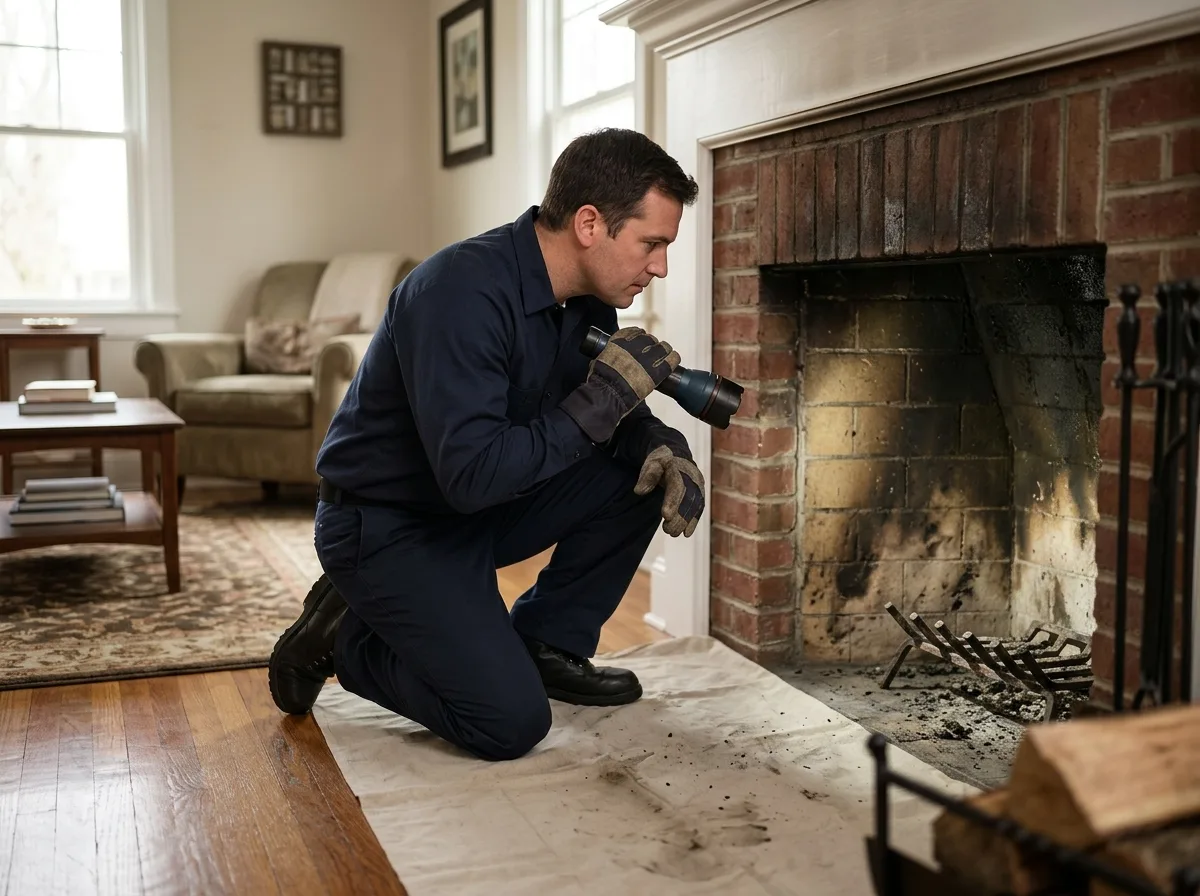
Call if black smoke doesn’t clear within a few minutes. Call if it’s a recurring problem across multiple fires. Call if you see any of the creosote signs described above.
A cleaning resolves most soot and creosote causes in one visit. See chimney sweep for what that involves. If the cause is structural, like a poorly sized flue, a chimney inspection confirms it before any repair is recommended. If you’re also noticing smoke smell between fires, see smoke smell from fireplace when not in use for that related issue.