
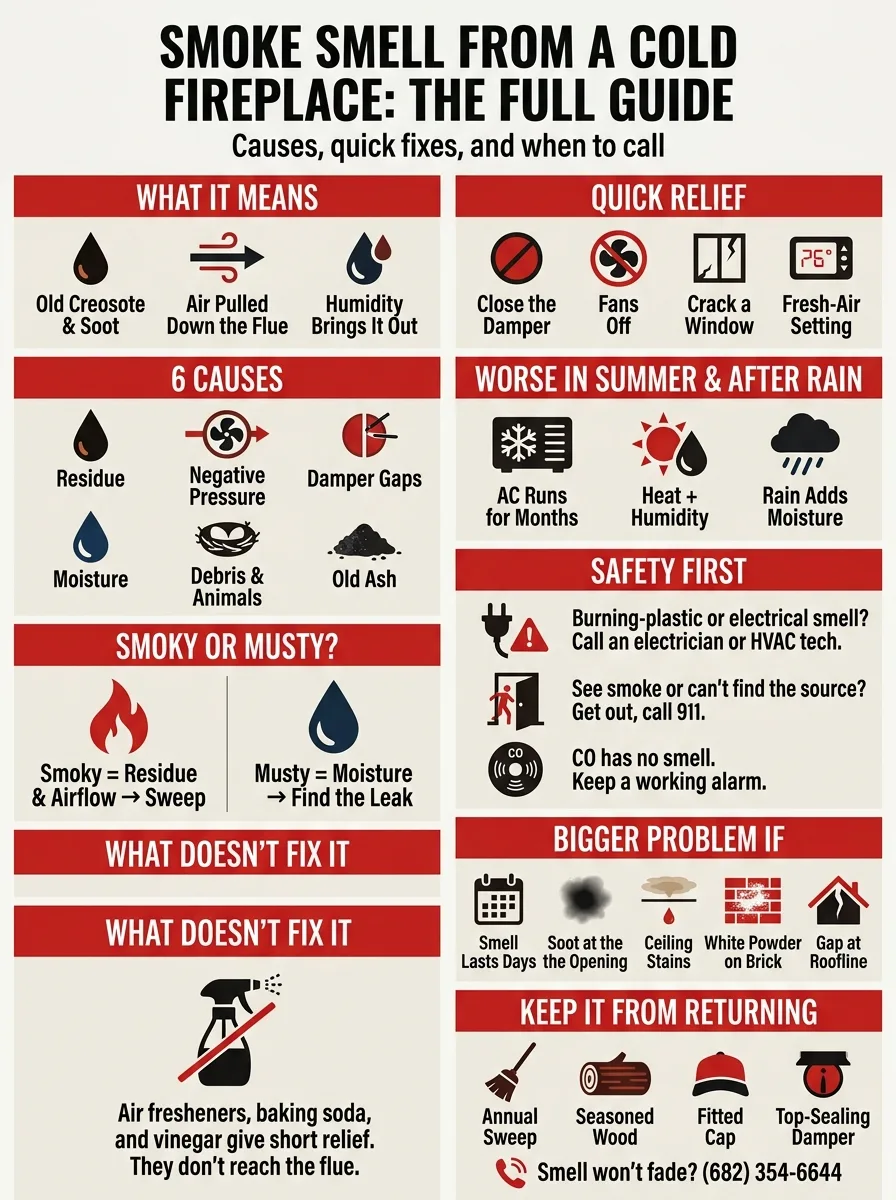
A smoke smell from a fireplace when not in use comes from old creosote and soot residue. Humidity brings the odor out, and air pulled down the flue carries it into your Fort Worth home. Negative air pressure, a damper that doesn’t seal, moisture, debris, and old ash are the usual causes.
This page gives quick relief, six causes, and the signs of a bigger problem.
Want the source found? Chimney Sweep Pro can help. Call (682) 354-6644.
Quick Relief Right Now
These four steps reduce the smell fast. They don’t remove the source.
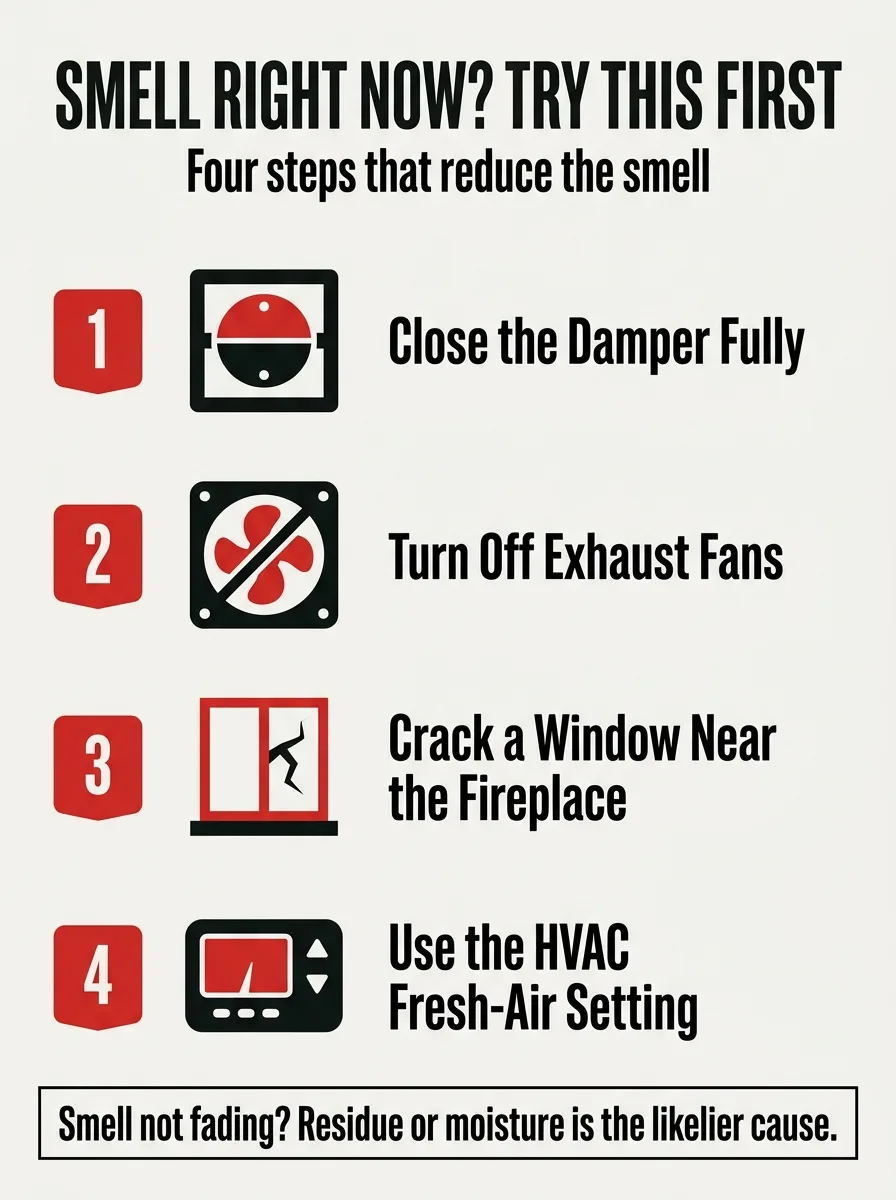
- Close the damper fully. This blocks air from moving down the flue.
- Turn off exhaust fans. That means the range hood, bathroom fans, and dryer, for now.
- Crack a window near the fireplace. This evens out the air pressure inside the house.
- Use your HVAC system’s fresh-air setting, if it has one. This brings outside air in and reduces backdrafts.
If the smell fades, air pressure or the damper is likely involved. If it doesn’t, residue or moisture is more likely.
Smoke Smell Causes at a Glance
| Symptom | Likely cause | What to check |
|---|---|---|
| Stronger when the AC or exhaust fans run | Negative air pressure | Turn off fans and crack a window. See if it fades |
| Stronger on humid days or after rain | Damp creosote and soot residue | Look for dark residue in the firebox. Check the cap |
| Returns even with the damper closed | Damper that doesn’t seal | Look for gaps or rust around the damper plate |
| Sour, earthy, or rotten smell | Debris or an animal in the flue | Listen for sounds. Call for a camera check |
| Stale burnt smell near the firebox | Old ash and soot in the firebox | Look for ash buildup. Clean it once it’s cold |
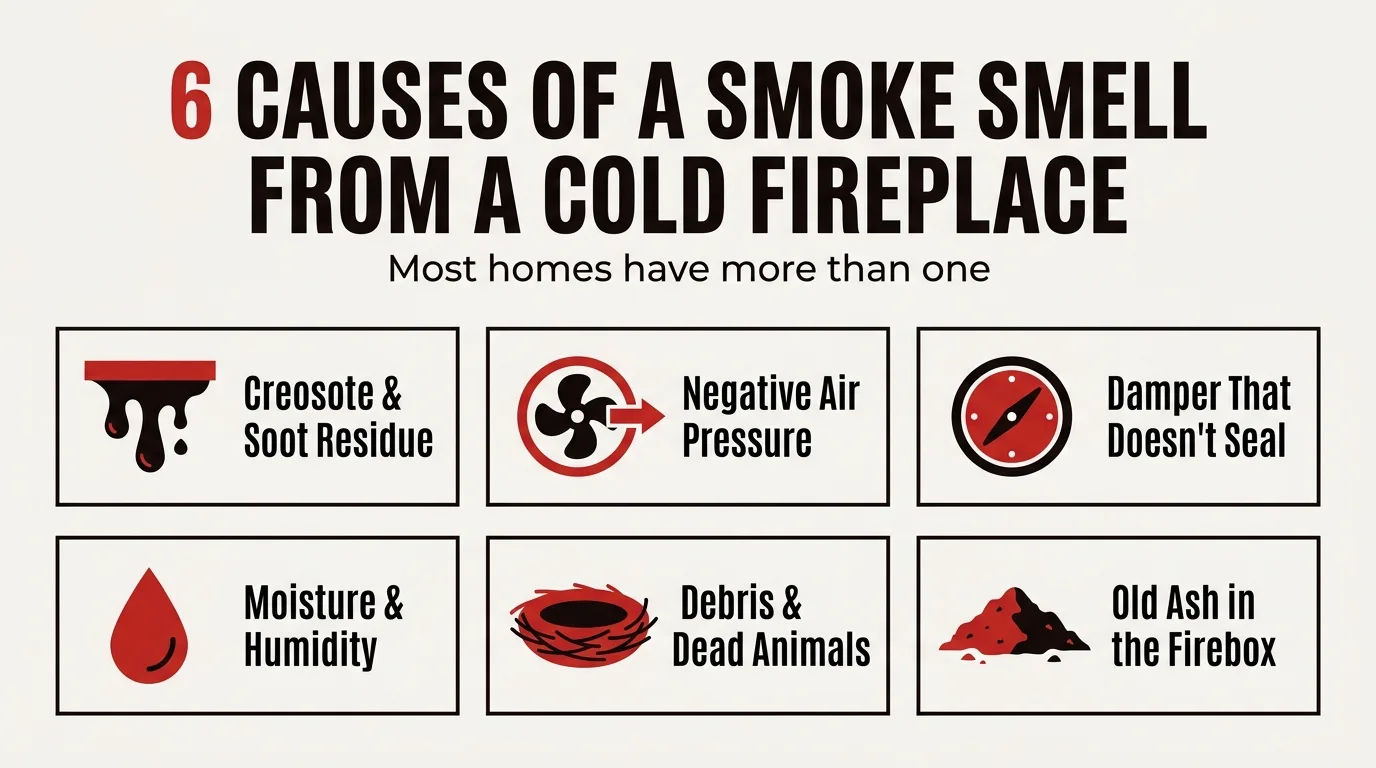
Most homes have more than one cause. The sections below cover each one.
Creosote and Soot Residue Holding Odor
Creosote is a sticky, tar-like residue that forms when wood smoke condenses on cool flue walls. Soot is the fine black powder that settles in the firebox and the smoke chamber, the sloped area above the firebox that narrows into the flue.
Both hold smoke odor long after the last fire. Warm, humid weather brings that odor out.
A sweep is the fix. See chimney sweep for what a cleaning removes.
Negative Air Pressure Pulling Air Down the Flue
Negative air pressure means more air is leaving your house than entering it. Exhaust fans, range hoods, and dryers push air out. A tightly sealed home can’t replace it easily.
The house then pulls replacement air from wherever it can. An open or leaky flue becomes an air intake. That air carries old soot odor into the room.
Cracking a window helps. So does running fewer exhaust fans at once. A professional can advise on adding a make-up air supply, which brings in outside air to balance what the fans remove.
A Damper That Doesn’t Seal
The damper is the metal plate that opens and closes the flue. A closed damper is meant to block air from moving between the chimney and the house.
Many traditional dampers don’t seal airtight. A warped, rusted, or damaged damper leaves gaps. Outside air and odor pass through them.
A top-sealing damper mounts at the top of the chimney and seals it airtight. It blocks smoky air and odor when the fireplace isn’t in use. It’s a common long-term fix.
Moisture and Humidity Reviving Old Residue
Water gets in through a missing cap, a cracked crown, or damaged flashing. It mixes with soot and creosote and produces a sour, smoky-musty smell. Rain and humid weather make it stronger.
See fireplace smells wet if your smell is musty rather than smoky. Persistent moisture can also lead to mold. See mold in fireplace if you can see growth.
Debris, Nests, and Dead Animals
Leaves, twigs, and nesting material collect in a chimney without a cap. Birds, squirrels, and raccoons can move in.
Droppings and organic debris add their own odor. A dead animal adds a strong rotting smell that mixes with the smoke smell.
A camera check shows what’s in the flue. Don’t clear it yourself, since poking at a blockage can damage the liner. Some birds, such as chimney swifts, are protected while nesting, so check before removing anything.
See chimney animal removal if an animal is involved. See chimney cap installation to keep them out.
Old Ash and Firebox Residue
Ash absorbs moisture from the air. It then releases a stale, burnt-wood odor. Fine soot in the firebox keeps giving off smell after the last fire.
Remove ash only when it’s completely cold. Put it in a metal container and store it outside. A vacuum with a HEPA filter picks up fine soot that sweeping misses.
Can’t tell which cause you have? Call (682) 354-6644.
Why the Smell Gets Worse in Summer and After Rain
Air conditioning runs for months in Fort Worth. It, along with exhaust fans, strengthens the pressure differences that pull air down the flue.
Heat and humidity also bring odor out of old residue. Rain adds moisture through any opening in the cap, crown, or flashing.
That’s why homeowners often notice a campfire smell in a fireplace they haven’t used since winter.
Smoky Smell vs. Musty Smell
A smoky or campfire smell points to residue and airflow. A musty or damp smell points to moisture.
The fixes differ. Residue needs a sweep. Moisture needs the leak found. See fireplace smells wet for the musty case.
When the Smell Isn’t From the Fireplace
A smell that’s strongest away from the fireplace may not be a chimney problem. A burning-plastic or electrical smell near outlets, panels, or vents points to electrical or HVAC trouble.
Turn off the affected equipment and call an electrician or HVAC technician. Don’t investigate electrical equipment yourself.
If you see smoke, or smell burning and can’t find the source, get everyone out and call 911 first.
Smoke Smell and Carbon Monoxide
Carbon monoxide, or CO, is a colorless, odorless gas. A smoke smell doesn’t tell you whether CO is present. The CDC’s carbon monoxide overview explains the risk.
The airflow problems behind a smoke smell, such as a blockage or downdraft, can also raise CO risk when a fire or gas appliance is running. The U.S. Consumer Product Safety Commission recommends a CO alarm in every home.
Symptoms include headache, dizziness, weakness, and nausea. If an alarm sounds, get everyone outside and call 911. Don’t light a fire until a suspected blockage has been checked.
What Doesn’t Work
Air fresheners cover the smell for a short time. Baking soda, white vinegar, and activated charcoal absorb odor for a while. Scrubbing the hearth and firebox walls with a vinegar-and-water solution removes surface soot.
None of these reach the flue. The smell returns until the residue, the airflow problem, or the moisture is fixed.
What a Professional Visit Covers
A sweep removes creosote and soot from the firebox, smoke chamber, and flue using rotary brushes and a HEPA vacuum. The technician also checks the damper, cap, crown, and flashing, and how air moves through the fireplace.
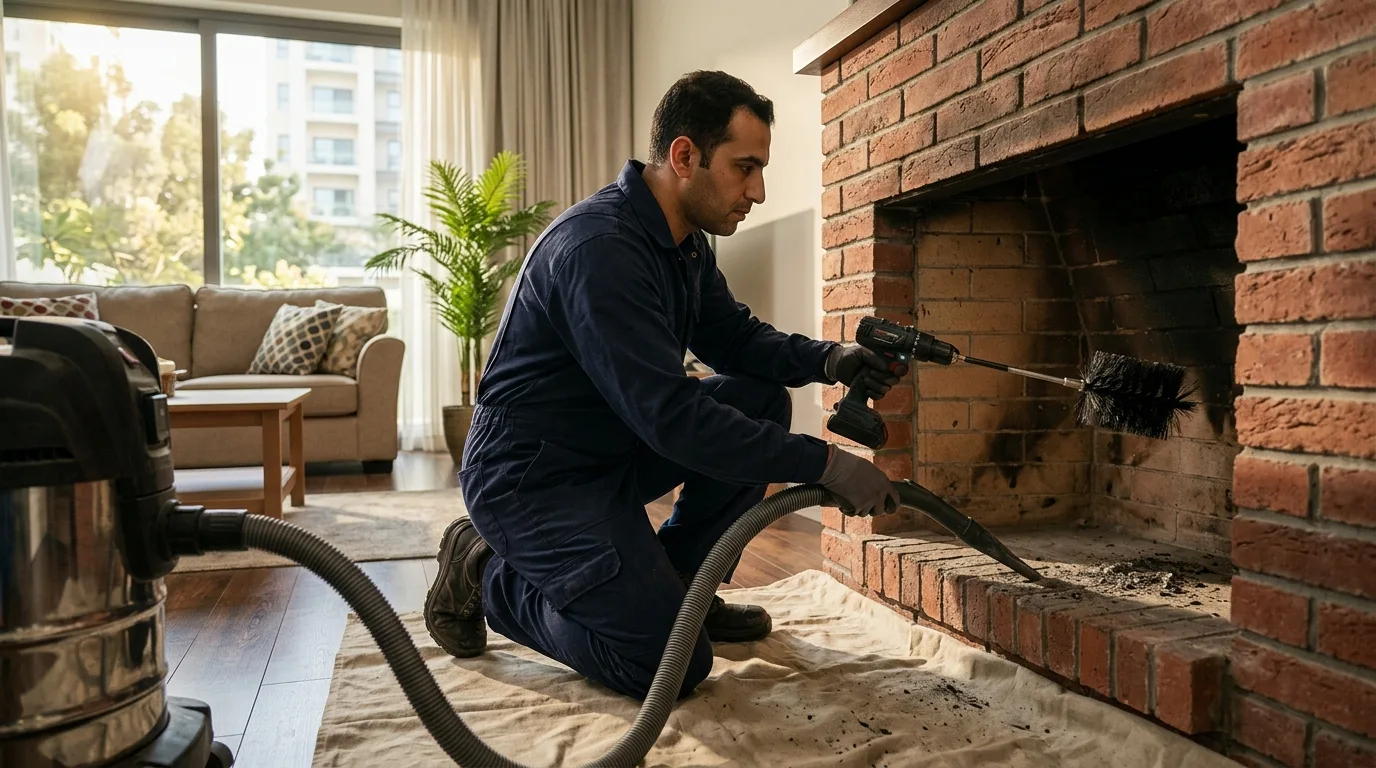
If a blockage is suspected, a camera shows what’s higher in the flue. Chimney Sweep Pro is CSIA certified. The Chimney Safety Institute of America certifies chimney professionals, so ask any company you hire about certification.
See chimney inspection for what an inspection includes.
Signs the Smell Means a Bigger Problem
A faint smell that fades is minor. These signs point to something more:
- The smell lasts for days or keeps returning.
- Soot shows around the fireplace opening.
- Smoke fills the room when you light a fire. See black chimney smoke for that problem.
- Water stains appear on the ceiling or walls near the fireplace.
- White powder, called efflorescence, appears on the exterior brick. It’s left behind when water evaporates from masonry.
- A gap shows between the chimney and the roofline.
Any of these calls for an inspection.
The Smell After Using the Fireplace
A faint smoky smell right after a fire is normal. A smell that lingers for hours, or returns days later, isn’t.
Keep the damper open until the ashes are completely cold. That lets remaining smoke and gases keep venting outside. Then close it.
Remove cold ash and clean the firebox before the next fire.
Preventing the Smell From Coming Back
- Sweep and inspect the chimney every year.
- Burn seasoned firewood, which is dry wood with low moisture content. It leaves less creosote.
- Keep a properly fitted cap with mesh screening on the chimney. See chimney cap installation.
- Consider a top-sealing damper if the smell returns every summer.
- Remove cold ash after each use.
- Balance air pressure with a cracked window or the fresh-air setting.
How Often to Sweep
One common guideline is to sweep after about 50 fires or when soot buildup reaches 1/8 inch. Sweep sooner if a smell keeps returning.
NFPA 211 calls for every chimney to be inspected at least once a year. That applies to a fireplace you rarely use.
Why This Shows Up More in Fort Worth
Newer, tightly sealed homes are more prone to negative air pressure. Older homes are more likely to have leaky dampers and porous masonry that hold moisture and residue.
Older masonry chimneys in neighborhoods like Fairmount, Ryan Place, and Mistletoe Heights often show the second pattern. Spring storms can also knock a cap loose, which lets in rain and debris.
When to Call a Professional
Call if the smell lasts more than a few days, returns every summer, or comes with any sign listed above. Call sooner if you suspect an animal or a blockage.
A chimney sweep removes the residue behind most cold-fireplace smells. A chimney inspection finds moisture, damper, and blockage problems.
Ready to get the smell gone for good? Call (682) 354-6644.