
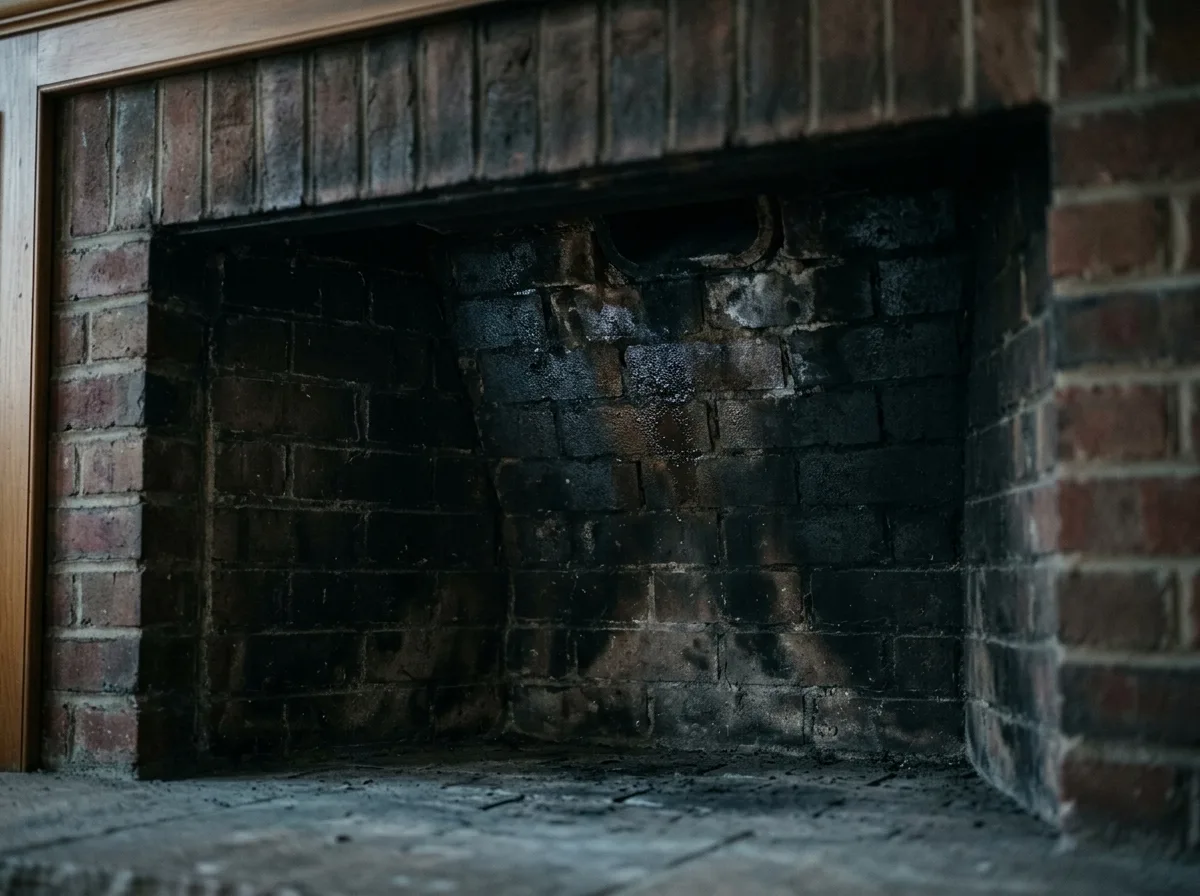
A wet or musty fireplace smell means moisture. It’s not the same as a smoky smell.
Moisture is getting into your chimney somewhere. Finding the source stops the smell for good.
Masking it with baking soda or a deodorizer doesn’t fix the cause. The smell comes back.
Chimney Sweep Pro can find the source. Call (682) 354-6644.
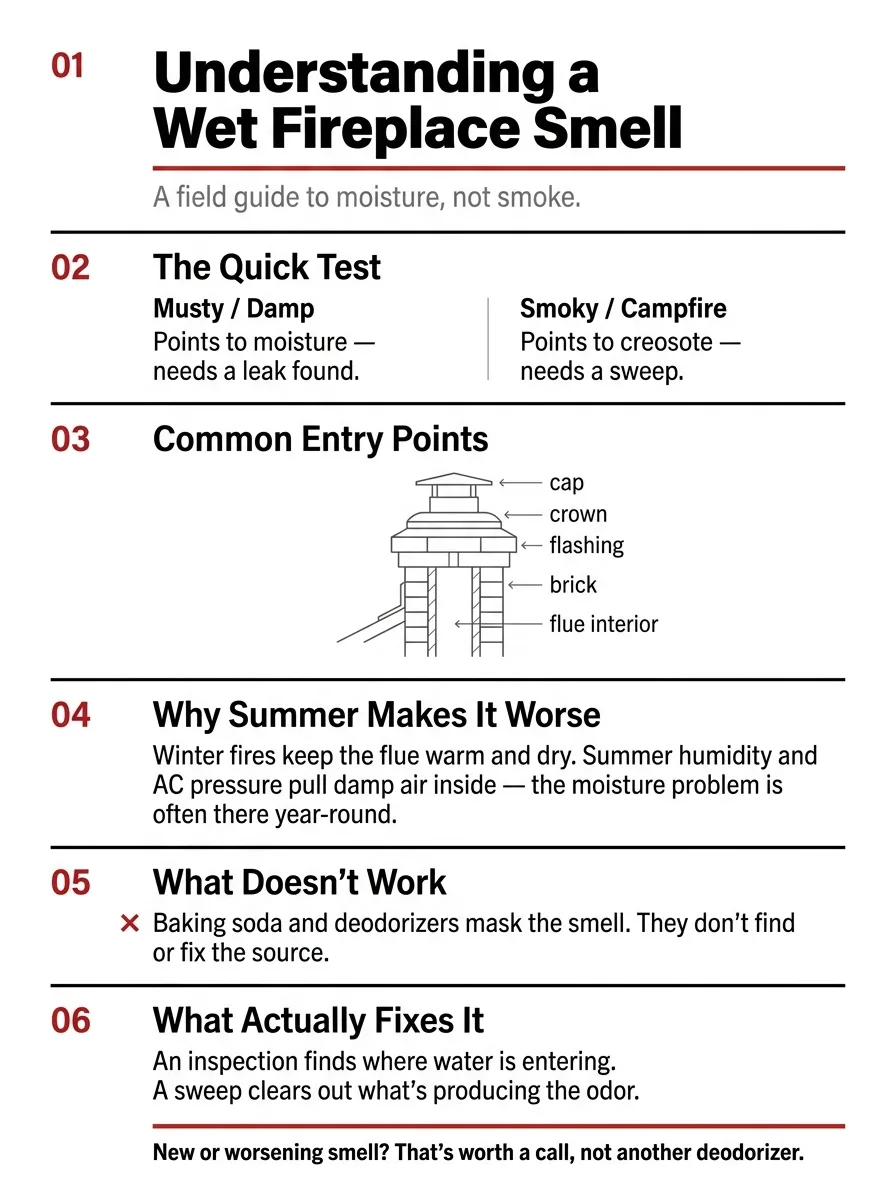
Musty Smell vs. Smoky Smell
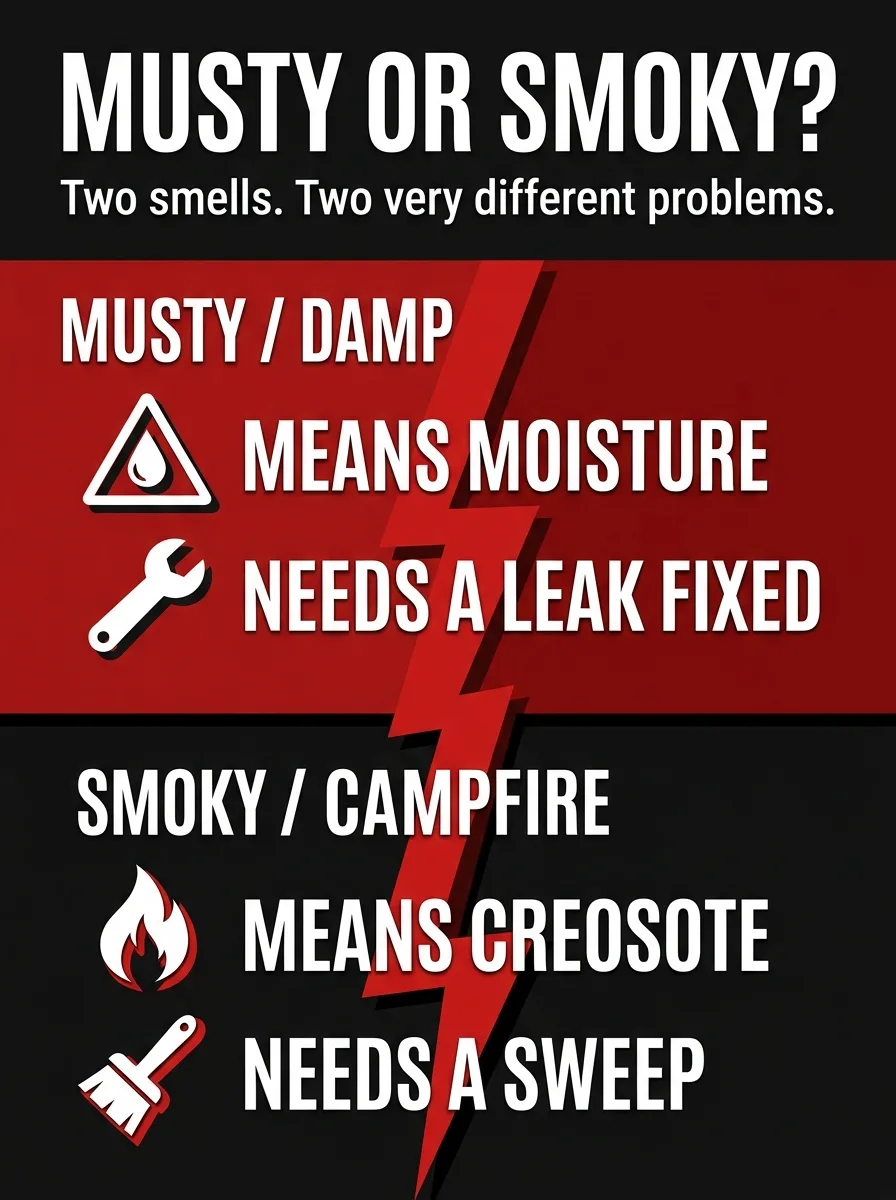
A musty or damp smell means water. A smoky or campfire smell means creosote.
These have different causes. They need different fixes.
Water intrusion needs a leak repair. Creosote buildup needs a sweep. See smoke smell from fireplace when not in use if your smell is smoky, not musty.
What Causes a Wet or Musty Smell
Moisture gets into the chimney. It mixes with old soot, creosote, or organic debris.
That mixture produces the musty odor. It’s the same process that makes a wet basement smell musty.
The moisture has to come from somewhere. The sections below cover the most common sources.
Where the Moisture Is Getting In
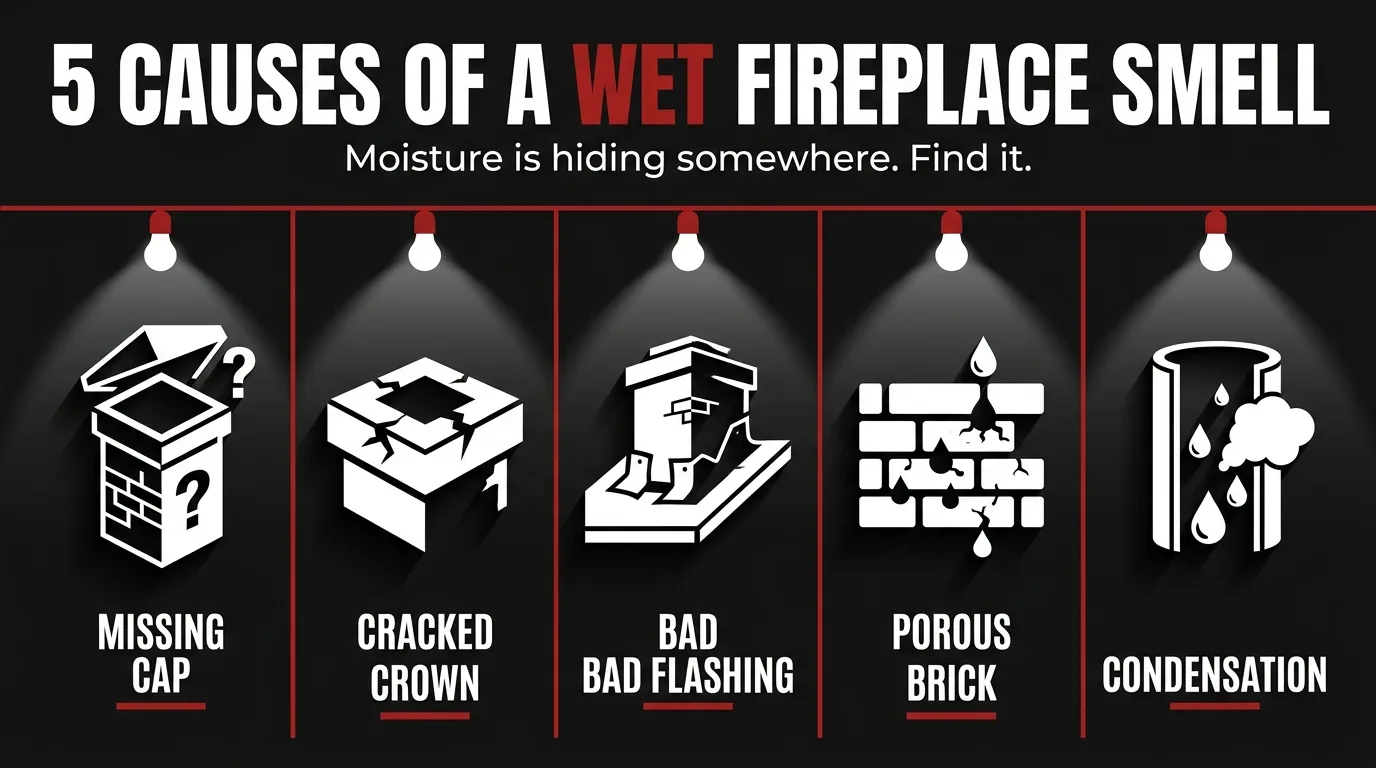
A missing or damaged chimney cap is the most common entry point. Rain falls straight into an uncapped flue.
A cracked chimney crown is another common source. Cracks let water into the masonry below.
Deteriorated flashing at the roofline is a third source. Water runs down along the chimney instead of over the roof.
Porous or cracked masonry can also absorb water directly. Older brick and mortar are more likely to have this problem.
Condensation Without an External Leak
Sometimes there’s no leak at all. The flue itself can be the source.
A cool flue meets warm, humid outside air. Condensation forms on the inside walls.
This is more common with metal liners in cooler climates. It can still happen in Fort Worth during humid stretches.
Chimney Liner Type and Condensation Risk
The type of flue liner affects how likely condensation is to form. A liner is the material lining the inside of the flue, and it comes in three common types: clay tile, uninsulated metal, and insulated metal.
Clay tile liners hold heat longer after a fire. They’re less prone to the temperature swings that cause condensation.
Uninsulated metal liners cool faster. A cool metal liner meeting warm, humid air produces condensation more easily than a clay tile liner does.
Insulated metal liners perform closer to clay tile. Insulation slows the liner’s temperature swings and reduces the condensation risk.
An older chimney with an uninsulated metal liner is more likely to develop this kind of musty smell. The Chimney Safety Institute of America covers liner types in more detail. Relining with an insulated liner is one way to address it directly.
Why It’s Worse in Summer
Many homeowners only notice this smell in warm weather. Winter fires keep the flue warm and dry.
Summer humidity is higher. Air conditioning also creates pressure differences that pull chimney air into the house.
The moisture problem often exists year-round. It’s just more noticeable in summer.
Wet Debris Inside the Flue
Leaves, twigs, and nesting material can enter an unprotected chimney. Rain gets these materials wet.
Wet organic material decomposes. Decomposition adds its own musty, earthy smell on top of any moisture issue.
A missing or damaged cap is usually why debris got in to begin with. Fixing the cap addresses both problems at once.
Negative Air Pressure Pulling the Smell Inside
Exhaust fans and HVAC systems can create negative pressure inside a house. Negative pressure pulls air down the chimney instead of letting it rise naturally.
This can pull a musty chimney smell into the living space. It happens even when the fireplace hasn’t been used in weeks.
A working damper helps block this. A professional can confirm if your damper is sealing properly.
When It Might Be Mold
A musty smell that keeps getting stronger, not weaker, can mean mold has started growing. Visible mold changes the situation.
See mold in fireplace if you can see mold, not just smell moisture. That page covers what to do next.
Finding and fixing the moisture source matters either way. Mold won’t stop growing until the moisture is gone.
Signs the Moisture Problem Is More Than Just Smell
Smell isn’t always the only clue. Visible signs often show up alongside it.
Rust-colored staining on the ceiling or wall near the chimney points to an active leak. White, chalky staining on the brick itself is called efflorescence, and it means water is moving through the masonry.
Peeling paint or bubbling drywall near the chimney chase is another sign. Both happen when moisture gets trapped behind the surface.
Spalling brick, where the face of the brick flakes or pops off, is a longer-term sign of water damage. Freeze-thaw cycles make this worse once water is already getting in.
Any of these signs alongside a musty smell points to a moisture source that needs attention, not just odor control.
Why Masking the Smell Doesn’t Work
Baking soda, vinegar, and chimney deodorizers absorb odor temporarily. They don’t address where the moisture is coming from.
The smell returns once the product wears off. The underlying leak or condensation keeps happening in the meantime.
These products are fine as a short-term measure. They’re not a substitute for finding the source.
What You Can Safely Do Yourself vs. What Needs a Professional
A few things are safe to do on your own. Most of the fix isn’t.
Wiping visible dust or debris from the firebox with a damp cloth is safe. Running a dehumidifier in the room can reduce how noticeable the smell is while you wait for an inspection.
Closing the damper when the fireplace isn’t in use helps limit how much humid air moves through the flue. Checking that the damper closes fully is something most homeowners can do from inside the firebox.
Going onto the roof to inspect the cap, crown, or flashing isn’t safe without the right equipment and training. Diagnosing a condensation issue inside the liner isn’t something a visual check from the ground or the firebox can confirm.
The moisture source itself almost always requires a professional to find and fix.
Why a Professional Inspection Is Necessary
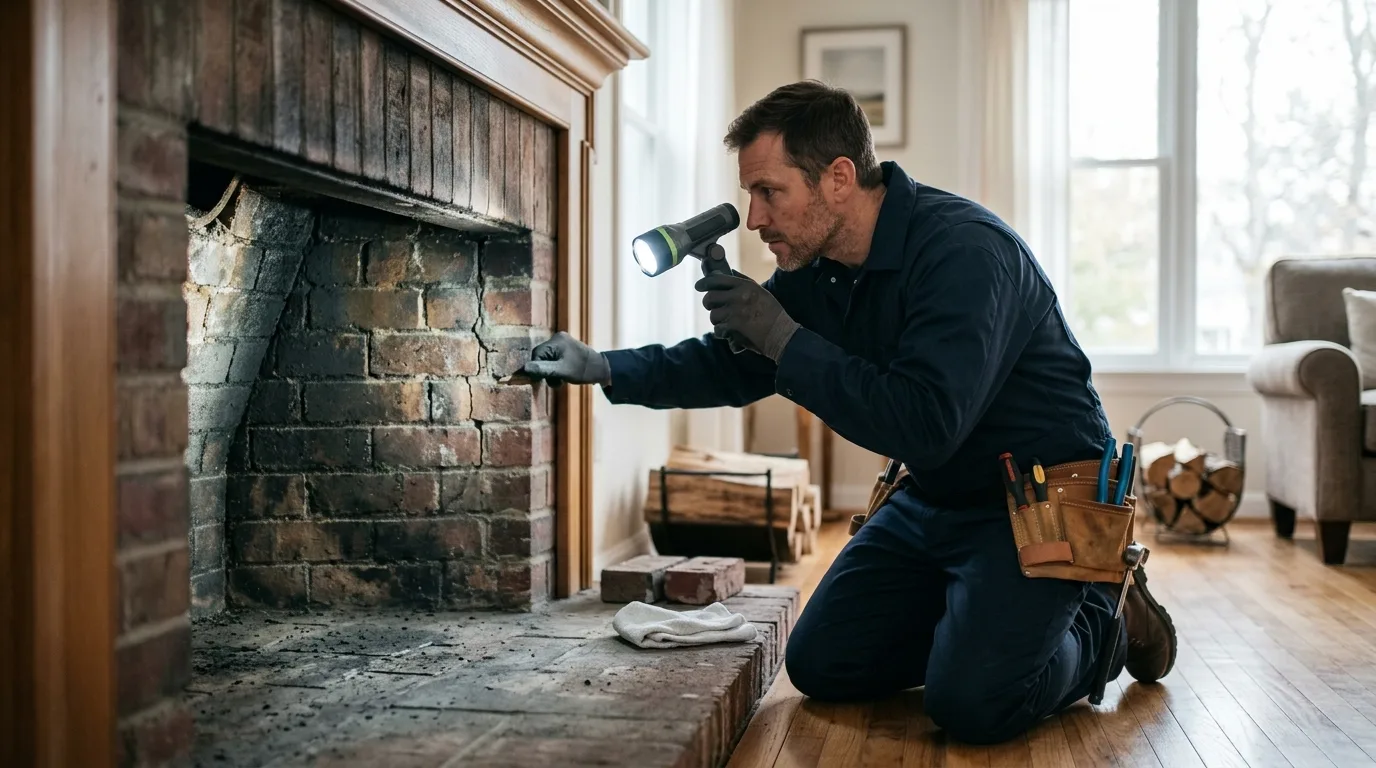
The moisture source usually isn’t visible from inside the house. A cracked crown or damaged flashing is only visible from the roof.
A flue camera can also check for condensation patterns inside the liner. This isn’t something a homeowner can assess safely or accurately.
If you’d like this looked at directly, call (682) 354-6644.
What an Inspection and Sweep Visit Address
An inspection checks the cap, crown, flashing, and visible masonry for damage. It identifies exactly where water is getting in.
A sweep removes old soot, creosote, and any wet debris contributing to the smell. This clears out the material actually producing the odor.
Together, these two steps address both the source and the smell. Doing only one usually leaves the problem partly unsolved.
Preventing This Going Forward
A properly fitted chimney cap blocks rain and debris. This is the single most common fix.
Crown sealant protects a cracked or aging crown from further water absorption. It’s a preventive step, not a full repair, if the crack is significant.
A tight-sealing damper reduces both moisture entry and negative-pressure pullback. Checking it during an annual inspection catches wear early.
If the Smell Started Suddenly
A musty smell that’s brand new, after years of nothing, usually means something changed. A recent storm, a new crack, or a cap that just failed are common triggers.
This is worth addressing sooner rather than later. New water intrusion gets worse the longer it’s ignored.
Ready to get it checked? Call (682) 354-6644.
Fort Worth’s Climate and Chimney Moisture
Fort Worth’s climate makes this a common issue. Humid summers, heavy spring storms, and freeze-thaw cycles in winter all add moisture pressure on a chimney.
Expansive clay soil is common throughout the area. As it swells and shrinks with moisture, it can shift a chimney’s foundation slightly, which opens small cracks in the crown or mortar joints over time.
Summer thunderstorms and occasional hail add sudden, heavy water exposure on top of that gradual wear. A chimney with an existing crack or gap lets more water in during these storms than it would otherwise.
Freeze-thaw cycles in winter widen small cracks that summer humidity and storms already started. This combination is why moisture problems tend to build gradually rather than show up all at once.
Older Fort Worth Homes and Chimney Moisture Risk
Home age changes how vulnerable a chimney is to moisture. Neighborhoods like Fairmount, Ryan Place, and Mistletoe Heights have a large share of homes built before 1950, many with original lime-mortar chimneys.
Lime mortar is softer and more porous than the portland-cement mortar used in newer construction. It absorbs water more readily, which makes it more likely to produce the musty smell described above.
A newer chimney with portland-cement mortar and a properly sealed crown generally resists moisture better. That doesn’t make it immune, especially once the cap or flashing starts to age.
If your home is in one of Fort Worth’s older, established neighborhoods, treat a musty smell as a reason to check the mortar condition specifically, not just the cap.
When to Call a Professional
Call if the smell is new or getting stronger. Call if you notice it mainly after rain or in humid weather.
An inspection finds the source. A sweep clears out what’s producing the odor.
If an active leak is found, see chimney leak repair. If the cap is the cause, see chimney cap installation.