
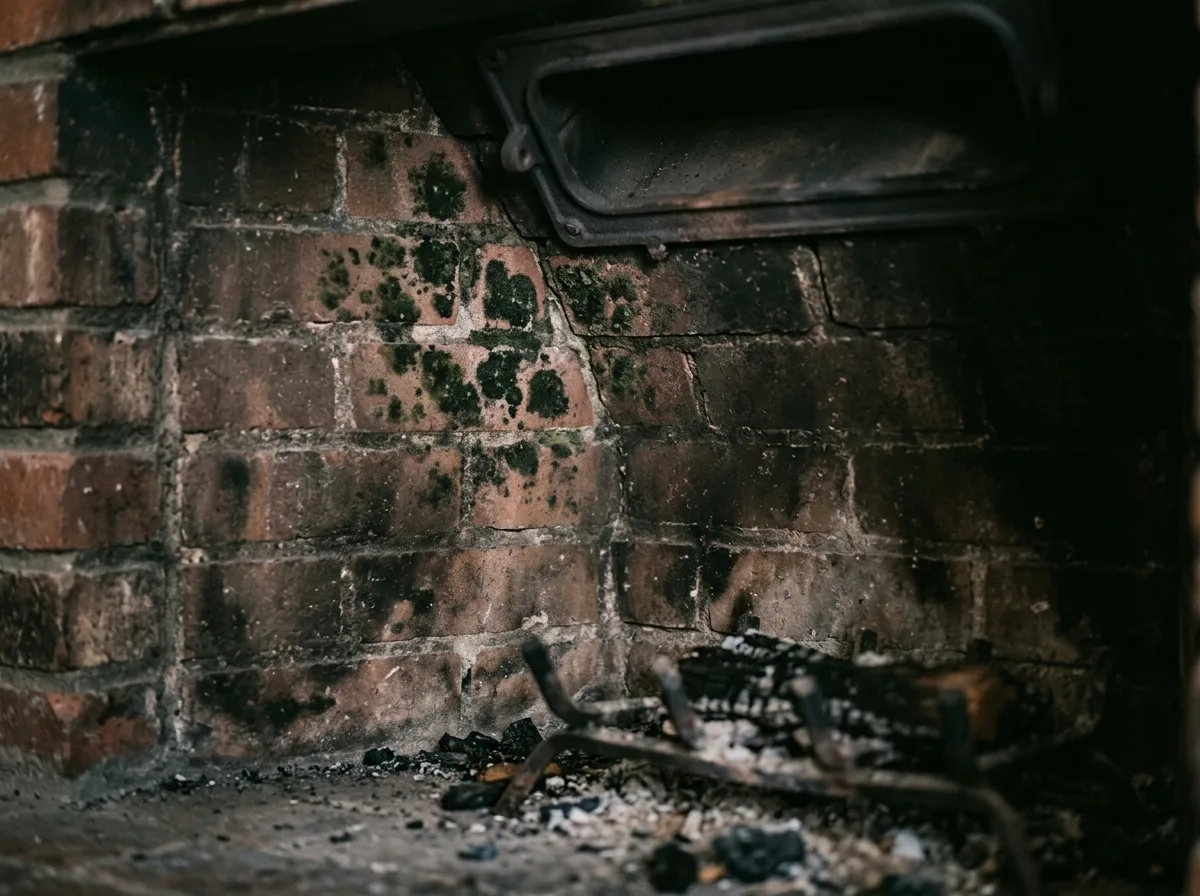
Mold in a fireplace means moisture is present. Mold needs both moisture and organic material to grow.
It can appear black, green, white, or orange. It’s often fuzzy or fibrous, not flat like soot.
Don’t touch it or brush it away yourself. Disturbing mold spreads its spores into the air.
Close the fireplace doors or damper if you can. Keep children, pets, and anyone with allergies away from the area.
If you’d like this confirmed and safely removed, Chimney Sweep Pro can help. Call (682) 354-6644.
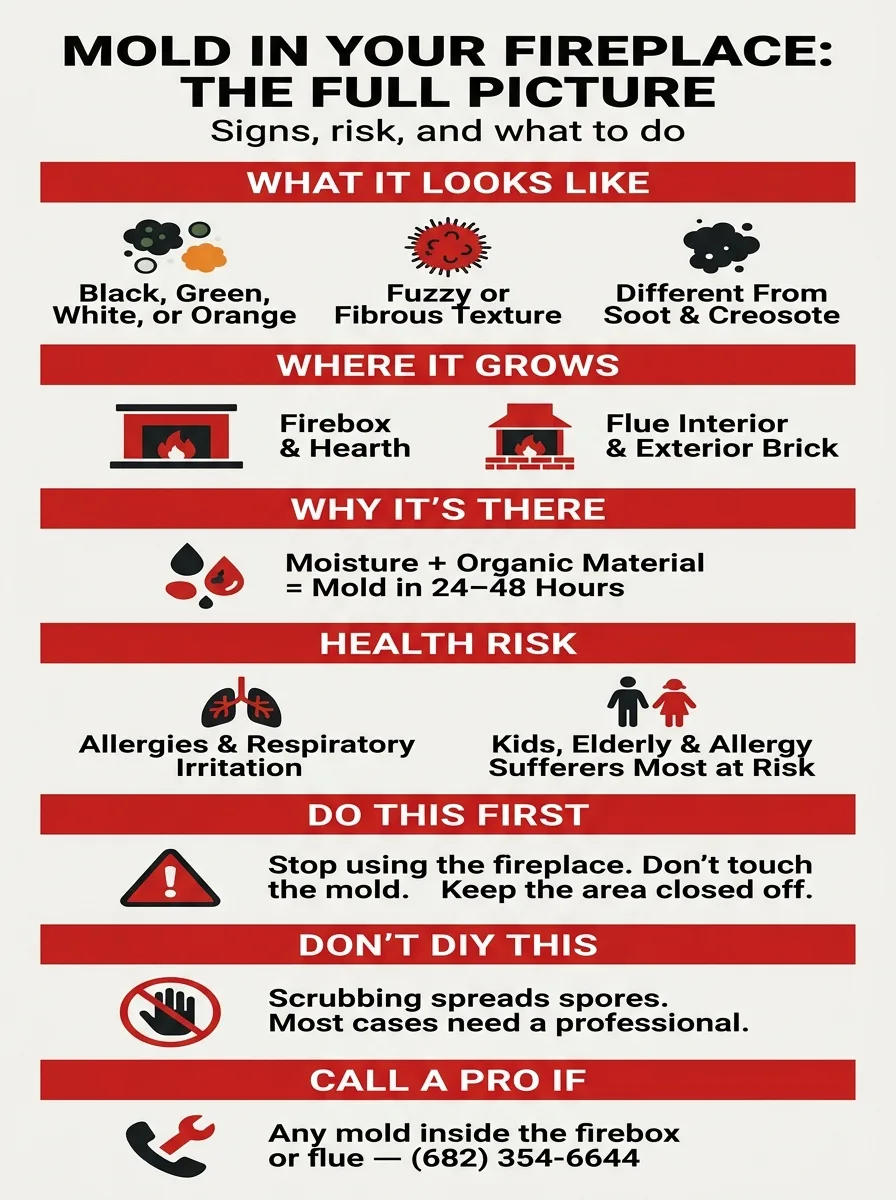
What Mold in a Fireplace Looks Like
Mold usually looks fuzzy, fibrous, or slightly raised. Soot and creosote are flat and often shiny or matte black.
Mold can be black, green, white, or orange. Color alone doesn’t tell you the species or the danger level.
A musty, earthy smell often comes with visible mold. See fireplace smells wet if you’re smelling this without seeing anything yet.
Mold vs. Soot and Creosote
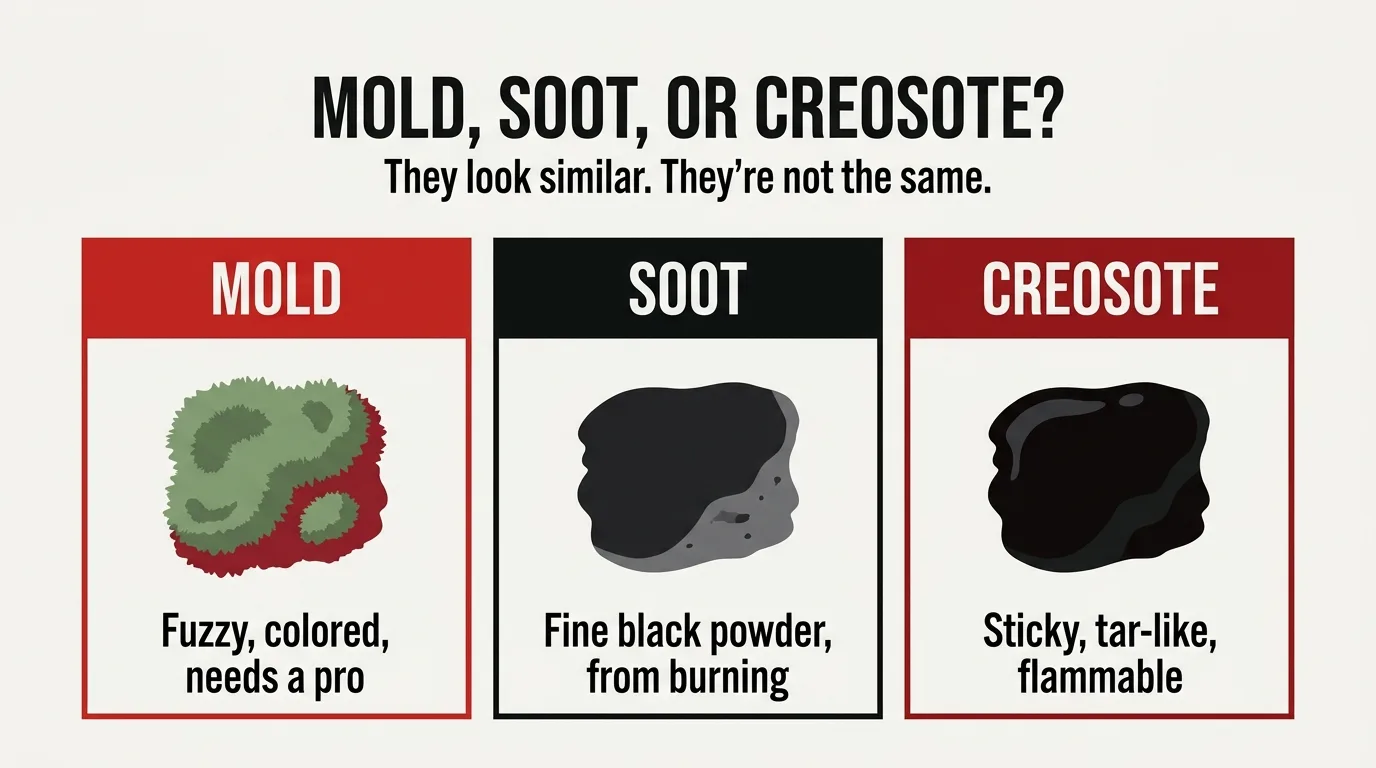
Soot is a fine, powdery black residue. Creosote is often shiny, tar-like, or glazed.
Mold has texture. It looks alive, not like a stain or deposit.
If you’re not sure which you’re looking at, treat it as mold until confirmed. The safety steps are the same either way.
Where Mold Typically Grows
Mold can grow inside the firebox. It can also grow on the hearth or the surrounding brick facade.
Inside the flue is a common but harder-to-see location. Exterior masonry can also host mold in humid conditions.
An unused fireplace is more vulnerable than one used regularly. Dark, still, damp air is exactly what mold needs.
What Causes Mold to Grow
Mold needs moisture and organic material. Both are often already present in a fireplace.
The organic material comes from wood particles, ash, and airborne debris. The moisture usually comes from an outside source.
See fireplace smells wet for where that moisture is likely coming from. This page focuses on the mold itself, not the moisture source.
Does Fireplace Type Change Mold Risk?
Wood-burning fireplaces have more organic material on hand than gas fireplaces do. Ash, soot, and leftover wood particles all count as food for mold.
A gas fireplace has less organic debris, but the same moisture sources still apply. A missing cap, a cracked crown, or flue condensation can still grow mold on the surrounding brick.
A prefabricated metal firebox doesn’t host mold directly. Moisture trapped behind the metal can still reach nearby wood framing or drywall, so the risk moves rather than disappears.
How Fast Mold Can Start Growing
Mold can begin colonizing within 24 to 48 hours of sustained moisture. It doesn’t take a major leak to start the process.
A single humid stretch can be enough. This is part of why it shows up seasonally for many homeowners.
Once established, mold spreads quickly if the moisture continues. Early action limits how far it gets.
Health Risks of Fireplace Mold
Mold releases spores into the air. These spores can trigger allergic reactions, respiratory irritation, and skin or eye irritation.
Some mold species produce mycotoxins. These can pose a health risk even to people without allergies. The CDC’s guidance on mold and health covers this in more detail.
Symptoms can include coughing, sneezing, sinus irritation, and headaches near the fireplace. These symptoms often improve away from the room.
Who’s Most at Risk
Children and elderly individuals are more vulnerable to mold exposure. People with asthma or allergies are also at higher risk.
Anyone with a compromised immune system should avoid contact entirely. Healthy adults can still experience symptoms with prolonged exposure.
If anyone in the household falls into these groups, treat the situation with extra caution. Concerned about symptoms already showing up? Call (682) 354-6644 and we’ll get it inspected.
Immediate Safety Steps
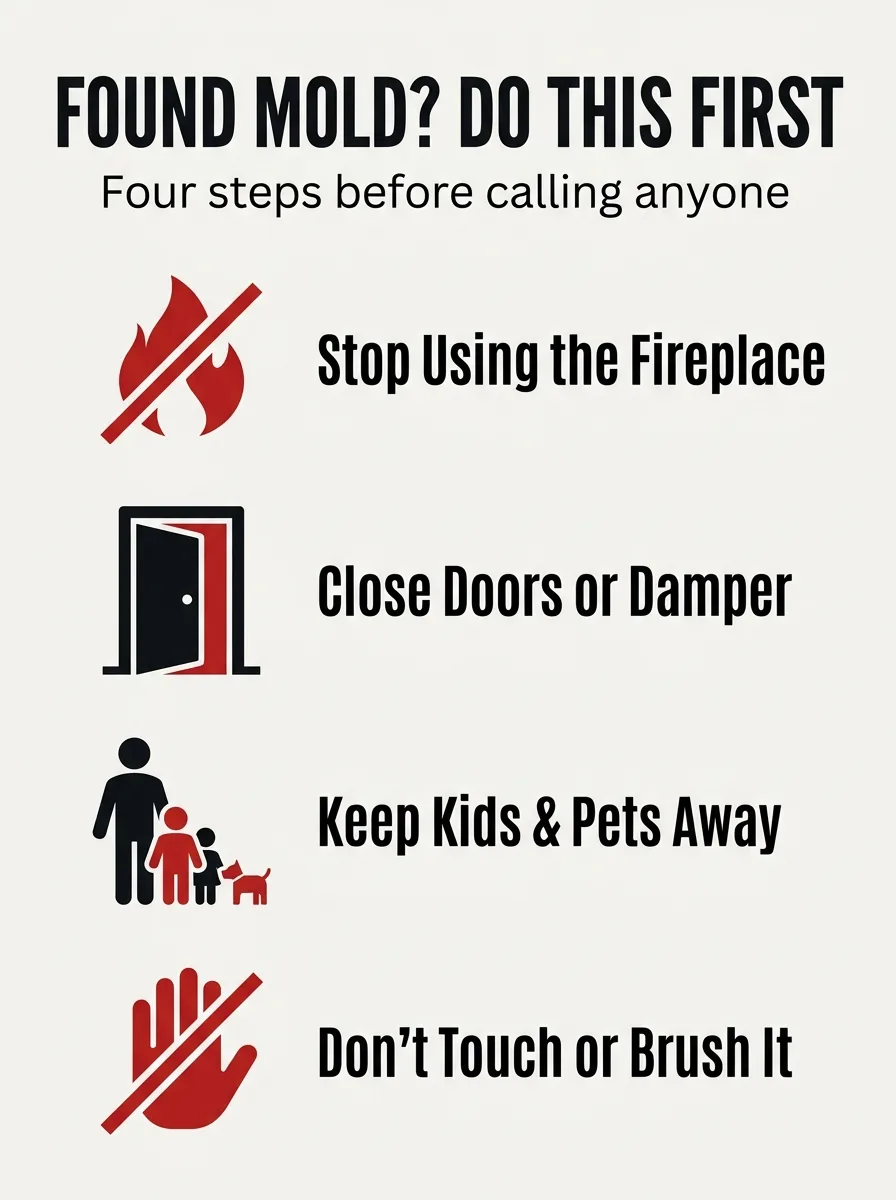
Stop using the fireplace right away. Smoke combined with mold spores makes air quality worse, not better.
Close the fireplace doors if you have them. If you don’t, keep the damper closed to limit airflow from the flue.
Keep the room’s traffic to a minimum. Don’t let children or pets near the fireplace opening.
Why You Shouldn’t Clean It Yourself in Most Cases
Scrubbing or brushing mold releases spores into the air. This can spread the problem to other parts of the room or home.
Removing mold safely requires containment and the right protective equipment. A vacuum without proper filtration can make the spread worse, not better.
Incomplete removal is also common with DIY attempts. Mold that isn’t fully removed often returns quickly.
When Minor Cleaning Might Be Reasonable
A small amount of surface mold on exterior brick, away from the flue, is sometimes manageable yourself. This applies only to small, easily accessible areas.
Wear gloves, a mask, and eye protection if you attempt this. Use a stiff brush and an appropriate cleaner, not bleach on porous brick.
Anything inside the firebox, flue, or a larger area should go to a professional. When in doubt, treat it as a professional job. The EPA’s brief guide to mold, moisture, and your home covers general small-scale cleanup guidance if you’re weighing this yourself.
Why Bleach Doesn’t Fix Mold on Brick
Bleach kills mold on the surface, but brick and mortar are porous. Mold growing inside those pores stays behind and often returns within days.
Diluted bleach can also lighten or damage decorative or historic brick. On a fireplace surround, that trades one problem for another.
Never mix bleach with an ammonia-based cleaner. The combination produces toxic fumes, and some mold-specific cleaning products already contain one or the other.
A professional uses products meant to penetrate porous masonry, not just kill what’s visible on top. That difference is part of why DIY attempts beyond a small exterior spot often don’t hold.
Testing for Mold
Visual identification is usually enough to confirm mold is present. Lab testing to identify the exact species is available but not always necessary.
Testing matters more when health symptoms are severe or unexplained. A professional can advise whether testing is worth pursuing in your situation.
What Professional Mold Remediation Involves
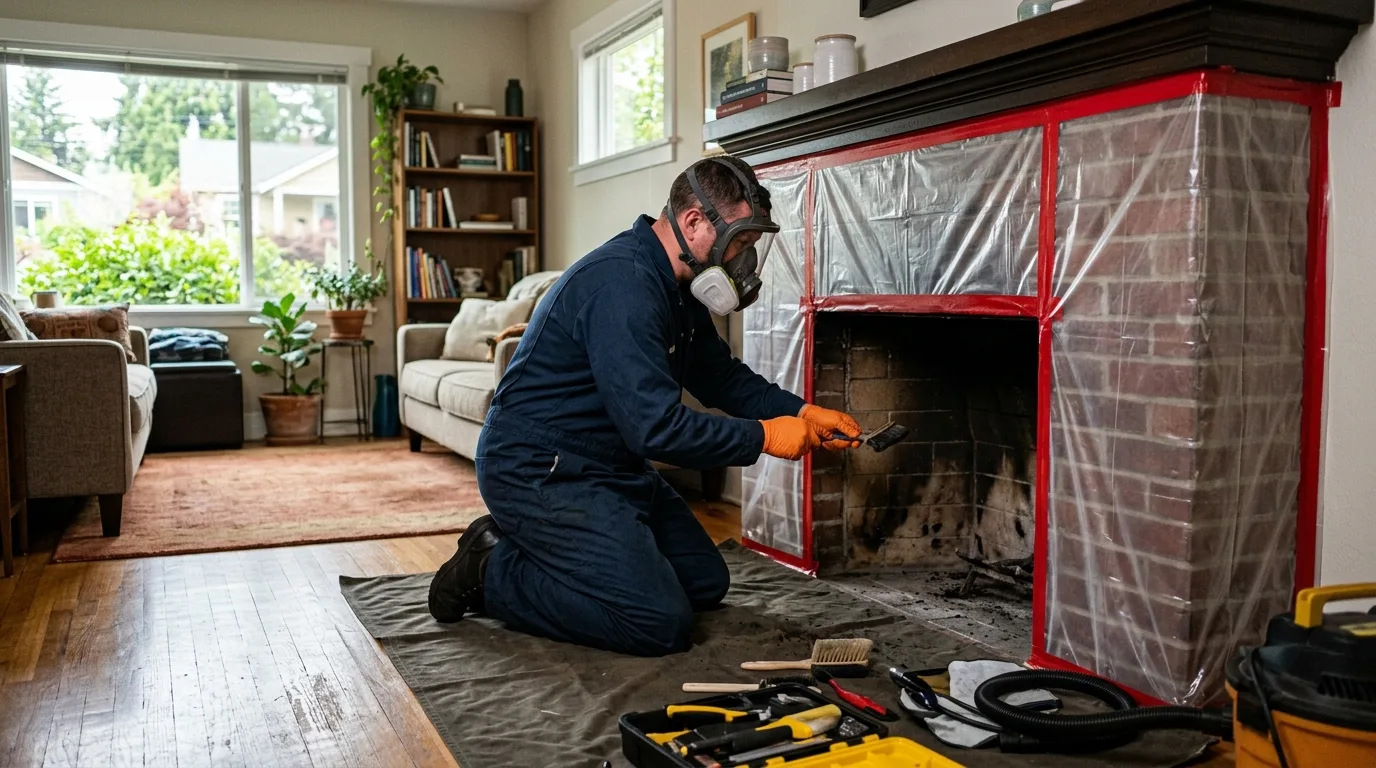
A technician confirms the mold and its extent first. This usually includes checking the firebox, hearth, and flue interior.
Containment goes up before any removal starts. This keeps spores from spreading into the rest of the home during the work.
The mold is then removed using appropriate equipment and techniques. The area is treated to discourage regrowth.
Why Fixing the Moisture Source Matters
Removing mold without addressing the moisture source is a temporary fix. The same conditions will grow mold again.
See fireplace smells wet for how to find where water is entering. A chimney inspection can confirm the specific source.
Addressing both the mold and the moisture is the only way to solve this for good.
Does Homeowners Insurance Cover Mold Remediation?
Sometimes, depending on the cause and your specific policy. Mold caused by a sudden, covered event like storm damage is more likely to be covered than mold from long-term neglect.
Contact your insurance provider to confirm what your policy covers. Ask what documentation they require before starting remediation work.
What to Document If You File a Claim
Photograph the mold before anything is touched or cleaned. Take a wide shot showing its location and a close-up showing texture and color.
Note when you first noticed it and what you think caused it, such as a recent storm or a leak you already knew about. That timeline matters if coverage depends on a sudden event rather than gradual neglect.
Keep a copy of any professional inspection or remediation report. Insurers typically want a written finding, not just a description of the work performed.
Ask your adjuster what they need before remediation starts. Removing mold before it’s documented can weaken a claim that depends on proving how much damage occurred.
Preventing Mold From Returning
Fixing the original moisture source is the most important step. A cap, crown repair, or flashing fix addresses the entry point directly.
Keeping indoor humidity in a moderate range helps in humid climates. Good airflow around the fireplace also reduces the stagnant, damp conditions mold needs.
Regular inspection catches new moisture problems early. Catching it early is easier than removing established mold later.
Check for Mold Before Your First Fall Fire
A fireplace closed up all summer is exactly the environment mold prefers: dark, still, and often damp. Check it before lighting a fire for the season, not after.
Look at the firebox walls, the damper, and the hearth in good light. A flashlight helps catch mold in the corners and along the flue opening.
If you find anything, don’t light a fire until it’s addressed. Burning a fire with mold present pushes spores through the smoke and into the room.
Why This Is More Common in Fort Worth
Fort Worth’s humid summers create the moisture conditions mold needs. This is especially true for fireplaces that sit unused for months at a time.
Older masonry chimneys are more porous than newer construction. Porous brick holds moisture longer, giving mold more time to establish.
This shows up often in older neighborhoods like Fairmount, Ryan Place, and Mistletoe Heights, where older masonry is common. Homes in these areas benefit from more frequent inspection during humid months.
When to Call a Professional
Call if you see any mold inside the firebox or flue. Call if a musty smell comes with visible spots, discoloration, or a fuzzy texture.
A chimney sweep removes mold safely and clears the area. A chimney inspection confirms the extent and the moisture source behind it.
If the cause turns out to be an active leak, see chimney leak repair. If a missing or damaged cap is the entry point, see chimney cap installation.
Ready to get it looked at? Call (682) 354-6644.