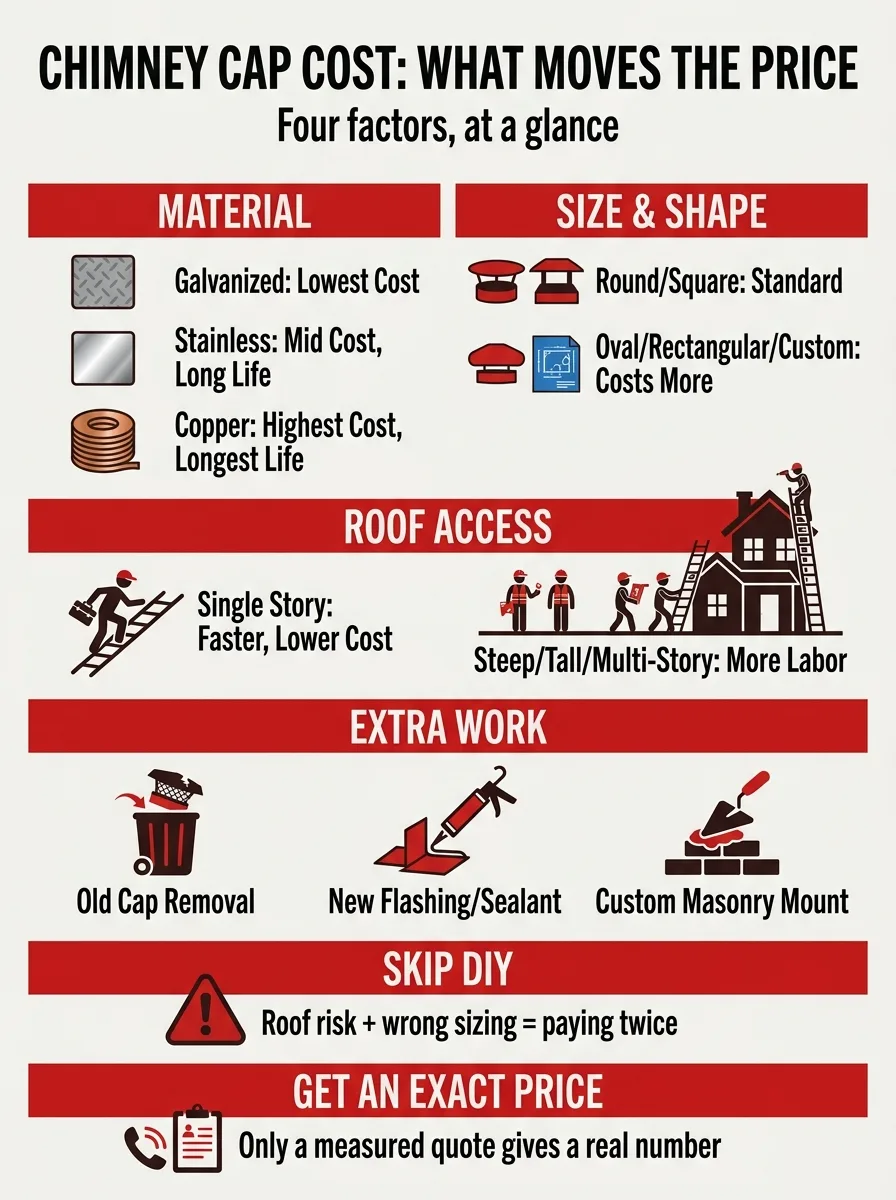
Chimney cap installation cost isn’t one number. It depends on four things: material, size, shape, and roof access.
This guide covers each factor. Use it to understand your quote, whether it’s on the low end or the high end.
Chimney Sweep Pro measures your flue before giving a price. Call (682) 354-6644 for a written quote.
Material affects cost the most. Size and shape affect it next. Roof access affects labor time.
Material: Galvanized, Stainless Steel, or Copper
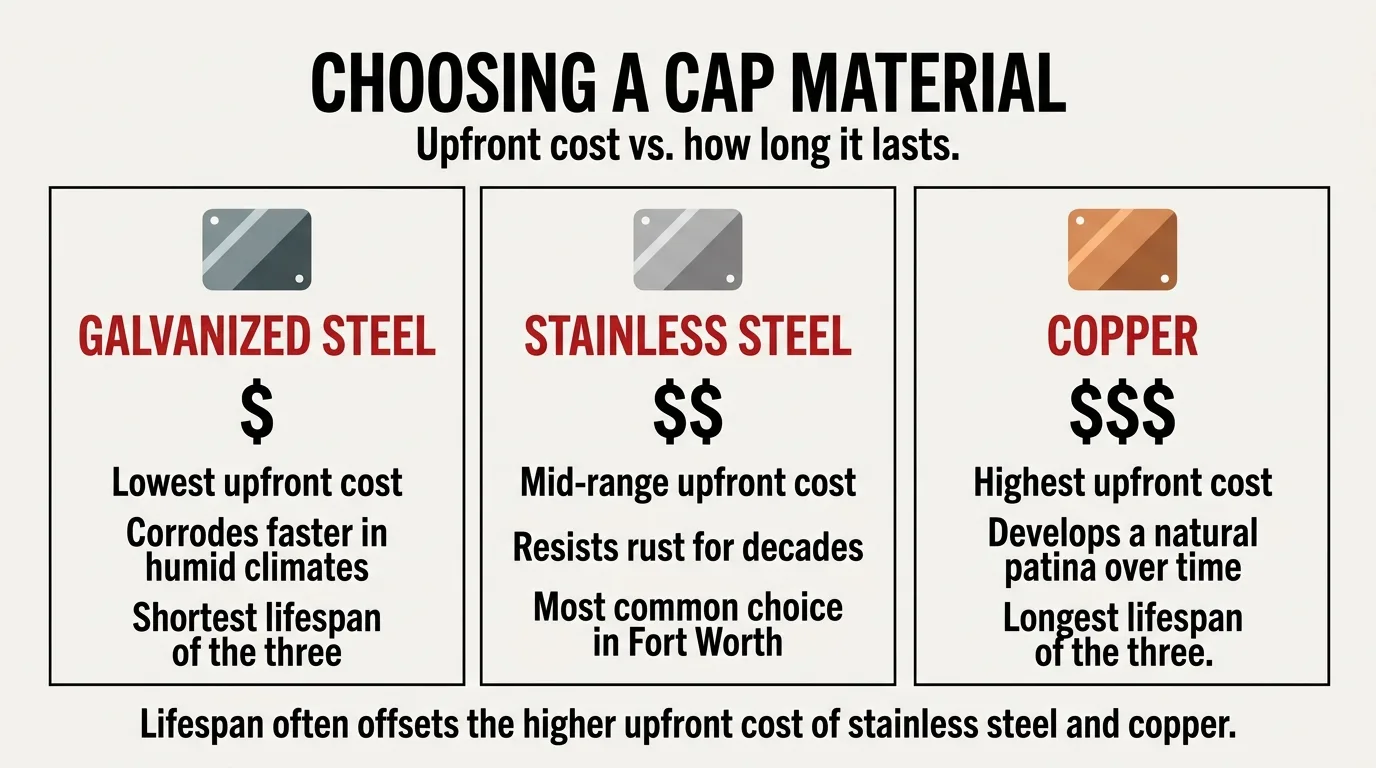
Material is usually the biggest cost factor. Galvanized steel costs the least upfront.
Galvanized steel corrodes faster in humid climates. That shortens its lifespan.
Stainless steel costs more than galvanized. It resists rust for decades.
Stainless steel is the most common recommendation in Fort Worth. Copper costs the most of the three.
Copper develops a natural patina over time. It typically lasts the longest.
Cap Size and Shape
Round and square caps are the most standard shapes. They’re widely available, which keeps their price lower.
Oval, rectangular, and custom shapes cost more. They require more material or a non-standard shape.
The right shape depends on your flue’s actual dimensions. It’s not a matter of preference alone.
Cap Sizing Standards a Professional Follows
A professional doesn’t guess at cap size. CSIA, the Chimney Safety Institute of America, certifies technicians on correct sizing and installation practice.
NFPA 211, the national fire code for chimneys and vents, sets the spec for spark-arrestor mesh. The openings can’t be smaller than 3/8 inch or larger than 1/2 inch.
Mesh that’s too tight restricts draft and causes smoke problems. Mesh that’s too open lets sparks and embers through, which defeats the cap’s main safety function.
A properly sized cap also has to clear the flue opening without pinching airflow. That’s part of why the flue gets measured before a cap gets chosen, not after.
Single-Flue vs. Multi-Flue Caps
A single-flue cap covers one opening. It’s the simplest and least expensive option.
A multi-flue cap covers two or more openings with one larger cap. It uses more material.
A multi-flue cap typically costs more than two separate single-flue caps. Chimneys with multiple fireplaces or appliances often need this option.
Roof Accessibility and Pitch
A steep roof adds time to the job. A tall chimney adds time to the job.
A multi-story home adds time to the job. More time means higher labor cost.
A single-story home with easy roof access is the fastest scenario. It’s also the least expensive.
Roof pitch and height get assessed during the initial inspection. This happens before a final price is given.
Removing an Old Cap First
A failed or rusted-out cap has to come off first. This adds a labor step.
Removal sometimes reveals additional wear on the crown or flashing. This wasn’t visible before removal.
Most full installation quotes include removal. Confirm this before booking.
Flashing and Sealant
Some installations need new flashing around the cap’s base. Some need new sealant.
This keeps water out. It’s more common on older chimneys where the existing seal has degraded.
Not every job needs this. It adds to the cost when it’s needed.
A technician checks this during the same visit as the installation.
Repair vs. Full Replacement
A cap with minor surface rust can sometimes be repaired. A cap with a loose fastener can sometimes be repaired.
Repair costs less than replacement. A cap that’s rusted through needs full replacement.
A cap that’s badly dented needs full replacement. A cap missing mesh needs full replacement.
A quick inspection determines which category applies.
Standard vs. Custom-Fabricated Caps
A standard prefab cap fits common flue sizes. It’s the less expensive option.
A custom-fabricated cap matches an unusual flue size or shape. It costs more because it isn’t mass-produced.
Many older Fort Worth chimneys need a custom fit. The next section explains why.
Decorative and Specialty Cap Features
A standard cap has one job: keep water, animals, and embers out. Some homeowners choose more than that.
Multi-tier caps, weathervane-style tops, and custom decorative finishes are available for chimneys where the cap is visible from the street or the yard. These sit on the same functional mesh and housing as a standard cap.
A turbine-style rotating cap is another option. It uses wind to pull draft through the flue, which can help a chimney with weak natural draft.
None of these are required for a cap to function. They’re chosen for looks or for a specific draft problem, and a technician can explain whether either one fits your chimney.
Why Many Fort Worth Chimneys Need a Custom Cap
Older masonry chimneys in Fort Worth predate a code requirement. That code requires the flue liner to protrude a set distance above the crown.
Without that protrusion, a standard clamp-on cap has nothing to grip. The cap has to be fastened directly to the masonry instead.
This shows up often in older neighborhoods. Fairmount, Ryan Place, and Mistletoe Heights all have masonry chimneys from that era.
A custom or masonry-mounted cap costs more than a standard clamp-on model. The extra cost comes from fabrication and mounting work.
Permits and Local Code Requirements
A like-for-like cap replacement usually doesn’t need a permit in Fort Worth. You’re swapping one cap for another on the same opening, not altering the structure.
That changes if the work involves rebuilding part of the chimney crown or altering the flue itself. The Fort Worth Building Inspection Division handles permits for structural chimney work inside city limits, and Tarrant County has its own process outside them.
If your home sits in a designated historic district or is governed by an HOA, check whether exterior changes need approval first. A masonry-mounted cap changes the chimney’s visible top and may fall under review where a standard clamp-on cap would not.
A professional installer can tell you which category your job falls into before work starts.
What’s Included in a Professional Installation
A professional installation includes four steps. Measuring the flue. Inspecting the crown and visible liner. Selecting or fabricating the right cap. Mounting it securely.
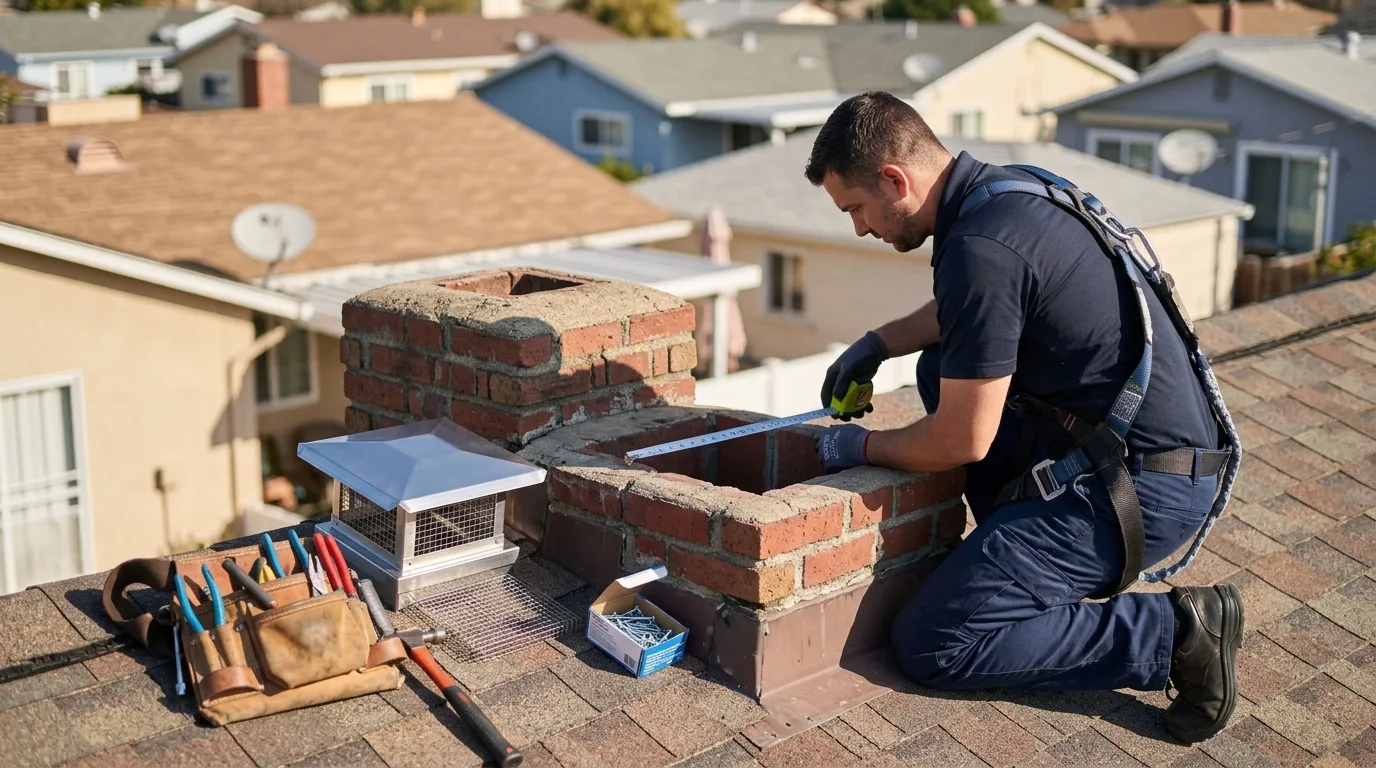
Most single-flue installations on an accessible roof finish in under an hour. A written quote should reflect every factor above, not just the cap itself.
The Best Time to Schedule Installation
Late winter and early spring are the best windows. Fort Worth’s storm season picks up in spring.
Installing a cap before storm season reduces the risk of losing it to wind or hail later. A cap installed after a storm is often a reactive fix, not a planned one.
Scheduling ahead of storm season also means more flexibility. Technicians book up fast once storm damage starts coming in.
Waiting until a cap fails isn’t a cost-saving strategy. It usually means an urgent appointment instead of a planned one.
What a Written Quote Should Include
A complete quote lists the material by name. It lists the cap’s size and shape.
It states whether removal of an old cap is included. It states whether flashing or sealant work is included.
It states whether a crown or flue inspection is part of the visit. It’s provided in writing before any work starts.
A quote missing any of these items isn’t complete. Ask for the missing piece before agreeing to the work.
Comparing quotes only works when each one covers the same list. A lower number that skips removal or flashing isn’t actually lower once those get added later.
Why DIY Installation Isn’t a Good Way to Save Money
DIY installation means climbing onto a sloped roof. It means doing this without professional fall protection.
That’s the same risk covered in chimney cap blew off. DIY also means measuring and fitting the cap correctly.
This is harder on an older or non-standard chimney. A poorly fitted DIY cap is more likely to blow off in the next storm.
That means paying for the job twice.
How Cap Lifespan Affects Long-Term Cost
A cheaper cap that needs frequent replacement can cost more over time. A pricier cap that lasts decades can cost less over time.
Galvanized steel has the shortest lifespan of the common materials. This is especially true in a humid climate like Fort Worth’s.
Stainless steel and copper cost more upfront. They spread that cost over a much longer lifespan.
This often makes them the better value over time.
What Happens If You Delay Installation
Every month without a cap exposes the flue to rain, debris, and animals. Any of these can cause problems that cost more than the cap itself.
See chimney cap blew off for what happens to an exposed flue over time. Delaying doesn’t lower the eventual cost.
It usually just adds the cost of fixing whatever got in during the wait.
When to Call a Professional Now vs. Later
Some cap problems can wait for your next scheduled inspection. Others can’t.
Call right away if you can see daylight through the mesh, if the cap sits crooked or rattles in the wind, or if water is entering the flue during rain. Any of these means the cap is already failing at its main job.
A few surface rust spots with no gaps or looseness can typically wait. So can a cap that’s still mounted solidly with only minor cosmetic wear.
When in doubt, treat it as urgent. A cap that fails completely during a storm adds new exposure on top of whatever caused it to fail in the first place.
A same-day chimney cap assessment settles which category your cap falls into.
Getting an Accurate Quote
Every factor above changes the final number. The only way to get an exact price is to have your chimney measured and assessed.
See chimney cap installation for a written quote based on your flue, your roof, and your chosen material. If your chimney’s crown or flue condition needs a closer look first, a chimney inspection can confirm what’s needed before you get a quote.