
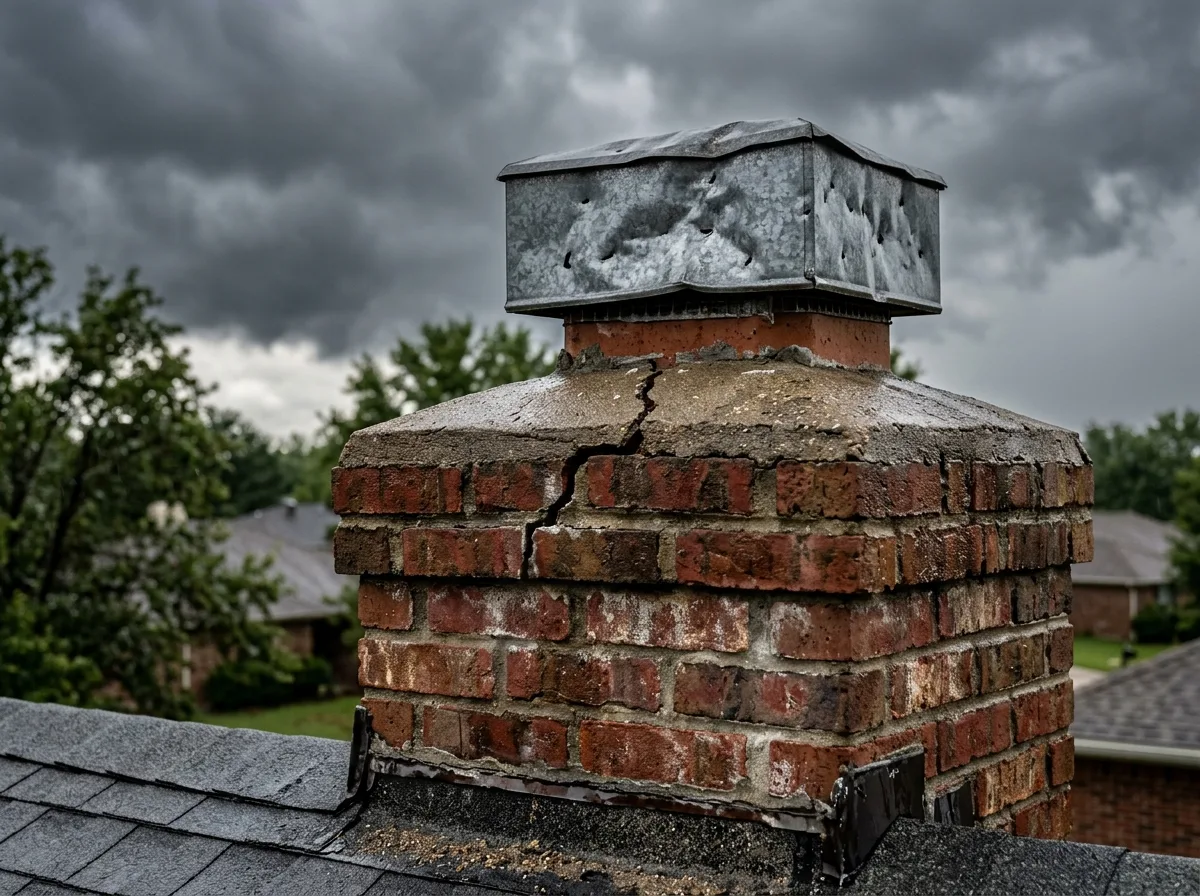
Your chimney is leaking after hail. Three parts usually cause this: the cap, the crown, or the flashing. Sometimes it’s more than one.
Protect the inside of your home first. Move anything valuable away from the leak. Place a bucket or towel under the drip.
Don’t climb on the roof yourself. Hail damage is often hard to see from the ground.
If you want a professional look today, Chimney Sweep Pro can inspect it — (682) 354-6644.
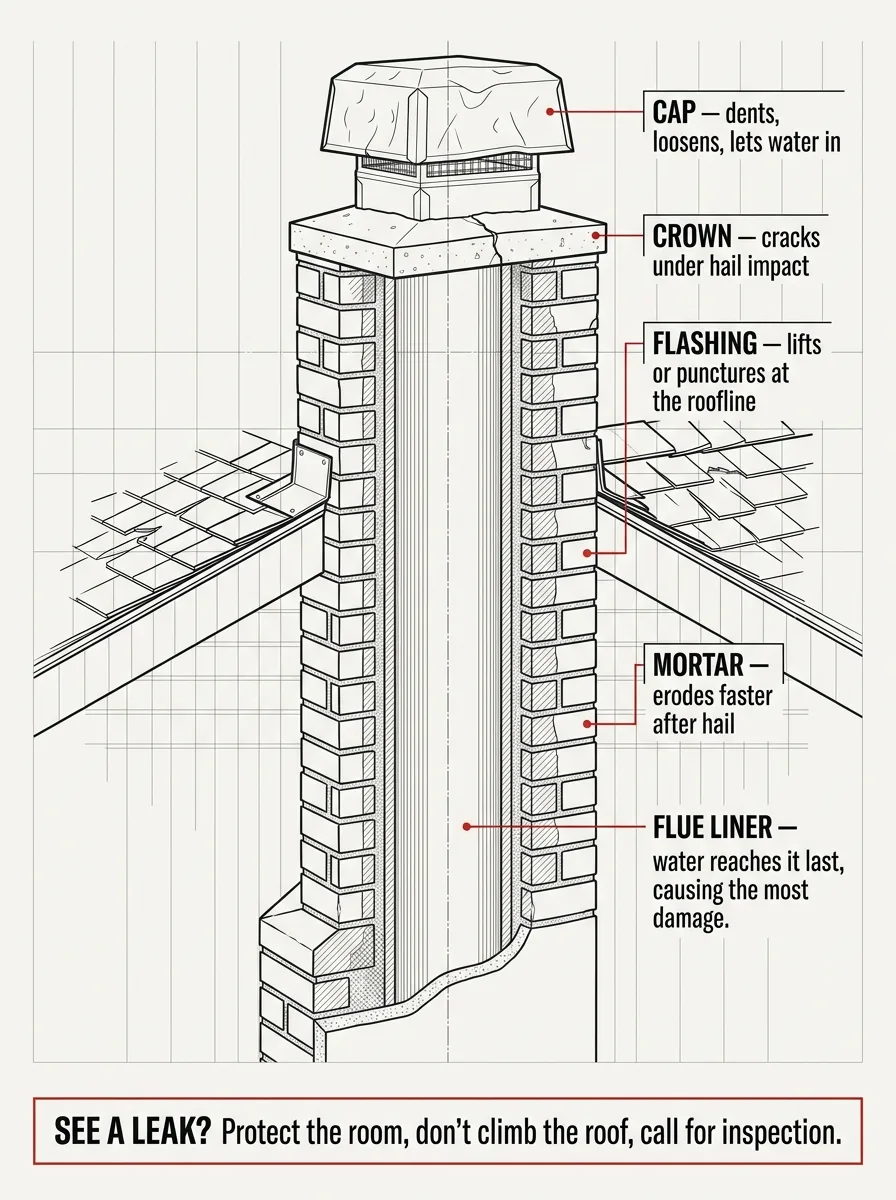
Why Hail Causes Chimney Leaks
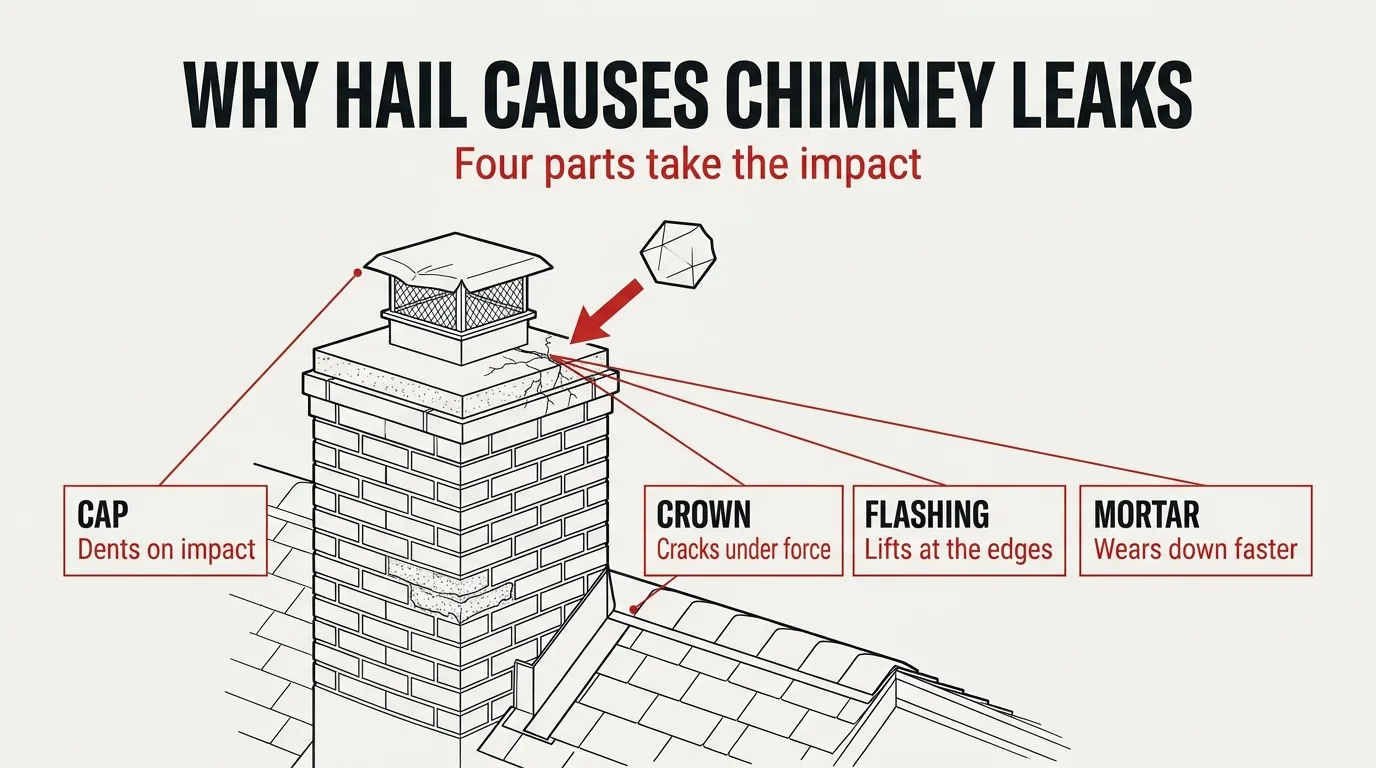
Hail hits the chimney the same way it hits the roof. It dents metal. It cracks concrete. It lifts thin material at the edges.
Four parts are most vulnerable. The cap. The crown. The flashing. The mortar joints.
Any one of these can let water in after a hailstorm.
What to Do Right Now
Move furniture and belongings away from the leak. Water damage spreads fast once it starts.
Place a bucket or towel under the drip. This limits damage while you wait for an inspection.
Don’t go on the roof to look for the cause. Hail damage is often small and hard to spot from a ladder.
Take photos of any visible damage from the ground. Do this before any cleanup starts.
Which Part Is Likely at Fault
| Symptom | Likely cause | What it looks like |
|---|---|---|
| Leak starts right after a specific hailstorm | Cap or crown damage | Dents, cracks, or a cap sitting crooked |
| Leak appears near where the roof meets the chimney | Flashing damage | Lifted, bent, or punctured metal strips |
| Leak gets worse gradually over several storms | Mortar erosion | Crumbling or missing mortar between bricks |
| Water enters even during light rain | Multiple components damaged | More than one issue is usually present |
This table narrows down the cause. A professional inspection confirms it.
Chimney Cap Damage From Hail
Hail can dent a chimney cap. Dents don’t always mean the cap has to be replaced.
Hail can also crack the fasteners holding the cap in place. A loosened cap can shift or let water past its edges.
Hail can damage the mesh screening on the cap. Torn mesh no longer blocks debris or sparks the way it should.
Chimney Crown Cracking From Hail Impact
The crown is the concrete slab on top of the chimney. It’s the main barrier against water reaching the flue.
Hail impact can crack this concrete. Cracks let water seep directly into the masonry below.
A cracked crown often isn’t visible from the ground. It usually takes a rooftop inspection to confirm.
Flashing Damage at the Roof-Chimney Junction
Flashing is the metal strip sealing the gap between the chimney and the roof. It’s one of the most common sources of chimney leaks in general, not just after hail.
Hail can lift, bend, or puncture flashing. Once it’s compromised, water runs straight down into the attic or ceiling.
Flashing damage often shows up as a stain on the ceiling near the chimney, not as a visible drip at the fireplace.
Mortar Joint Erosion Accelerated by Hail
Mortar joints hold the bricks together. Hail speeds up wear that would otherwise happen slowly over years.
Cracked or missing mortar lets water into the brick itself. Repeated freeze-thaw cycles after that make the damage worse.
This type of damage tends to show up gradually. It’s not always tied to one single storm.
What Size Hail Actually Causes Chimney Damage
Not every hailstorm damages a chimney. Insurers and meteorologists generally treat hail at or above one inch across, roughly the size of a quarter, as large enough to damage roofing and masonry.
Pea- or dime-sized hail usually doesn’t crack a crown or dent a cap on its own. It can still work dust and debris into gaps that already exist.
Wind matters as much as size. A moderate hailstorm with strong gusts can do more damage than a larger hailstorm with little wind, because wind drives the hail sideways into the chimney instead of straight down.
The National Weather Service logs hail size for storms that pass through the area. That record can support an insurance claim even without a hailstone saved for proof.
How to Tell Hail Caused It, Not General Wear
A leak that starts right after a specific storm points to hail. A leak that’s been getting slowly worse over months points to general wear.
Visible dents on the cap or metal flashing are a hail-specific sign. Gradual mortar crumbling with no dents anywhere is more likely just age.
Either way, the fix is similar. The cause matters most for insurance purposes.
No Active Leak Yet, But You Suspect Damage
Hail can damage a chimney without causing an immediate leak. Cracks in the crown or flashing sometimes take weeks to start letting water through.
Get an inspection soon after a hailstorm, even without visible dripping. Catching the damage early is easier and safer than waiting for a leak to appear.
This is especially true after a severe or prolonged hailstorm. Damage from a bad storm is often present even when no leak has started yet.
Documenting Hail Damage for an Insurance Claim
Take dated photos of any visible exterior damage. Do this as soon as it’s safe to do so.
Get a professional inspection report. This documents damage that isn’t visible from the ground, like a cracked crown or damaged flashing.
Keep a record of the storm date. Many insurers ask when the damage occurred, not just when you noticed it.
Does Insurance Typically Cover This?
Often, yes. Storm and hail damage is usually covered under a standard homeowner’s policy, unlike damage from gradual wear.
Coverage depends on your specific policy. Some policies have separate hail or wind deductibles.
Contact your insurance provider directly to confirm what your policy covers. Ask what documentation they require before you file.
How Soon to File a Claim After a Storm
File as soon as you have documentation. Most policies have a window for reporting storm damage, and waiting too long can complicate a claim.
Get the professional inspection report before filing if possible. A claim backed by a documented assessment moves faster than one based on a homeowner’s description alone.
Don’t wait for a second storm to make the decision. Damage from an earlier storm can be harder to prove once more weather has passed.
Multiple Hailstorms in One Season
Fort Worth can see more than one significant hailstorm in a season. Damage from an earlier storm can make the chimney more vulnerable to the next one.
A cap already loosened by one storm is more likely to blow off during the next. A crown already cracked can widen with each new impact.
This is why an inspection after the first storm matters, even if the damage looks minor at the time.
Why DIY Damage Assessment Is Risky
Checking for hail damage means going on the roof. This carries the same fall risk covered in chimney cap blew off.
Hail damage is also easy to miss without training. A hairline crack in the crown or a slightly lifted flashing edge isn’t always obvious, even up close.
A CSIA-certified professional inspection catches what a homeowner’s walkthrough usually misses.
What Happens If Hail Damage Goes Unaddressed
Water intrusion gets worse over time, not better. A small leak today can reach the flue liner, the firebox, or nearby framing within a few storms.
Mold and structural damage can follow prolonged water exposure. What starts as a cap or flashing repair can become a larger masonry or interior repair.
Addressing the damage after the first storm is almost always simpler and less invasive than waiting.
Fort Worth’s Hail and Its Effect on Chimneys
Fort Worth sees significant hailstorms most years, more than many parts of the country. This makes chimney cap, crown, and flashing damage a recurring local issue, not a rare event.
Fort Worth’s clay soil and freeze-thaw cycles also play a role. Cracks that start from a hail impact widen faster here than in a drier, more stable climate.
Older masonry chimneys are generally more vulnerable to this combination. Age and prior wear make hail damage more likely to turn into an active leak.
Older Fort Worth Neighborhoods and Hail Vulnerability
Age changes how a chimney holds up to hail. Neighborhoods like Fairmount, Ryan Place, and Mistletoe Heights have a large share of homes built before 1950, many with original lime-mortar chimneys.
Lime mortar is softer than the portland-cement mortar used in newer construction. It erodes faster once hail impact and freeze-thaw cycles start working on it.
A newer chimney with portland-cement mortar and a properly seated cap generally holds up better against the same storm. That doesn’t make it immune, especially if the cap or flashing was already aging.
If your home sits in one of Fort Worth’s older, established neighborhoods, treat a hailstorm as a reason to get the chimney checked even if nothing looks obviously wrong yet.
What a Professional Hail Damage Inspection Involves
A hail damage inspection starts on the ground. A technician looks for the obvious signs first: a crooked cap, a cracked crown visible through binoculars, or a stain on the siding below the chimney.
The next step is a rooftop visual check. This covers the cap, crown, flashing, and mortar joints up close, the parts that are hardest to judge from the ground.
A moisture meter checks whether water has already reached the masonry or the flue liner, even without a visible leak yet. This can catch a slow leak before it shows up as a stain inside the home.
On a chimney with an older or questionable liner, a technician may run a video scan of the flue interior. This confirms whether water reached the liner itself, not just the outer masonry.
The inspection ends with a written report listing what’s damaged and what fixing it involves. That report is also what most insurers ask for when you file a claim.
When to Call a Professional
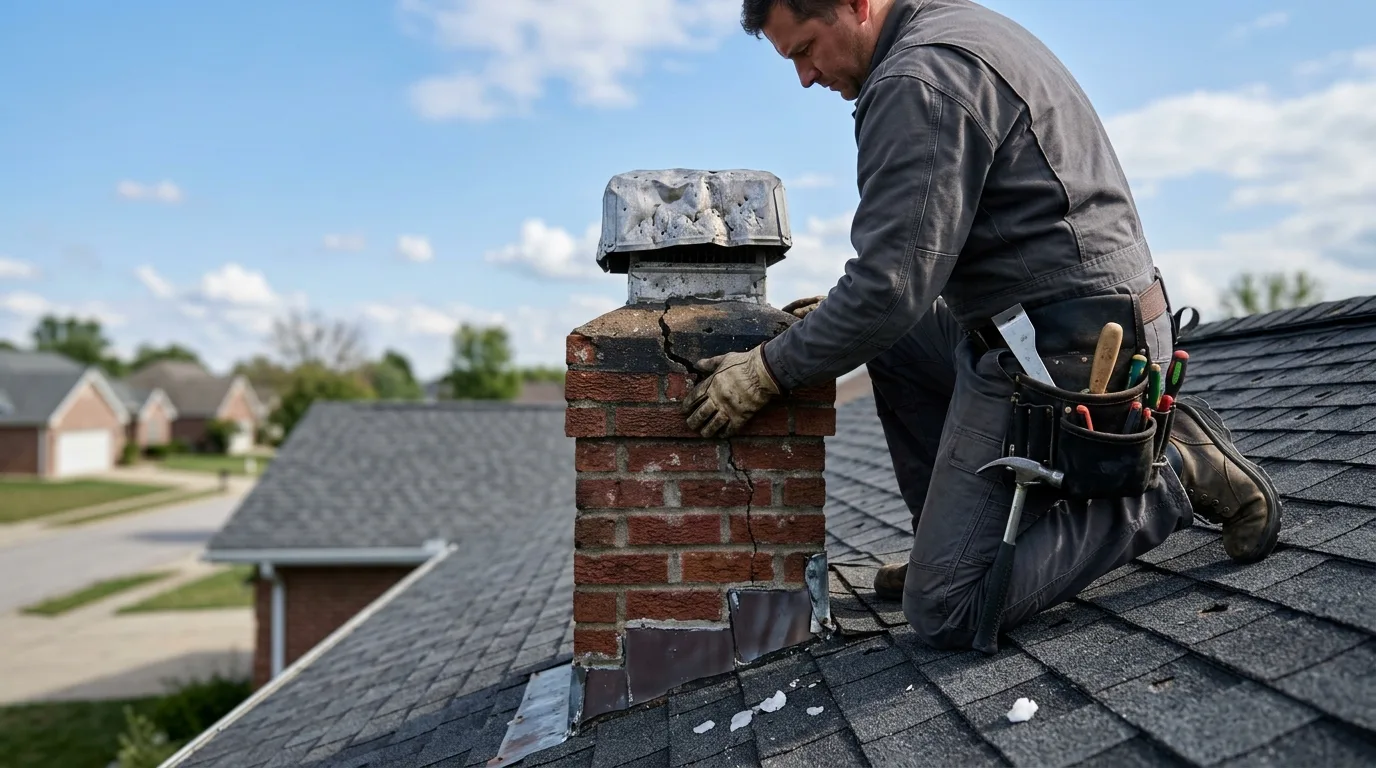
Call right away if you see an active leak. Call soon after a significant hailstorm even without a visible leak yet.
A chimney leak repair visit fixes an active leak and identifies its source. A chimney inspection checks for hail damage before a leak starts.
If the cap turns out to be the cause, see chimney cap blew off for what a damaged or dislodged cap means long-term. For broader structural damage, see chimney repair.