
Dryer vent fires start when heat meets lint, clothing, or another flammable material faster than the dryer can vent it. Lint buildup is the leading cause, but it is not the only one.
If your dryer is on fire right now, get everyone out and call 911 first. The full steps are in the emergency section below.
Chimney Sweep Pro cleans dryer vents for Fort Worth homeowners from our base in Saginaw, TX. To book a cleaning, call (682) 354-6644.
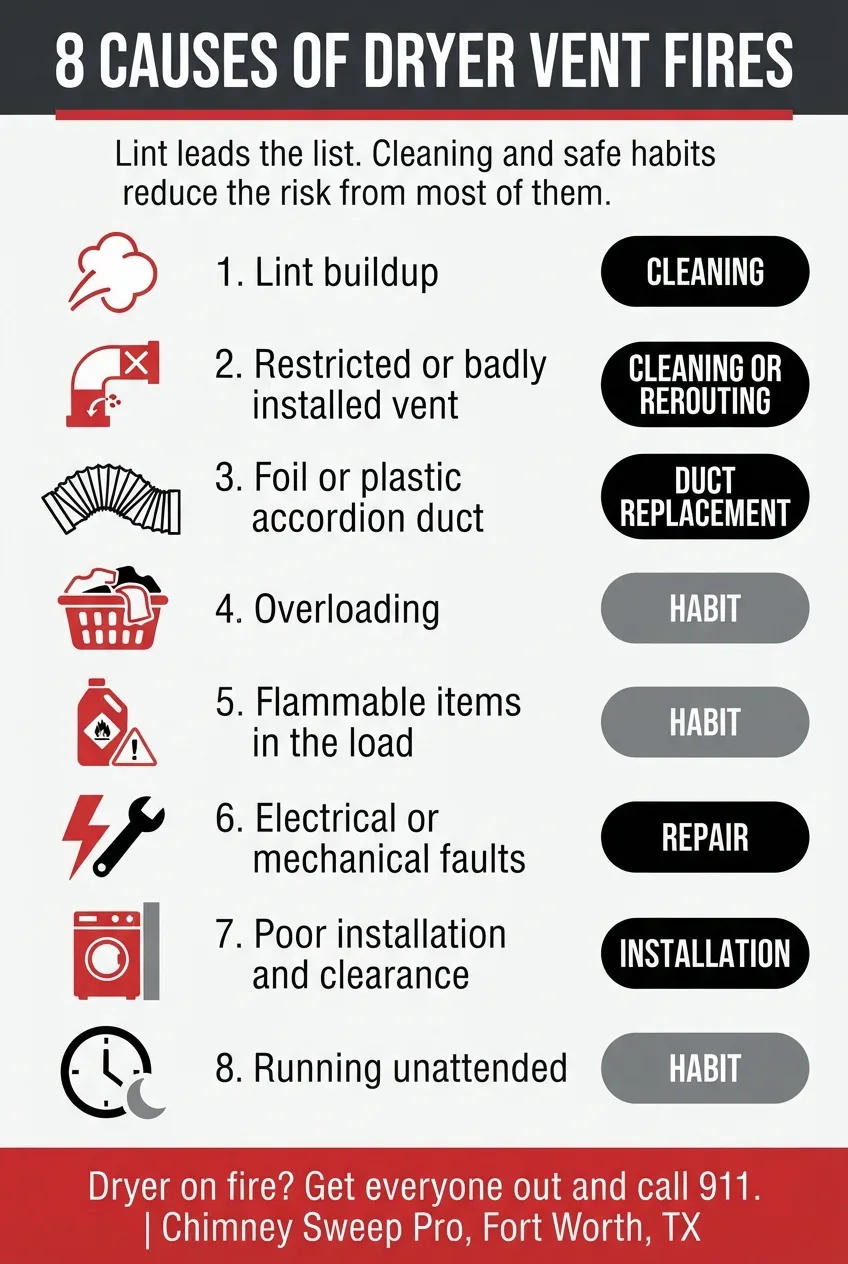
Dryer vent fires at a glance
The main causes of dryer vent fires are lint buildup, restricted or badly installed vents, foil or plastic duct, overloading, flammable items in the load, electrical or mechanical faults, poor installation and clearance, and running the dryer unattended. Lint buildup leads the list. Routine cleaning and safe habits reduce the risk from most of them.
| Cause | What happens | Type of fix |
|---|---|---|
| Lint buildup | Combustible lint packs the duct and traps heat | Cleaning |
| Restricted or badly installed vent | Heat and lint stay inside the dryer | Cleaning or rerouting |
| Foil or plastic accordion duct | The duct sags and collects lint | Duct replacement |
| Overloading | A packed drum traps heat | Habit |
| Flammable items in the load | Chemical residue can ignite | Habit |
| Electrical or mechanical faults | Faulty parts overheat or spark | Repair |
| Poor installation and clearance | A crushed duct and nearby clutter raise the risk | Installation |
| Running unattended | No one is there to catch a fire early | Habit |
What should you do if your dryer catches fire?
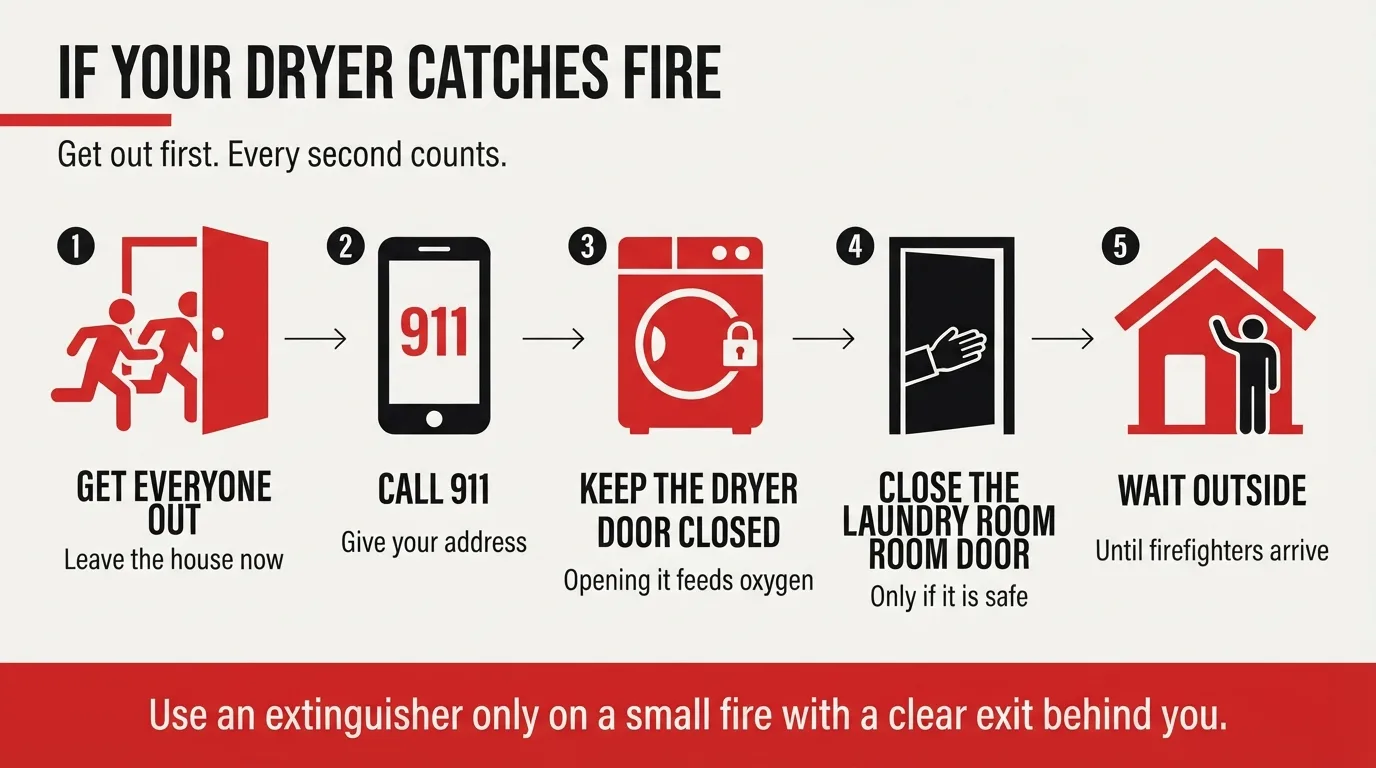
Get everyone out of the house and call 911. Tell the dispatcher your address. Keep the dryer door closed, because opening it feeds oxygen to the fire. If it is safe, close the laundry room door behind you and wait outside until firefighters arrive.
Using a fire extinguisher
Use an extinguisher only on a small fire and only with a clear exit behind you. If the fire grows or smoke builds, leave.
If the fire looks out
Call 911 even when the fire looks out. Fire can keep smoldering inside the duct.
Unplug the dryer only when the fire is completely out and the cord and connections are undamaged.
How common are dryer vent fires?
Fire departments respond to around 13,820 home fires a year caused by clothes dryers, according to recent National Fire Protection Association figures reported by Consumer Reports. Those fires cause about seven deaths and 344 civilian injuries a year.
Older reports give different totals because they cover other years and, in some cases, washing machines too.
Which type of dryer is more likely to cause a fire, gas or electric?
Neither type is clearly safer, because sources disagree. Some report more fires in electric dryers, but most U.S. homes use electric dryers. An older NFPA fact sheet found the risk slightly higher for gas dryers. Both types need a clean vent and regular inspection.
A gas dryer adds one more check. A professional should inspect the gas line and its connection for leaks.
If you smell gas near the dryer, leave the house and call the gas company or 911.
What causes dryer vent fires?
Dryer vent fires need heat and fuel, and each cause below adds one or both.
Lint buildup in the lint trap and vent
Lint buildup is the leading cause of dryer fires. Lint burns easily, and a packed duct traps heat.
The U.S. Fire Administration lists failure to clean as the leading factor in home clothes dryer fires, at 31 percent from 2018 to 2020. National Fire Protection Association data shows lint and clothing are the items that most often ignite first.
Lint from synthetic fabrics is especially combustible, according to UL Solutions. The lint screen catches some lint on each cycle, not all of it.
Restricted or badly installed vents
A restricted vent holds heat and lint inside the dryer. Long runs, sharp bends, crushed duct, and a blocked exterior hood all restrict airflow. See dryer vent length and routing for the 35-foot limit, how bends count, and how to measure your own run.
The exterior hood can clog with leaves and bird nests, especially after windy weather, according to Consumer Reports.
Some dryers have blockage indicators. Consumer Reports testing found they detect full blockages better than partial ones.
Foil or plastic accordion duct
Foil and plastic accordion duct is a fire risk because it can sag. Lint collects at the low points and in the ridges.
Whirlpool does not recommend aluminum foil or plastic duct because it can collapse or be crushed.
Overloading the dryer
Overloading traps heat in the drum. A packed drum leaves less room for air to move, and extra heat raises the risk of fire.
Flammable items in the load
Clothes soiled with gasoline, cooking oil, cleaning agents, or other flammable chemicals can ignite in a dryer. The Consumer Product Safety Commission flags these items because volatile chemicals can remain in the fabric.
Electrical and mechanical faults
Electrical and mechanical faults cause a share of dryer fires that cleaning cannot prevent. After failure to clean, they are among the next leading causes in NFPA data.
Worn parts and faulty wiring can overheat or spark.
Poor installation and clearance
A dryer pushed tight against the wall can crush the duct behind it. Clutter near the dryer can burn if the dryer overheats.
Sheet-metal screws in duct joints can catch lint, according to the Town of Clayton, NC and Consumer Reports.
Running the dryer while you sleep or are away
A dryer that runs unattended gives no one the chance to catch a fire early. Nobody is there to notice a burning smell or smoke.
How do you prevent dryer vent fires?
You prevent dryer vent fires by keeping lint and heat from building up and by using the dryer safely. The ten habits below cover the cleaning, the duct, the load, the room around the dryer, and when to run it.
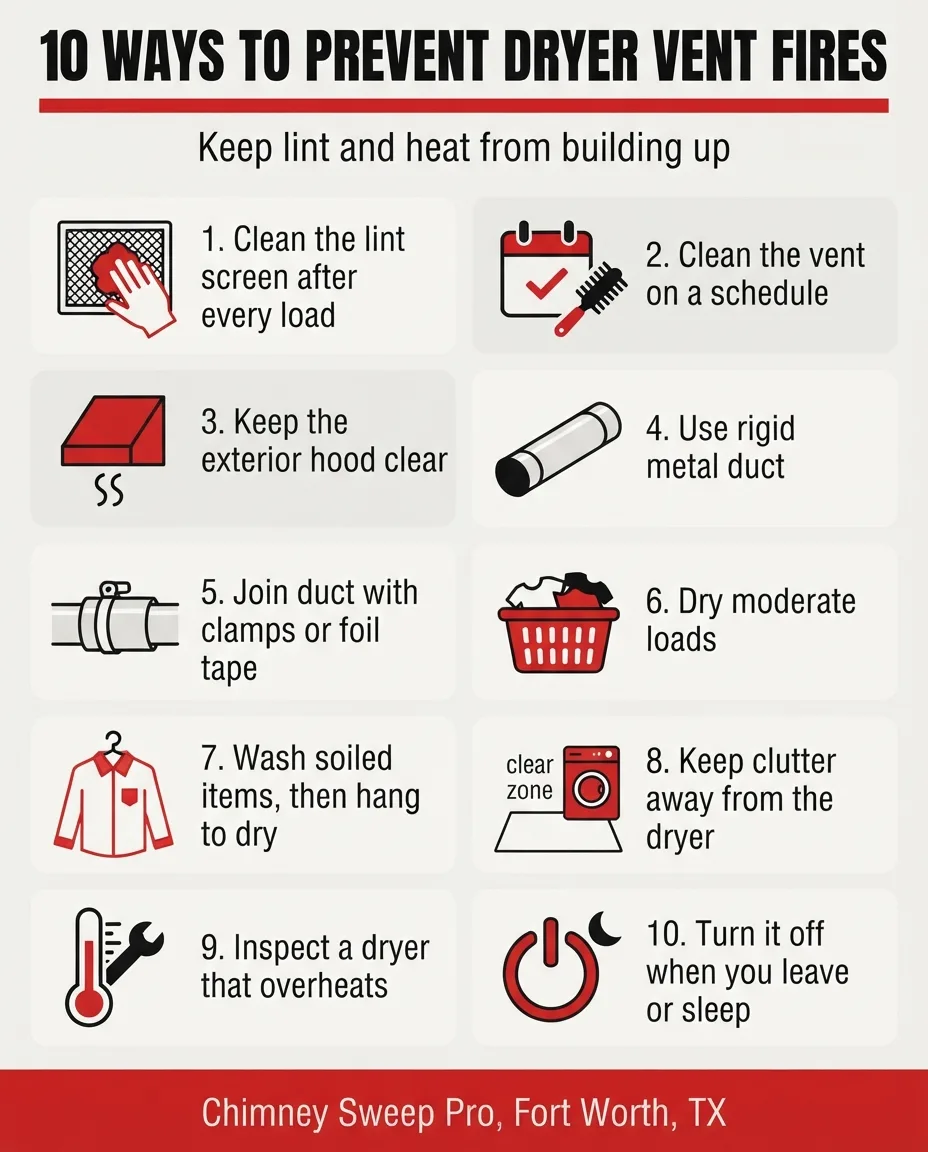
- Clean the lint screen after every load.
- Clean the vent on a schedule. The guide to how often to clean a dryer vent gives intervals by household.
- Keep the exterior hood clear. Check it after windy weather.
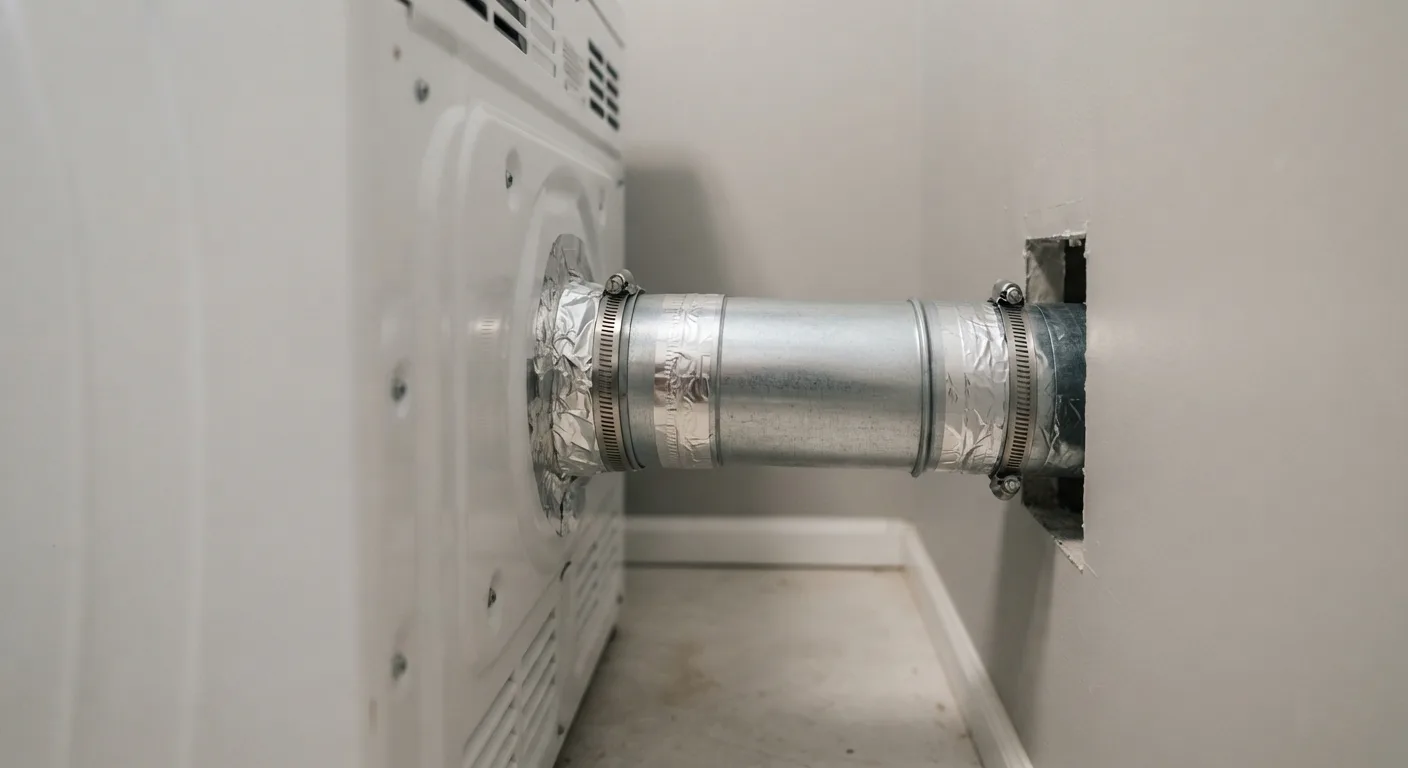
- Use rigid metal duct, and replace foil or plastic accordion duct. The testing engineer at Consumer Reports recommends rigid metal duct, with flexible metal duct as a second choice.
- Join duct sections with metal clamps or foil tape. Do not use sheet-metal screws.
- Dry moderate loads. Do not pack the drum.
- Wash soiled items more than once and hang them to dry. This applies to laundry stained with gasoline, cooking oil, cleaning agents, or other flammable chemicals. If you must use the dryer, choose the lowest heat setting and a cycle that ends with a cool-down period.
- Keep clutter and combustible items away from the dryer. Leave room behind it so the duct is not crushed.
- Have a technician inspect a dryer that makes unusual sounds or overheats.
- Turn the dryer off before you leave the house or go to bed. AAA also advises unplugging the dryer if you will be away for an extended time.
Warning signs before a dryer vent fire
Long dry times, a very hot dryer, and a burning smell often come before a dryer vent fire. The signs of a clogged dryer vent explain each one and how to test airflow.
Chimney Sweep Pro can clear a blocked vent before it becomes a hazard. Call (682) 354-6644.
What should you do after a dryer fire?
Do not open the dryer until firefighters say it is safe. Take photos or notes of the damage, contact your insurance company, and get medical attention if anyone breathed smoke, even if they feel fine. Have the vent inspected before you use the dryer again.
AAA advises checking that your homeowner’s insurance covers fire and smoke damage.
Fire safety setup for the laundry area
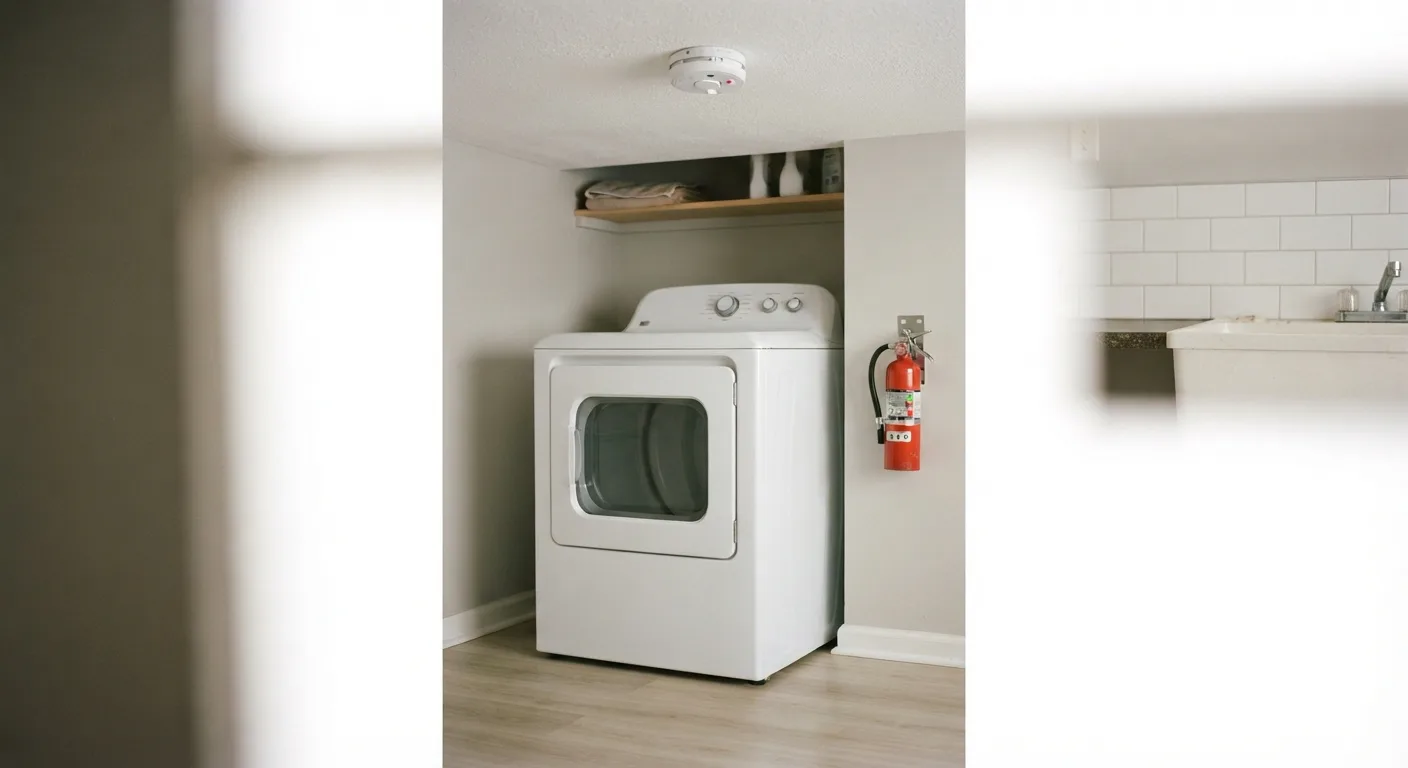
Install a smoke alarm in or near the laundry area for early warning. Keep a fire extinguisher within easy reach of the dryer.
Dryer vent fires in Fort Worth homes
Some Fort Worth homes route the dryer vent through the attic to a roof exit. A fire inside a hidden attic run is harder to spot than one in a short wall vent.
Homes with an interior or upstairs laundry room often need longer runs than homes with the dryer on an exterior wall. Longer runs add more places for lint to settle.
When to call a professional to reduce dryer vent fire risk in Fort Worth
Call a professional when the vent is hard to reach, when warning signs persist, or when you do not know when it was last cleaned.
- Your vent runs through the attic, up to the roof, or through several bends.
- Signs remain after you clear the screen and hood.
- You have never cleaned the vent, or its history is unknown.
- You have a gas dryer or a dryer that overheats.
Chimney Sweep Pro provides dryer vent cleaning in Fort Worth for homeowners in Fort Worth and nearby areas.
To lower your risk of dryer vent fires, call (682) 354-6644 and have the vent cleaned. For smoke or flames, follow the emergency steps above first.