
The signs of a clogged dryer vent are long dry times, clothes that stay damp, a burning smell, and lint where it does not belong. Fort Worth homeowners see the same signs, and each one points to restricted airflow in the vent line.
Chimney Sweep Pro clears blocked dryer vents for Fort Worth homeowners from our base in Saginaw, TX. If you notice more than one sign, call (682) 354-6644.
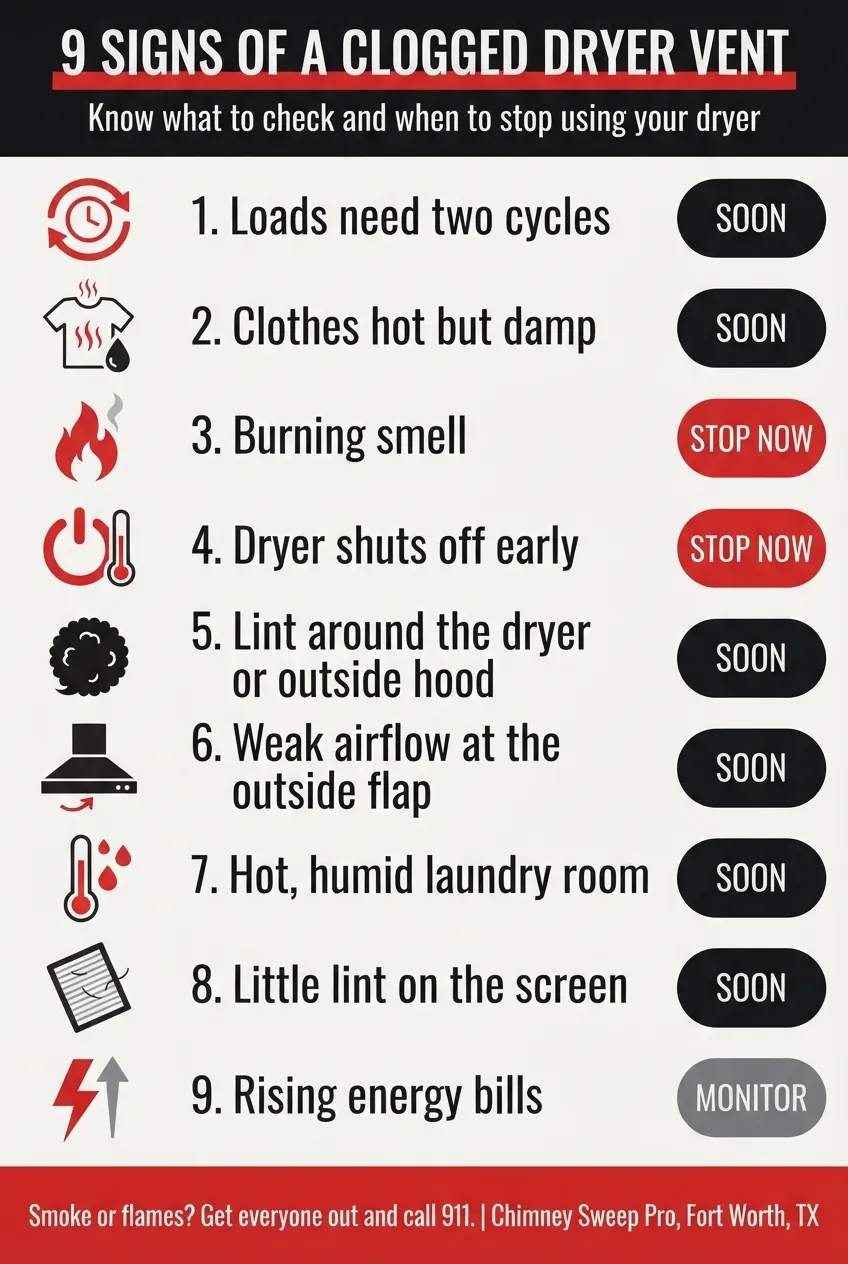
Signs of a clogged dryer vent at a glance
The main signs of a clogged dryer vent are dry times that keep growing, clothes that come out hot but damp, a burning smell, lint around the dryer or outside hood, and weak airflow at the exterior vent. A burning smell is the urgent one. Stop the dryer first, then investigate.
| Sign | What it usually means | Urgency |
|---|---|---|
| Loads need two cycles | Moist air cannot leave fast enough, so moisture stays in the drum | Soon |
| Clothes hot but damp | Heat is trapped because airflow is restricted | Soon |
| Burning smell | Lint may be heating up near the heating element or inside the duct | Stop now |
| Dryer shuts off before the load is done | A safety cutoff may be tripping from overheating | Stop now |
| Lint on the floor, around the door, or at the outside hood | Lint is escaping the vent path | Soon |
| Weak airflow or a flap that barely opens outside | The duct is partly or fully blocked | Soon |
| Hot, humid laundry room or musty smell | Moist exhaust is staying indoors | Soon |
| Very little lint on the screen | Lint may be bypassing the screen, or airflow is too weak to carry it | Soon |
| Rising energy bills | The dryer runs longer to finish each load | Monitor |
What to do at each urgency level
Each urgency label in the table tells you what to do next.
- Stop now. Stop using the dryer and leave it off until the vent is checked. These signs point to overheating.
- Soon. Run the airflow check below to confirm the problem. Then schedule a vent cleaning.
- Monitor. Write down the change and run the airflow check. If the sign stays or grows, treat it as a “soon” sign.
Signs of a clogged dryer vent, one by one
How long should a load of laundry take to dry?
Many dryers finish a medium load in about 30 to 40 minutes, though the exact time depends on your model and the load. If loads routinely take 50 to 70 minutes or more, or need a second cycle, airflow is likely restricted.
Heavy items like towels and jeans usually show the problem first. Track your own normal drying time so you can spot a change.
Clothes that come out hot but still damp
Hot, damp clothes mean the dryer is heating but the moist air is not leaving. The heat has nowhere to go, so it builds up inside the drum.
The top or front of the dryer may feel very hot after a cycle. That extra heat also wears on the dryer and on your clothes.
A burning smell during or after a cycle
A burning smell is the most urgent sign of a clogged dryer vent. Stop the dryer and unplug it.
Lint is highly flammable. Lint caught near the heating element or inside the duct can heat up and give off a sharp smell.
Electrical or smoky odors call for the same response. Do not use the dryer again until the vent has been checked.
If you see smoke or flames, or smoke is filling the room, get everyone out of the house and call 911 first. Keep the dryer door closed if there is a fire inside.
Lint around the dryer, the door, and the outside hood
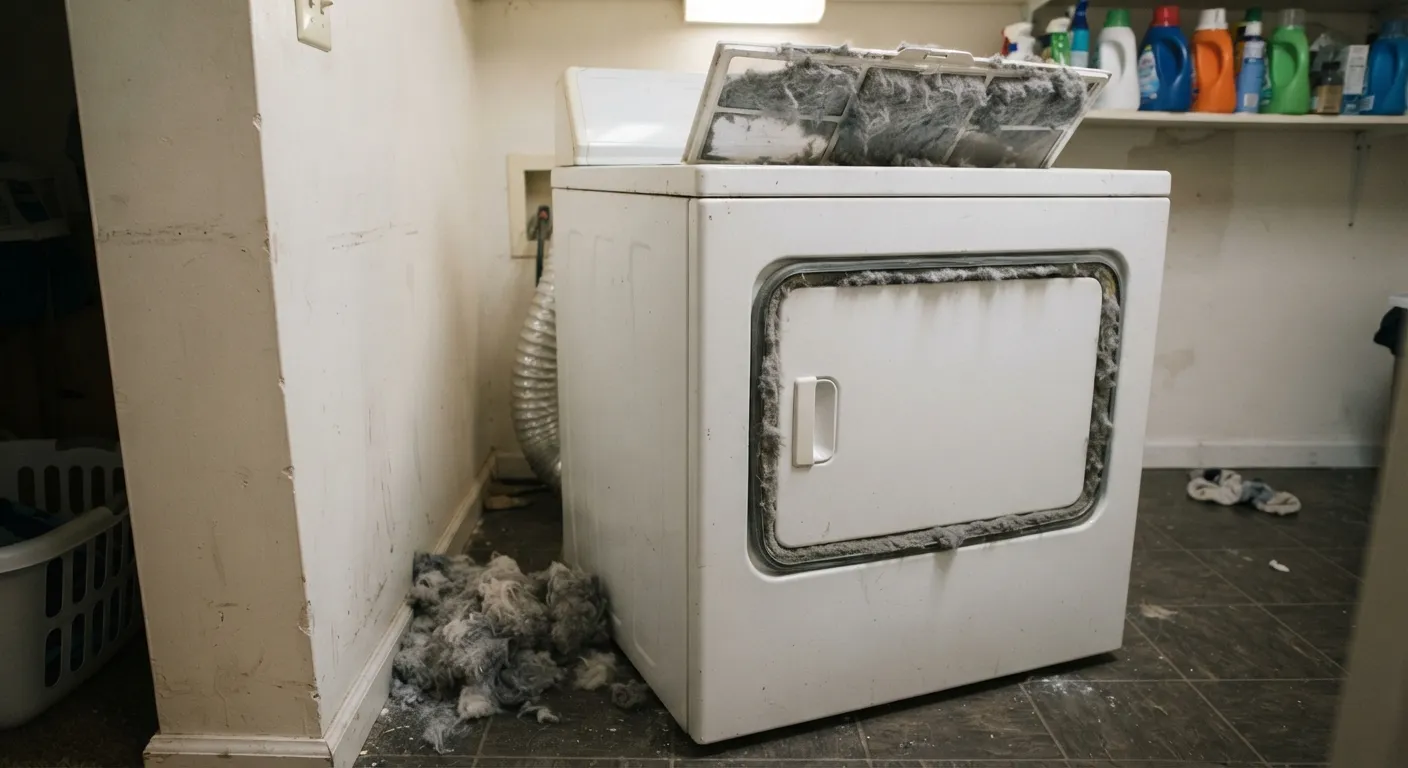
Lint belongs in the lint screen. Lint on the floor beside the dryer, around the door opening, or staining the exterior vent hood means lint is escaping the vent path.
Lint spilling out of the outside hood also means the duct may be partly blocked.
Weak airflow or a flap that barely opens outside
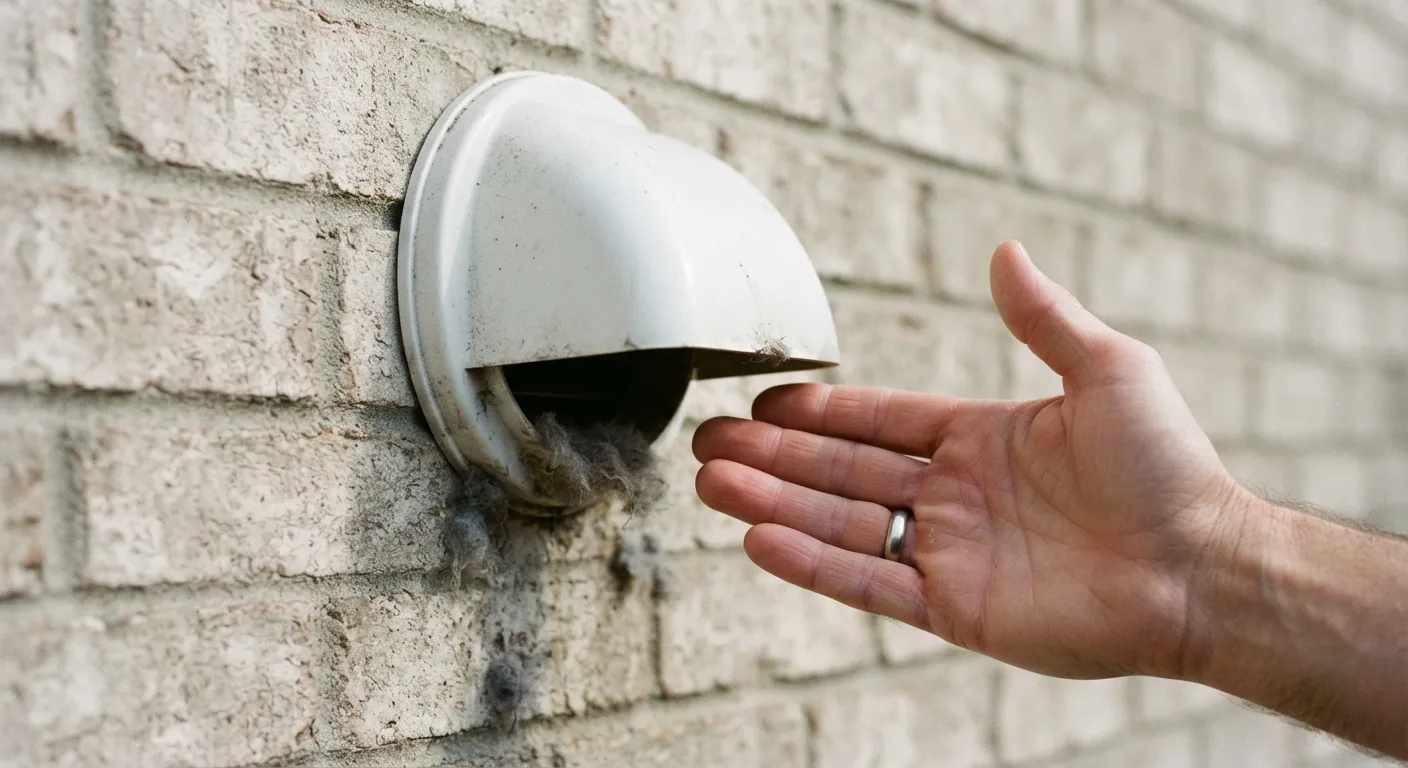
A working vent pushes out a steady stream of warm air, and its flap opens while the dryer runs. Little or no airflow, or a flap that barely lifts, points to a blockage.
This sign shows the problem at the exit of the duct. The airflow check below explains how to test it.
A hot, humid laundry room or a musty smell
Moist exhaust that cannot leave through the vent stays indoors. Your laundry room may feel warmer and more humid than usual, and a musty smell can appear.
Trapped moisture can lead to damp areas and mildew in the vent run or near the vent opening.
Rising energy bills
A blocked vent makes the dryer run longer and work harder, so energy use goes up. If your bills climb and your laundry habits have not changed, the vent is a suspect.
A dryer that shuts off before the load is done
Many dryers include a safety cutoff that shuts the unit down when it overheats. A blocked vent traps heat, so an early shut-off means the cutoff is doing its job.
Treat the shut-off as a signal to get the vent checked right away.
Very little lint on the lint screen
A screen with much less lint than usual can also signal restricted venting. Weak airflow may not carry lint to the screen, and lint that slips past it settles in the duct.
Whirlpool’s product help lists signs of restricted house venting that include long dry times, a warm dryer, moisture inside the dryer, and little lint on the screen.
How to check your dryer vent in 5 minutes
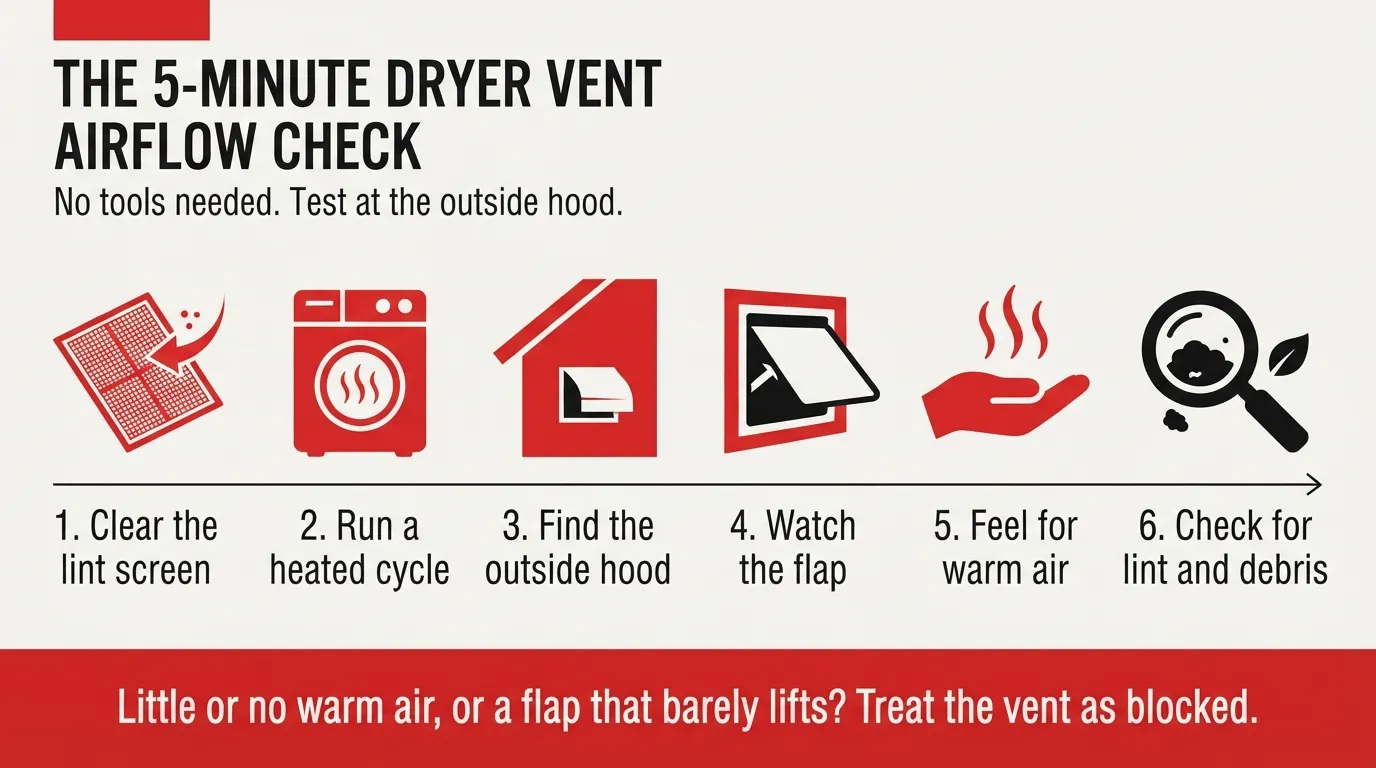
You can test dryer vent airflow with no tools. Each step below is one action, with what to watch for.
- Clear the lint screen. Remove all visible lint. A blocked screen restricts airflow too, so clear it before you test the vent.
- Start the dryer on a heated cycle. Use a load of clothes. A heated cycle pushes out warm air you can feel.
- Find the exterior vent hood. It is usually on an outside wall near the dryer. If you cannot find one, the vent may exit through the roof, and you should not climb up to check it.
- Watch the flap. It should open while the dryer runs. A flap that barely lifts or stays shut means weak airflow.
- Hold your hand near the opening. You should feel a steady stream of warm air. Little or no air means a blockage.
- Look at the hood for lint and debris. Lint staining, leaves, and nesting material all restrict airflow. Do not reach into the hood or duct with your hand.
If any step fails, treat the vent as blocked.
Weak airflow at the hood? Chimney Sweep Pro can find and clear the blockage. Call (682) 354-6644.
Why dryer vents clog
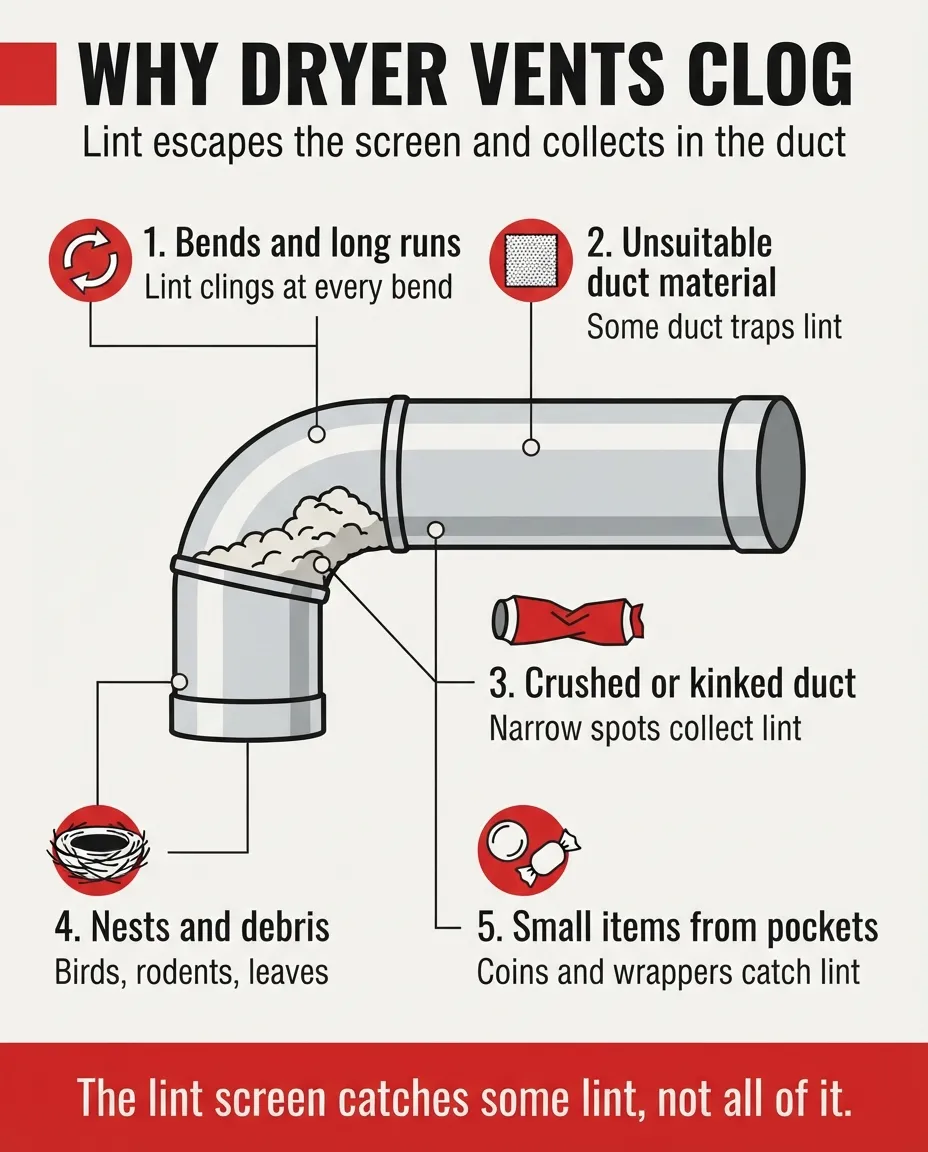
Dryer vents clog because lint escapes the screen and collects in the duct. The screen catches some lint on each cycle, not all of it.
- Bends and long runs. Lint clings to duct walls at every bend, and long runs give it more surface to settle on. Attic routes and multiple 90-degree bends make airflow problems harder to clear. See dryer vent length and routing for the 35-foot limit and how bends count against it.
- Unsuitable duct material. Some duct materials trap lint. Dryer manufacturers recommend rigid or semi-rigid metal duct.
- Crushed or kinked duct. A duct squeezed behind the dryer or inside a wall narrows the airflow path. Lint builds up at the narrow point.
- Nests and debris. Birds and rodents can nest in the exterior vent, and leaves can block the hood.
- Small items from pockets. Coins and gum wrappers can pass into the duct and catch lint.
Cleaning the screen after every load reduces how much lint reaches the duct. Massachusetts fire safety guidance also lists cleaning the filter screen after each load as a basic prevention step.
The guide to how often to clean a dryer vent gives intervals by household.
Gas dryers and carbon monoxide
A gas dryer sends combustion exhaust through the same duct as moist air. If those gases do not leave through the vent, carbon monoxide exposure is possible.
If a carbon monoxide alarm sounds, get everyone outside and call 911 first. If you smell gas near the dryer, leave the house and call the gas company or 911.
Have a qualified professional inspect the gas line and connection of a gas dryer.
Clogged vent or a dryer problem?
The exterior vent test separates the two. Strong airflow at the outside hood with damp clothes points away from the vent and toward the dryer itself.
Overloading the drum also restricts airflow and produces more lint per cycle. A technician can tell you which one is at fault.
What happens if you ignore a clogged dryer vent?
A partly clogged vent keeps getting worse because lint keeps collecting on every load. Heat builds up, and that extra heat wears out dryer components and clothes faster. The blockage also raises fire risk, which the next section explains.
How does a clogged dryer vent cause a fire?
Lint packed into a vent blocks airflow, so heat builds up and can ignite the lint or nearby materials. Lint from synthetic fabrics burns easily, according to UL Solutions.
Failure to clean was the leading factor in home clothes dryer fires from 2018 to 2020, at 31 percent, per the U.S. Fire Administration. Consumer Reports, citing National Fire Protection Association figures, puts home fires caused by clothes dryers at around 13,820 a year.
The full list of causes and what to do in a fire is in the guide to dryer vent fires.
What you can check yourself and what needs a professional
You can safely clean the lint screen, inspect the outside hood, test airflow, and remove lint you can see at the opening. Leave anything beyond that to a professional.
Do not push tools into a duct when you cannot see the end of it. Do not disconnect ducts behind walls.
These signs mean the blockage is deeper in the system:
- Lint keeps returning to the exterior cover.
- Clothes stay damp after several cycles.
- Odors keep coming back.
- The vent runs through the attic, up to the roof, or through several bends.
Clogged dryer vent signs in Fort Worth homes
Some Fort Worth homes route the dryer vent through the attic to a roof exit. Long attic runs give lint more duct to settle in and are harder to clear.
Homes with an interior or upstairs laundry room often need longer duct runs than homes with the dryer on an exterior wall.
Fort Worth summers are hot. A blocked vent adds heat and humidity to a laundry room while your air conditioner is already working hard.
When to call a professional for a clogged dryer vent in Fort Worth
Call a professional when more than one sign shows up, when airflow stays weak after you clear the screen and hood, or when your vent is long, bent, or routed through the attic or roof. Call after any burning smell or early shut-off once the dryer is off and everyone is safe.
Chimney Sweep Pro provides dryer vent cleaning in Fort Worth for homeowners in Fort Worth and nearby areas.
If your dryer shows any of the signs of a clogged dryer vent above, call (682) 354-6644 to have the vent found and cleared. For smoke or flames, follow the 911 steps in the burning smell section first.