
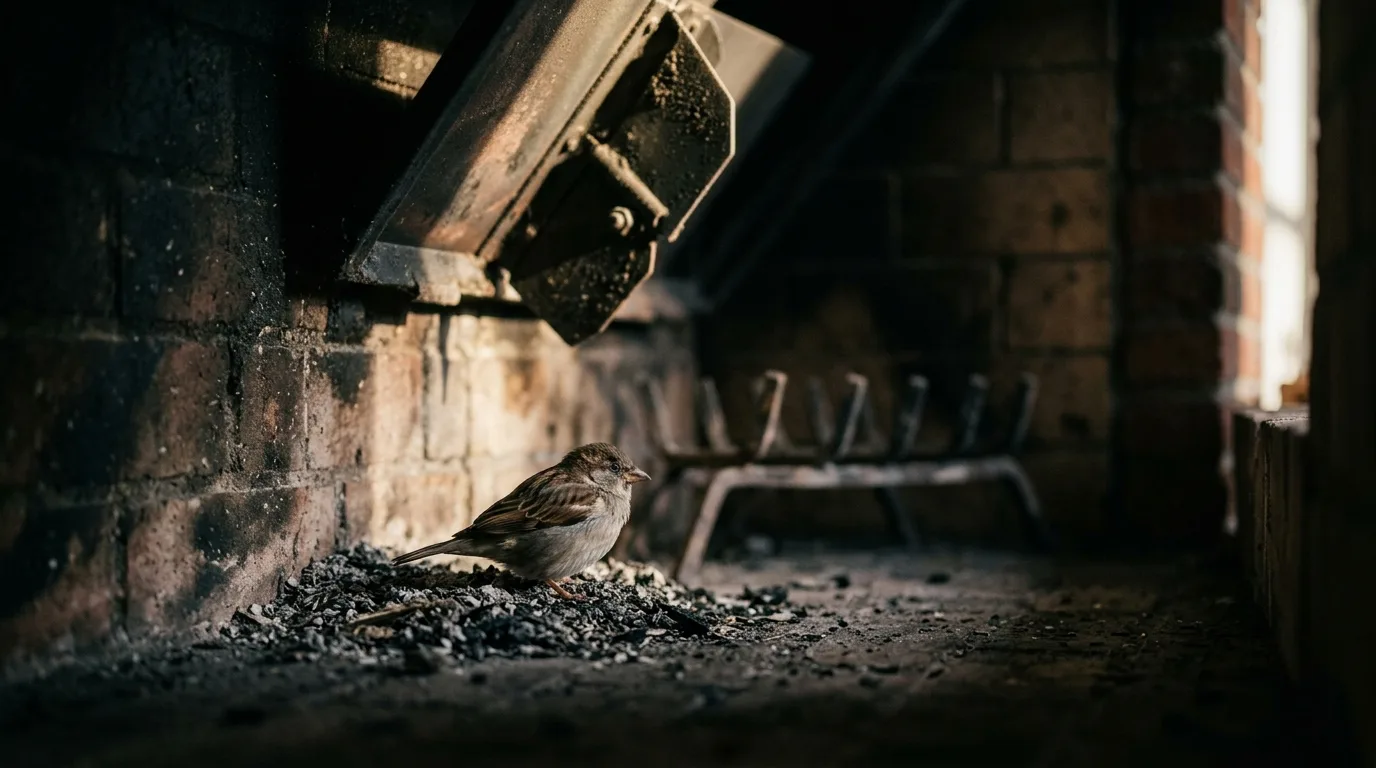
If a bird is stuck in your Fort Worth chimney, don’t light a fire. Open the damper. Darken the room. Open one window or door as the only light source. Most birds fly toward the light and leave on their own within an hour.
This guide covers a few things. How to tell a truly trapped bird from one that’s just nesting. The steps to help it out safely. And when to stop trying and call a professional.
To help a bird stuck in a chimney escape, don’t light a fire or run a gas appliance connected to the flue. Open the damper, darken the room, and open one exterior door or window as the only light source. Most birds find their way out within 30 to 60 minutes. If it doesn’t leave, Chimney Sweep Pro can help — (682) 354-6644.
Trapped or Nesting? How to Tell the Difference
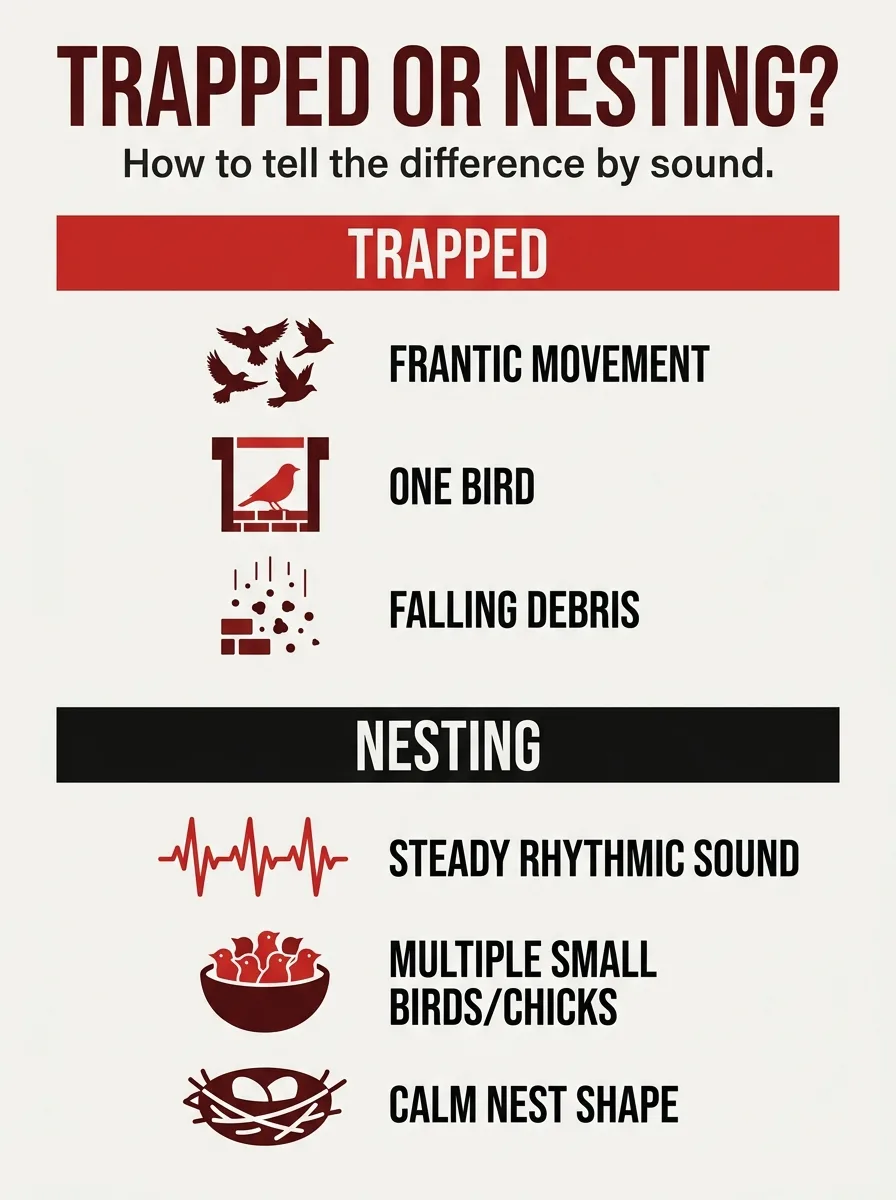
Not every noisy chimney has a trapped bird in it. Chimney swifts nest inside chimneys on purpose. Their chicks make steady, high-pitched chirping, especially around feeding times at dawn and dusk. That sound is normal. It doesn’t mean anything is wrong.
A truly trapped bird sounds different. You’ll hear sudden, frantic flapping, often from one spot that doesn’t move much. Scratching may come and go instead of staying steady. Debris might fall into the firebox as the bird struggles.
If the sound is calm and rhythmic, you likely have a nest, not an emergency. See our guide on bird nest in chimney Fort Worth for what to do next — the legal rules and timing are different for an active nest.
Signs of a Truly Trapped Bird
A trapped bird usually shows a few clear signs. Loud, panicked flapping that doesn’t settle down. Scratching that moves around, as the bird tries different spots. A single bird, rather than the layered chirping of multiple chicks. Debris or soot falling steadily, not just once or twice.
If you’re not sure which you’re hearing, treat it as trapped. The light-and-dark method below is safe either way.
The Light-and-Dark Method: Step by Step
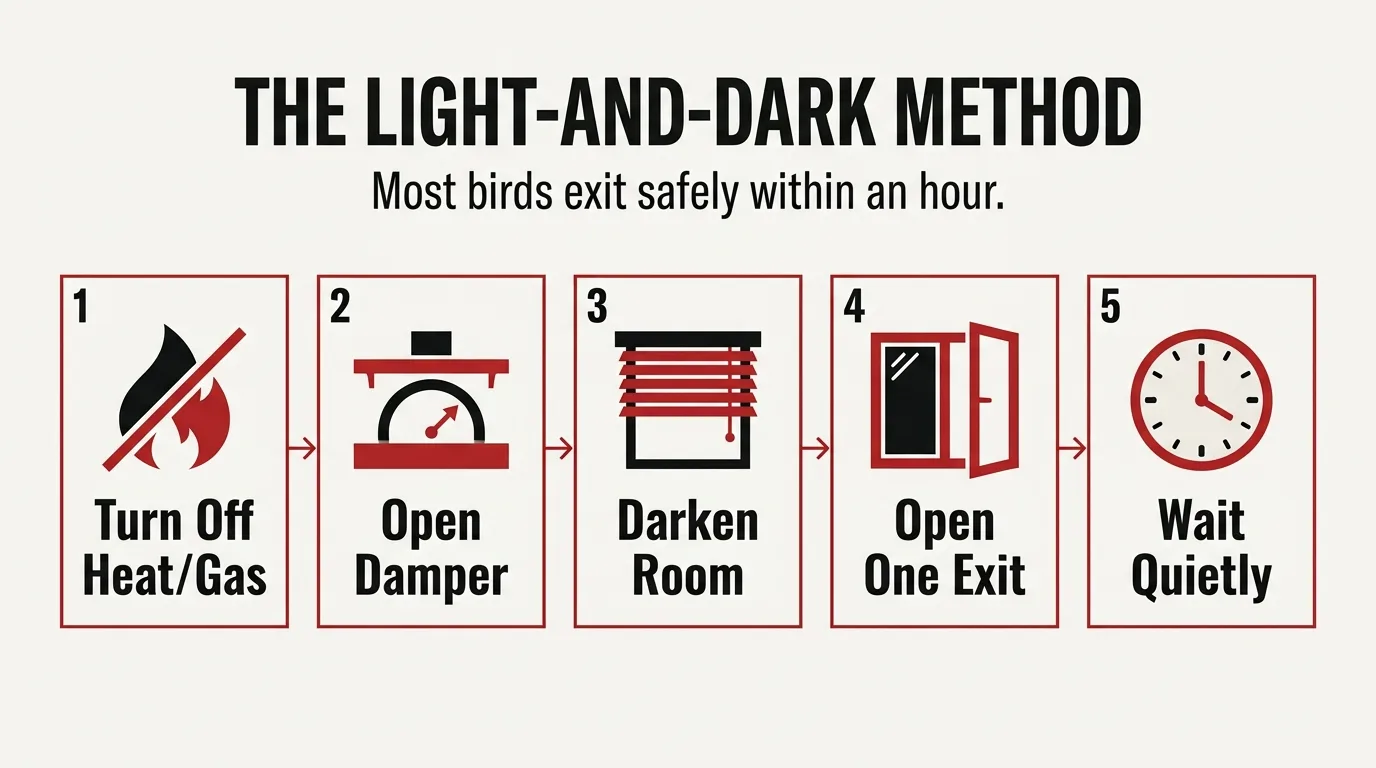
- Turn off the fireplace, heater, or any gas appliance connected to the chimney. Heat and smoke can kill the bird and make it harder to help.
- Open the damper fully. This gives the bird a path down into the firebox.
- Darken the room. Turn off all indoor lights and close blinds or curtains, except at one exit point.
- Open one exterior door or window. This should be the only light source in the room. The bird will usually fly toward it.
- Leave the room and stay quiet. Give the bird space. Movement and noise will stress it further and slow down its exit.
- Wait 30 to 60 minutes. Check back quietly rather than standing in the doorway the whole time.
If the Bird Doesn’t Leave Within an Hour
Sometimes the bird can’t find the exit, or it’s too weak or injured to fly. At that point, stop trying to coax it out yourself. Keep the damper open and the room dark. Call a chimney professional or a local wildlife rehabilitator — the National Wildlife Rehabilitators Association can help you find one.
Don’t light a fire in the meantime, even if the bird has gone quiet. Quiet doesn’t always mean it’s gone.
Why You Shouldn’t Try to Grab the Bird
It’s tempting to reach in and grab the bird once you can see it. Don’t. A frightened bird can scratch or bite, and the stress of being handled can injure it further. Wild birds also carry mites and bacteria that aren’t worth the exposure.
If the bird needs to be physically captured, a professional will use a towel or a box, not bare hands. That method takes practice to do safely.
How Long Can a Trapped Bird Survive?
There’s no single reliable number here, whatever a quick search might suggest. Survival time depends on the species, the temperature inside the chimney, and whether the bird has any access to water. Smaller birds are usually at risk sooner — often within a day or two without water — while larger birds like pigeons can sometimes hold on longer.
What that means in practice: don’t wait and see for multiple days. If the bird hasn’t left within an hour of trying the light-and-dark method, call for help the same day.
Special Cases: Gas Fireplaces and Sealed Chimneys
If the bird is stuck behind a gas fireplace insert, turn off the gas supply right away and don’t attempt to light it. A technician may need to move the insert to reach the bird safely.
If your chimney has no working fireplace, or the flue has been sealed or blocked, the light-and-dark method won’t work the same way. A professional will usually need a flue camera to find the bird, and may need to open a small access point to reach it.
If the Bird Doesn’t Survive
If a bird dies in the chimney, you’ll likely notice a strong odor within a few days as it decomposes. That smell can linger for weeks if the remains aren’t removed. A dead bird can also draw flies, which is unpleasant but a solvable problem.
A chimney sweep can remove the remains and sanitize the flue in one visit. Don’t try to reach the remains yourself — the same handling risks apply as with a live bird.
Fort Worth’s Bird Population and Why Chimneys Attract Them
Fort Worth sits along a major migration corridor. The Trinity River corridor running through the city creates a natural stopover for birds moving north and south each year, which is part of why the area supports so many species even inside city limits.
Chimney swifts are the species most associated with chimney encounters, and for a reason tied to habitat loss. These birds evolved to roost and nest inside hollow trees. As older forests gave way to neighborhoods, chimneys became the closest available substitute — a tall, hollow, vertical space that mimics what a hollow tree once offered. Central Texas populations of chimney swifts typically nest from around April through October, which lines up with the spring-through-fall calls Fort Worth chimney companies see most.
Chimney swifts aren’t the only birds drawn to structures like this. House sparrows, European starlings, and mourning doves are common year-round residents across North Texas neighborhoods, and all three will use a chimney, vent, or eave gap as a nesting or roosting spot if one is available. Purple martins, another cavity-nesting species common in Central Texas roughly March through September, nest almost entirely in human-made housing rather than natural cavities. A bird ending up in your chimney isn’t unusual behavior — it’s often just the species doing what it’s adapted to do for generations.
Preventing This From Happening Again
A stainless steel chimney cap with mesh screening is the most effective way to stop this from happening twice. It blocks birds and other animals from entering while still letting smoke vent normally.
Most Fort Worth chimneys can be capped in a single visit. See chimney cap installation for what that involves. Capping is best done after the current bird is out and, if it’s nesting season, after the nest has been vacated.
Fort Worth’s Nesting Season and Older Chimneys
Bird activity in Fort Worth chimneys picks up in spring and early summer, when chimney swifts and other species are looking for nesting spots. Older masonry chimneys are more likely to have gaps that let birds in — worn mortar joints and cracked crowns give them something to grip that a newer, tighter chimney doesn’t.
Chimney Sweep Pro sees this most in neighborhoods with a lot of pre-1970 masonry housing, including Fairmount, Ryan Place, Mistletoe Heights, Berkeley Place, Ridglea Hills, Westcliff, Near Southside, and the TCU area. If your home fits that pattern, it’s worth having the chimney checked before nesting season starts in March.
When to Call a Professional Immediately
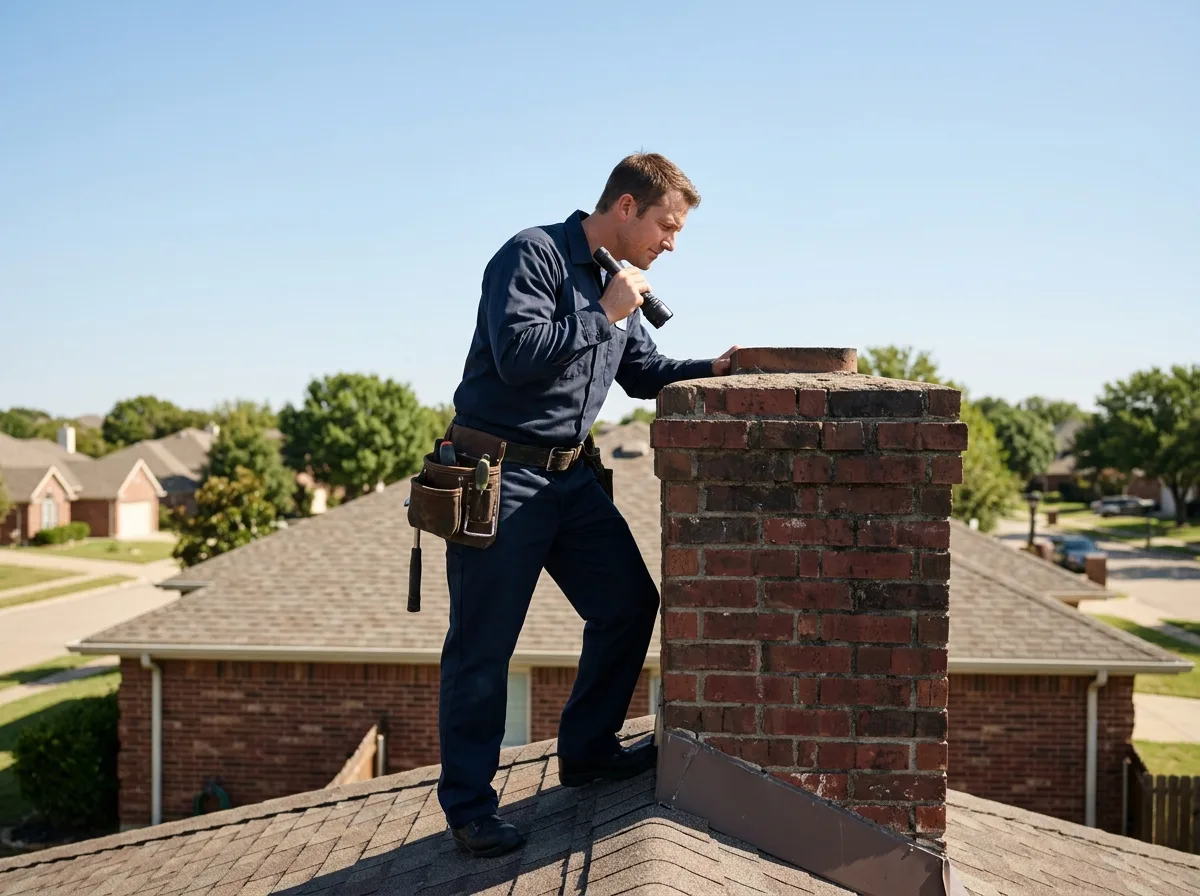
Call right away if the bird hasn’t left after an hour with the damper open and the room dark. Call right away if it appears injured, or if it’s stuck behind a gas fireplace or in a chimney with no working fireplace. Call right away if you’re not sure whether you’re dealing with a trapped bird or an active nest.
Chimney Sweep Pro serves Fort Worth and Tarrant County. See bird in chimney removal for the full service, or chimney animal removal if more than one animal is involved.