
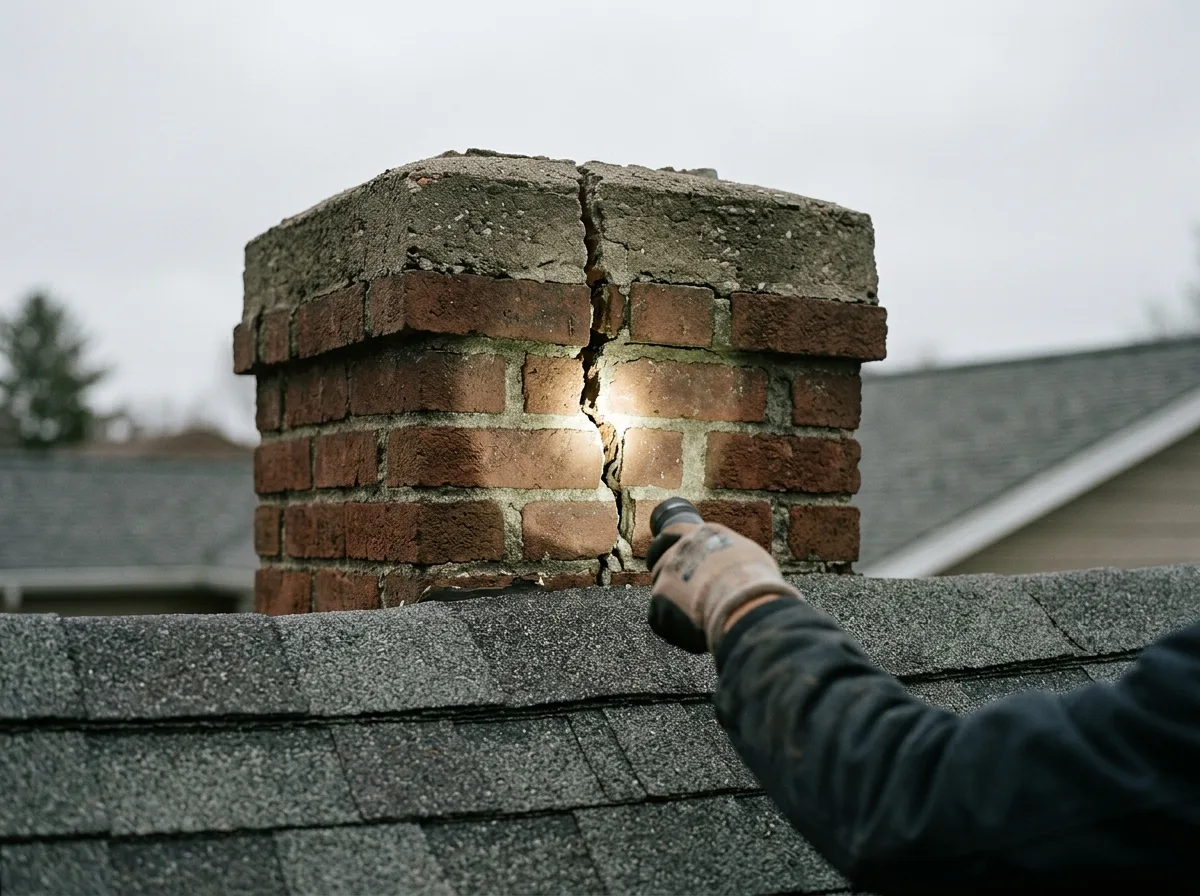
Water travels once it gets inside a chimney. A stain near the fireplace doesn’t always mean the leak started there.
Fixing a leak starts with finding the real source. Sealing the wrong spot doesn’t stop the water.
Four things usually cause chimney leaks. The cap, the crown, the flashing, or the mortar joints.
If you’d like the actual source found today, Chimney Sweep Pro can help. Call (682) 354-6644.
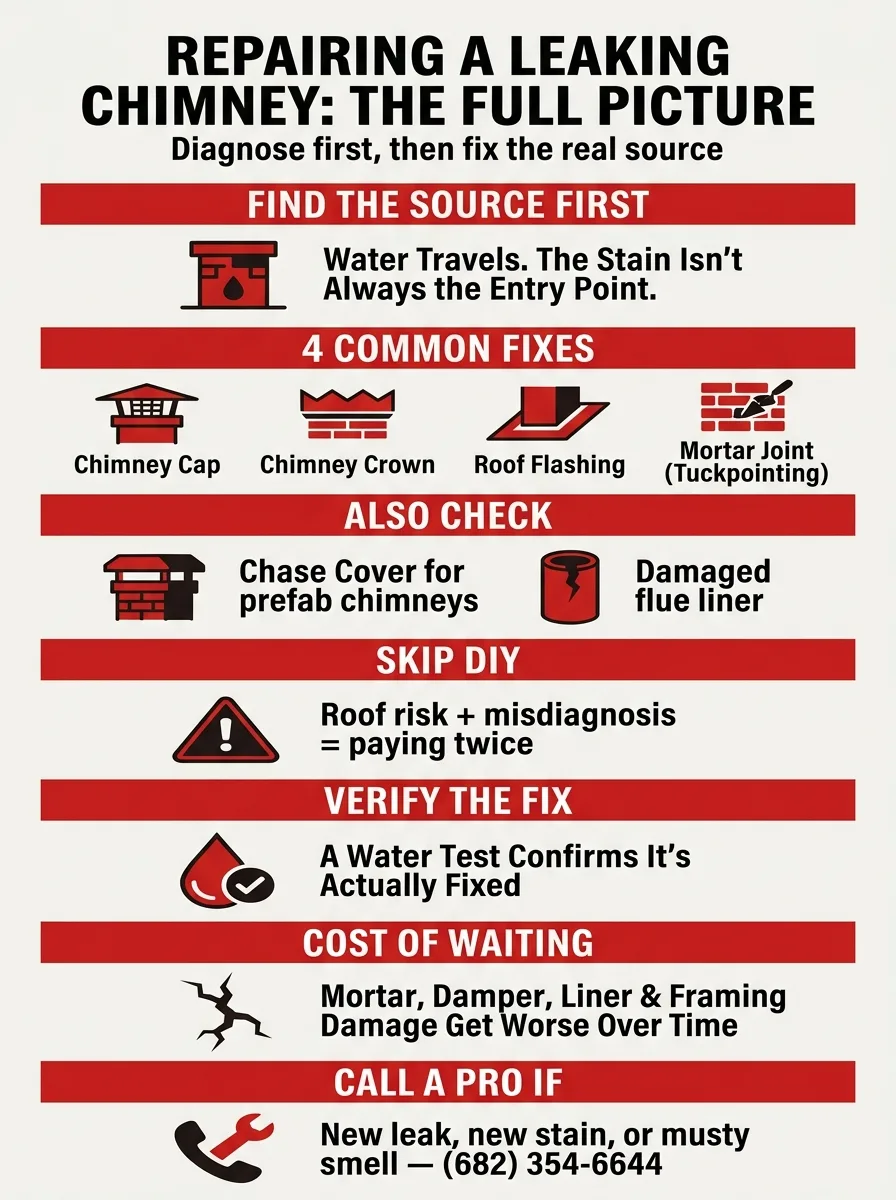
Why the Fix Depends on Finding the Real Source First
Water enters at the top of a chimney. It runs down inside the structure before it shows up anywhere visible.
A leak near the firebox might actually start at the crown, several feet higher. This is why guessing at the fix usually fails.
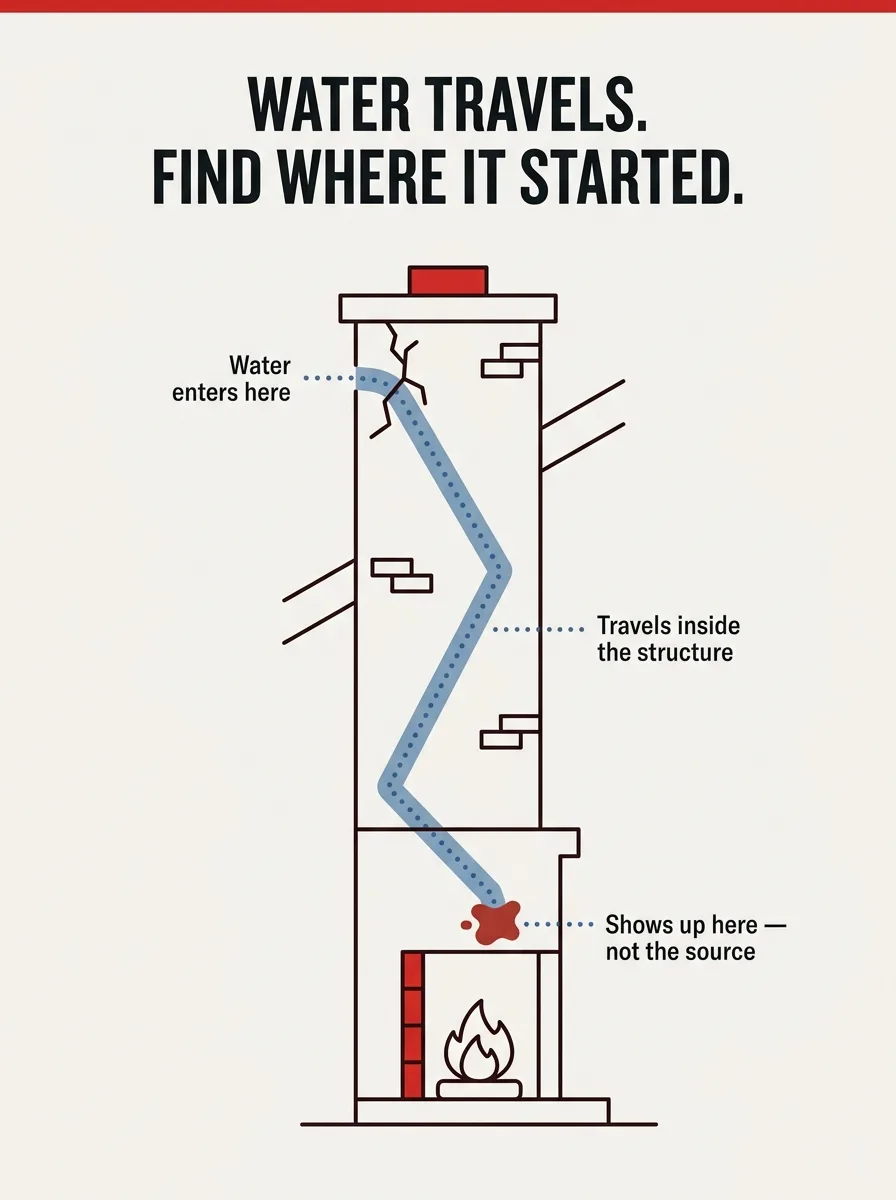
A proper repair starts with tracing the water back to its actual entry point. The InspectAPedia guide to chimney water damage covers this diagnostic process in more technical detail. Everything below assumes that step has already happened.
The Four Most Common Repair Types
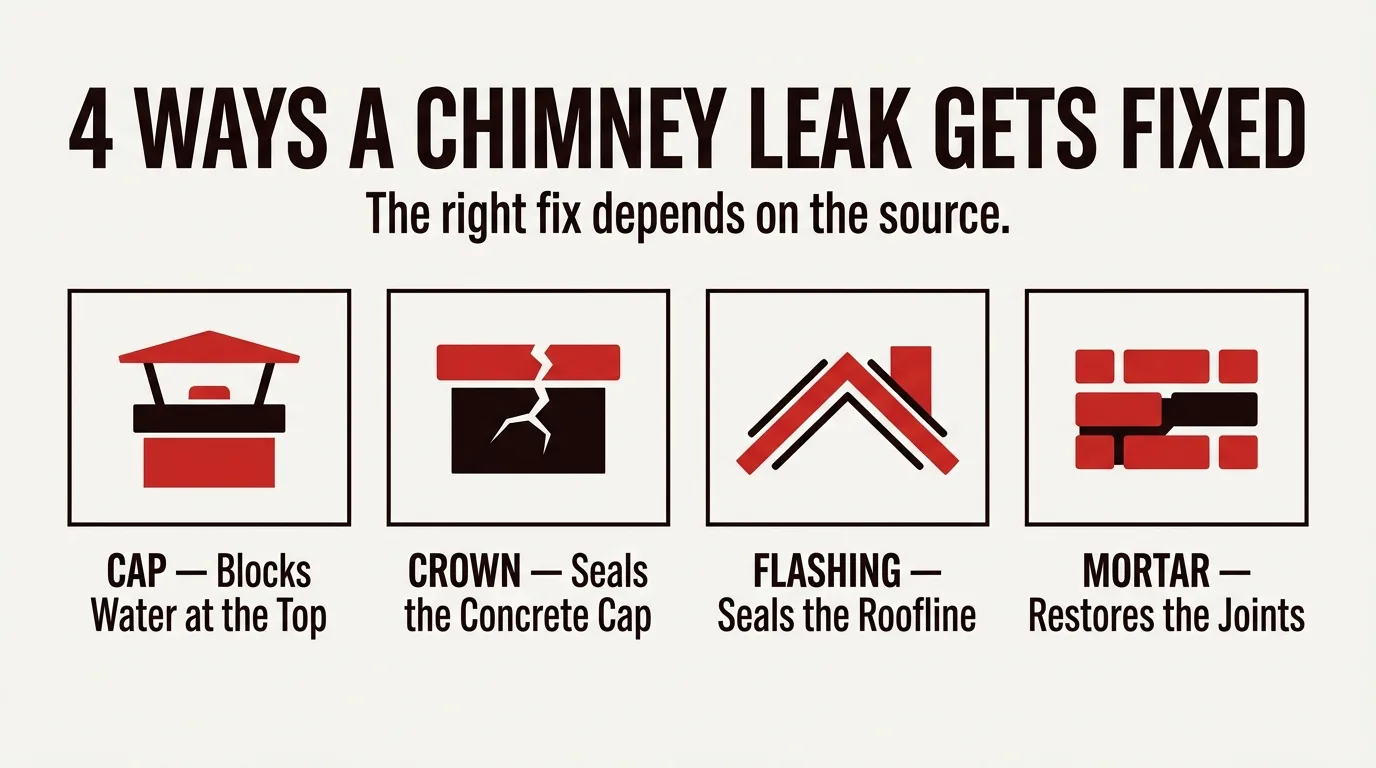
Cap repair or replacement blocks water at the top of the flue. Crown repair seals cracks in the concrete slab.
Flashing repair fixes the seal where the chimney meets the roof. Mortar repair, or tuckpointing, restores joints that have let water into the brick.
More than one of these is often needed at once. A single leak can have more than one contributing cause.
Chimney Crown Repair
A minor crack in the crown is usually sealed with a flexible, brushable coating. This coating expands and contracts with temperature changes, which keeps it from cracking again as quickly.
Severe crown damage needs a different approach. The damaged section is removed and rebuilt with new concrete and reinforcement.
A crown repair is usually confirmed by inspecting the crack depth first. Surface coating alone doesn’t help if the crack goes all the way through.
Chimney Flashing Repair
Minor flashing issues are often fixed by resealing the existing metal. Old or cracked sealant is removed and replaced with new flashing sealant.
More serious flashing damage requires full replacement. This means removing the old flashing, nearby shingles, and underlying material before installing new flashing correctly.
Flashing work should be done by someone trained in it. A poor flashing installation can create a new leak instead of fixing the old one.
Mortar Joint Repair (Tuckpointing)
Tuckpointing repairs mortar joints that have already let water into the brick. Old, crumbling mortar is removed and replaced with new mortar matched to the original joints.
This step usually comes after the water entry point itself has been sealed. Repairing mortar without fixing the original leak just delays the same damage.
Tuckpointing also restores the chimney’s structural integrity, not just its water resistance. Deteriorated mortar weakens the whole stack over time.
Chimney Cap Repair or Replacement
A missing or damaged cap is one of the simplest leak causes to fix. A properly fitted cap blocks rain at the source, before it ever reaches the crown or flue.
See chimney cap installation for what that process involves. This is often the fastest fix among the four, when the cap is the actual cause.
Chase Cover Repair or Replacement
A prefabricated metal chimney uses a chase cover instead of a masonry crown. It sits over the entire top of the chase, not just the flue opening.
Chase covers rust and develop seams that fail over time, especially cheaper galvanized versions. A stainless steel replacement resists this failure mode far longer.
If your home has a factory-built fireplace rather than a masonry chimney, a failing chase cover is a common leak source worth checking first.
Materials Used in Crown, Flashing, and Cap Repairs
The flexible coating used on a minor crown crack is usually an acrylic or elastomeric compound, a rubber-like material that stretches instead of cracking again as the concrete moves. A full crown rebuild uses portland-cement concrete, reinforced with rebar or wire mesh for added strength.
Flashing repair typically uses aluminum, galvanized steel, or copper. Aluminum is the most common choice and the easiest to form around a chimney’s shape; copper resists corrosion the longest and is often used on older or higher-end homes.
Replacement caps are usually stainless steel or copper. Stainless steel resists rust better than galvanized steel, which is why it has become the more common upgrade after a cap fails.
Mortar for tuckpointing has to match what’s already there. Older masonry was often built with a softer lime-based mortar, while most newer construction uses portland-cement mortar. Repointing with the wrong type can crack the surrounding brick instead of protecting it.
Repairing vs. Replacing a Flue Liner
A flue liner damaged by prolonged water exposure can crack or corrode. A cracked clay tile liner is often repaired by relining rather than by patching individual tiles.
A corroded metal liner usually needs full replacement, not a spot repair. Liner damage is also a safety issue, since a compromised liner can let heat or gases reach nearby materials.
Liner condition is checked during the same inspection that identifies the leak source. It’s not always visible without a flue camera.
Chimney Leak vs. Roof Leak: Who to Call
Not every leak near a chimney is a chimney problem. Sometimes the roofing around the chimney is the actual source, not the chimney itself.
A chimney professional checks the crown, flashing, cap, and masonry. A roofer checks the shingles, underlayment, and broader roof drainage around the chimney.
When it’s unclear which one applies, a chimney inspection usually identifies whether the issue is chimney-specific or belongs to the roofer instead.
Waterproofing Sealant: What It Does and Doesn’t Fix
A masonry waterproofing sealant can reduce how much water the brick absorbs going forward. It’s a preventive layer, not a repair for an active leak.
Applying sealant over an unfixed crack or gap doesn’t stop the water. The underlying damage still needs to be repaired first.
Waterproofing works best as a final step, after the actual entry point has been sealed. Used alone, it often just delays the same problem.
Why DIY Chimney Leak Repair Is Risky
Chimney repair means roof access, often several stories up. This carries the same fall risk covered in other posts on this site.
It also means correctly diagnosing which of the four causes is actually responsible. Misdiagnosis means fixing the wrong thing and paying for the repair twice.
Flashing and crown work in particular require specific materials and technique. A repair done incorrectly can fail again within one season.
What a Professional Repair Visit Looks Like
An inspection comes first. This identifies the actual water entry point, not just where the symptom shows up.
The specific repair is then completed. That might be one fix or a combination, depending on what the inspection finds.
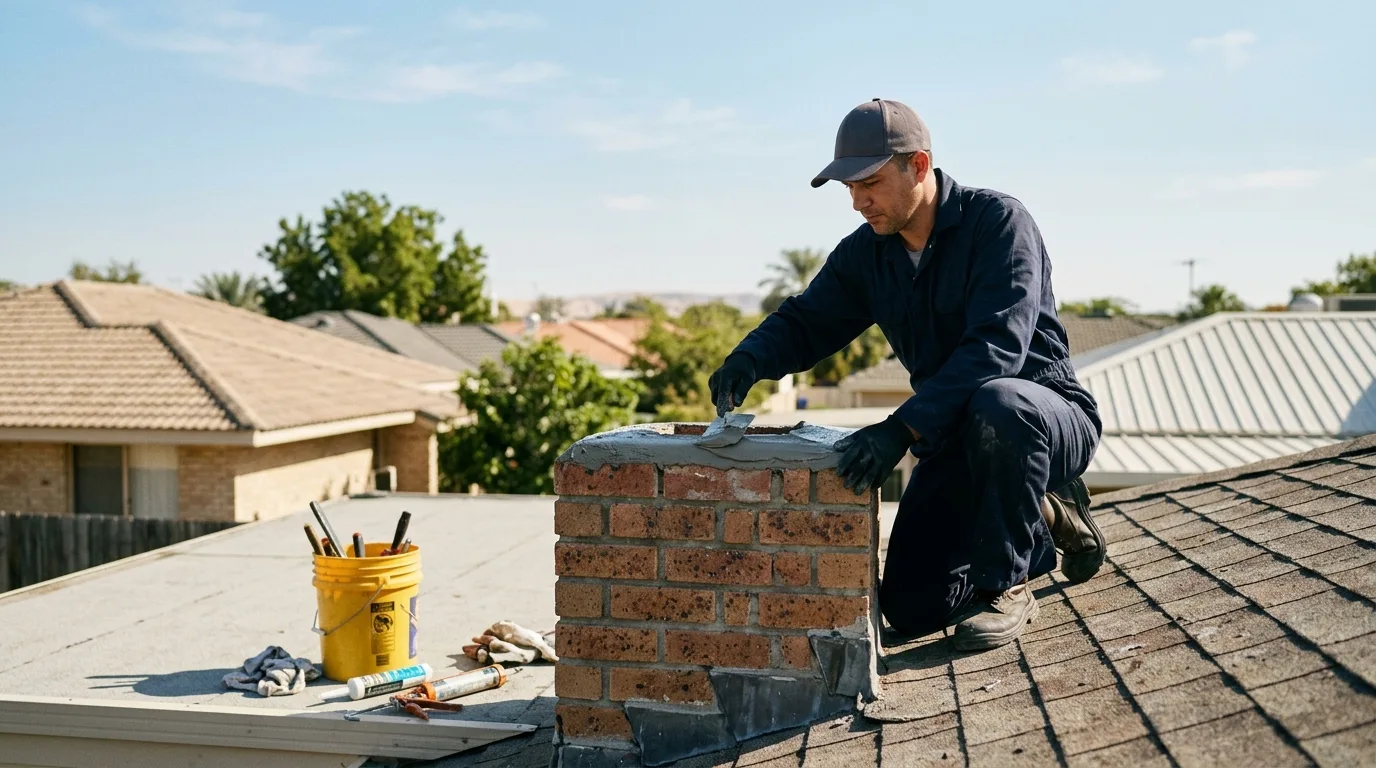
The area is checked afterward, often with a water test, to confirm the leak is actually resolved. This step catches a repair that looks complete but hasn’t fully stopped the water.
Want this handled start to finish? Call (682) 354-6644.
How Long a Chimney Leak Repair Takes
A cap replacement or a crown coating usually finishes in a single visit. A full crown rebuild or a larger flashing replacement often takes longer, since new concrete and sealant need time to cure before the job is done.
Weather affects the schedule too. Sealant and mortar both need dry, moderate conditions to cure correctly, so a repair scheduled right before rain or a hard freeze may get pushed back a day or two.
Combining more than one fix, such as a cap and a mortar repair together, usually adds time rather than requiring a separate visit. Handling every needed repair on the same trip avoids paying for a second rooftop setup later.
How a Repair Gets Verified as Fixed
A water test simulates rain on the suspected entry point. This confirms whether water still gets through after the repair.
Some repairs are verified over the following weeks, especially after a real storm. This is more reliable than a same-day check alone.
If water still shows up after a repair, it usually means the original diagnosis missed a second contributing source.
Signs a Repair Didn’t Fully Work
A stain that keeps reappearing after a repair usually points to an unaddressed second source. A single leak can have more than one entry point contributing to it.
New staining in a different location than before can also mean a new, separate leak, not a failed repair. These two situations require different next steps.
Either way, going back to the original inspection findings is the fastest way to sort out what’s actually happening.
Repair vs. Full Chimney Rebuild
Most leaks are fixed with one of the four repairs described above, not a full rebuild. A rebuild becomes necessary when the damage goes beyond the crown, flashing, cap, or a section of mortar joints.
A few signs point toward a rebuild instead of a repair: multiple courses of brick cracked or crumbling throughout the stack, a chimney that’s visibly leaning, or a flue liner and the surrounding masonry failing at the same time.
A professional inspection is what tells the difference. The same water entry point that causes a simple leak can also be a symptom of a chimney that has failed structurally, not just at the surface.
The Cost of Waiting to Repair a Leak
Water sitting in masonry erodes mortar joints faster over time. What starts as a small crack can widen into a larger structural issue.
A damper exposed to repeated moisture can rust and stop sealing properly. A flue liner exposed to water can crack or corrode, which is a safety issue, not just a repair cost.
Framing behind or around the chimney can also absorb moisture and begin to rot. According to the Chimney Safety Institute of America, water causes more damage to masonry chimneys over time than fire does. This kind of damage is more expensive and more invasive to repair than the original leak would have been.
Fort Worth Conditions That Make This Worse
Fort Worth’s clay soil shifts with moisture changes, which can stress a chimney’s foundation over time. Hard freezes widen small cracks that formed during the year.
Hailstorms are a recurring local trigger for both crown and flashing damage. See chimney leaking after hail if a specific storm caused your leak.
Older masonry in neighborhoods like Fairmount, Ryan Place, and Mistletoe Heights sees this combination more than newer construction. Age and prior wear make each of these factors more likely to cause an active leak.
What a Musty Smell or Mold Might Mean
A leak that’s gone unnoticed for a while can produce a musty smell before any visible stain appears. See fireplace smells wet if that’s what’s brought you here instead of a visible leak.
Prolonged moisture can also lead to mold growth inside the firebox or flue. See mold in fireplace if you’re seeing visible growth, not just a leak.
Either sign points to the same underlying issue. Water is getting in somewhere, and that’s what needs to be found and fixed.
Preventing Future Leaks
Regular inspection catches new cracks or gaps before they become active leaks. Twice a year is a reasonable schedule, especially before and after Fort Worth’s storm season.
Keeping the cap, crown, and flashing in good condition prevents most leaks before they start. These three components handle the majority of water exposure a chimney faces.
Addressing a leak completely the first time, rather than partially, avoids paying for the same repair twice. A full diagnosis up front is worth the extra step.
When to Call a Professional
Call as soon as you notice a leak, a new stain, or a musty smell. Waiting typically makes the repair larger and more expensive.
A chimney inspection finds the actual source. Chimney leak repair addresses whichever combination of cap, crown, flashing, or mortar is responsible.
Ready to get it diagnosed? Call (682) 354-6644.