
A top-sealing damper and a chimney cap do different jobs, and some fireplaces need both. This post compares how each handles drafts and animals on a Fort Worth chimney, and which fireplaces should not use a top damper at all.
Not sure which damper or cap your chimney has? Chimney Sweep Pro can check. Call (682) 354-6644.
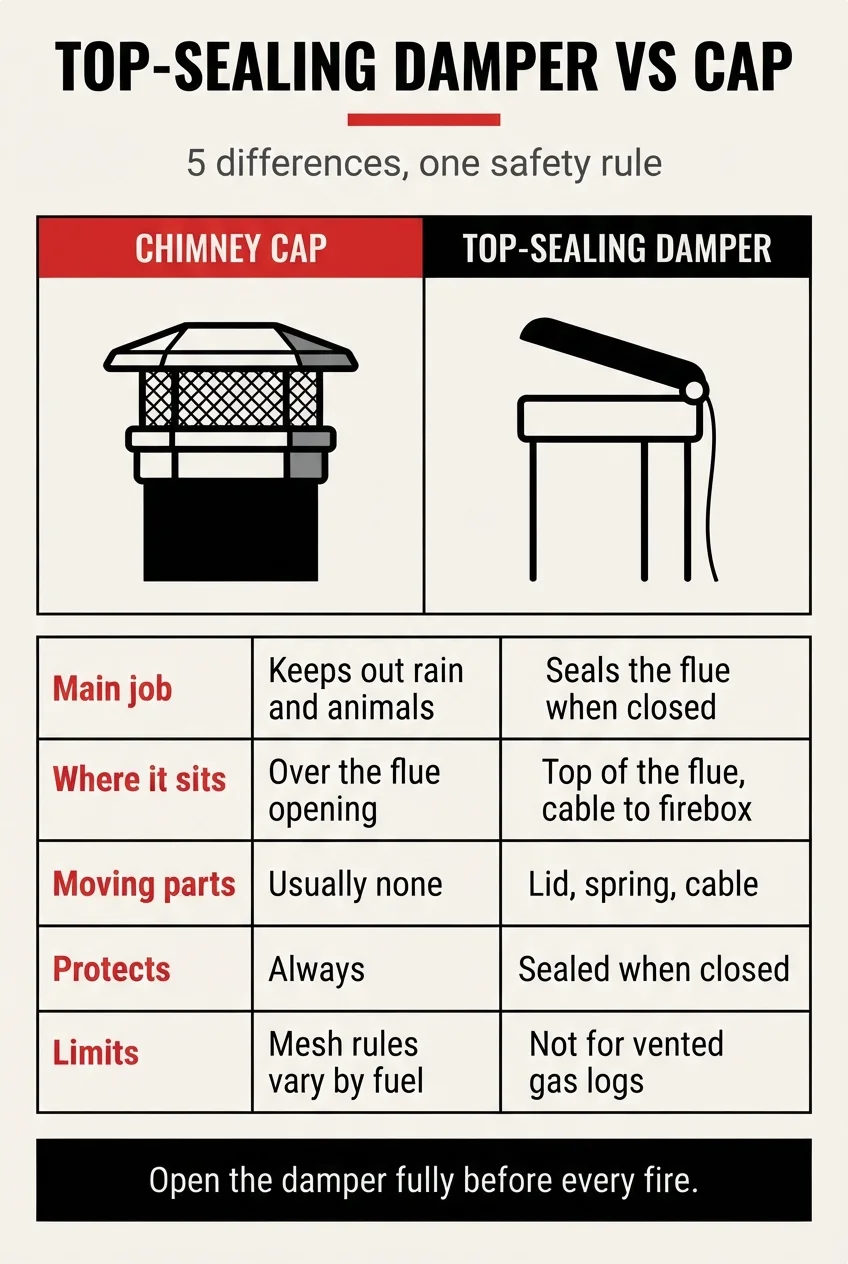
What is the difference between a top-sealing damper and a chimney cap?
A chimney cap is a fixed hood with mesh sides that covers the flue opening to keep out rain, animals, and debris. A top-sealing damper is a lid at the top of the flue that you open and close with a cable from the fireplace, and some units combine it with a cap.
These terms come up when you compare the two:
- Flue: the passage that carries smoke out of the house.
- Firebox: the part of the fireplace where the fire burns.
- Throat damper: the movable plate just above the firebox that most older fireplaces use to open and close the flue.
- Top-sealing damper: a damper mounted at the top of the flue that replaces the throat damper.
- Cap-damper combination: a single unit with a damper lid, a hood, and mesh sides.
Top-sealing damper vs chimney cap: 5 differences
The cap guards the opening all the time, while the damper seals the flue only when it is closed. The table sorts five differences.
| Difference | Chimney cap | Top-sealing damper |
|---|---|---|
| Main job | Keeps rain, animals, and debris out | Controls airflow and seals the flue when closed |
| Where it sits | Over the flue opening | On top of the flue, worked by a cable from the firebox |
| Moving parts | Usually none | A lid, a spring, and a cable |
| When it protects | Always | Fully sealed when closed; needs a screen to guard the flue when open |
| Fuel and appliance limits | Mesh rules depend on the fuel you burn | Not for vented gas logs, and some makers also exclude inserts, wood stoves, and furnaces |
How does a top-sealing damper change drafts and odors?
A top-sealing damper seals the flue at the top, which cuts the drafts and soot odors that leak past an old throat damper. Throat dampers are often leaky, and a closed one may not seal well.
Cold air can flow down a chimney on windy days. A tight seal at the top blocks that path.
A sealed flue can also reduce soot odors on windy or humid days. The causes of fireplace odors are covered in our guide to smoke smell from a fireplace when not in use.
Why does an open flue waste heated and cooled air?
An open or leaky flue is a hole in the house, and heated or cooled air escapes through it. HowStuffWorks notes that forgetting to close a damper leaves a large opening for conditioned air to escape, and that even a closed damper often seals poorly.
A standard cap does not fix that, because it is built to let air and smoke out. Only a damper seals the flue.
What does each part seal when it is open or closed?
A cap with mesh sides guards the flue at all times, a closed top-sealing damper seals it tightest, and an open damper protects only if it has a screen. The table compares four setups.
| Setup | Rain and snow | Animals and debris | Draft and air loss |
|---|---|---|---|
| Standard cap, throat damper closed | The hood sheds rain | Mesh blocks animals | The throat damper may leak |
| Top-sealing damper, closed | Lid keeps rain and snow out | Lid blocks animals and debris | Tightest seal of the four |
| Top-sealing damper, open, with screen and cap | The hood sheds rain | Mesh blocks animals | Air flows freely |
| Top-sealing damper, open, no screen | An open flue takes in rain | Animals can get in | Air flows freely |
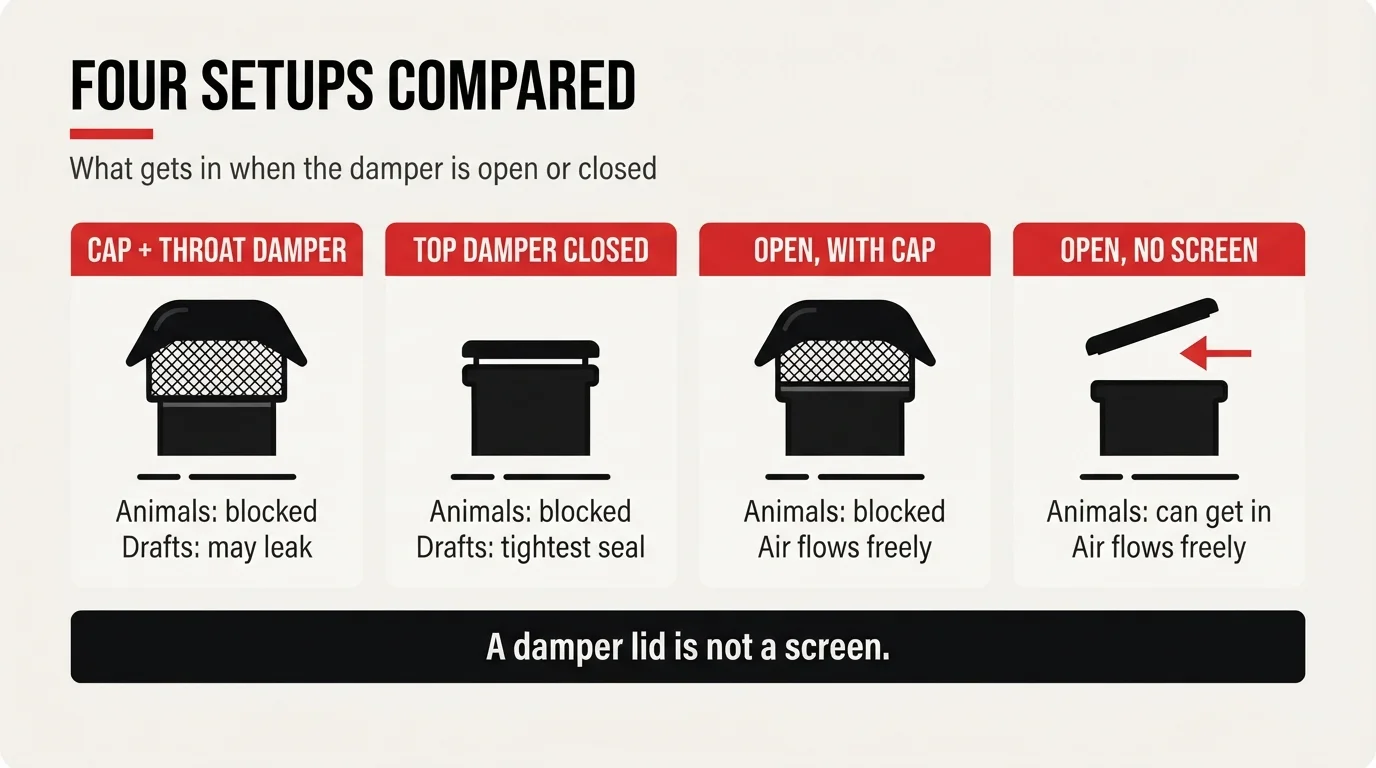
Standard cap with the throat damper closed
The hood keeps rain off the flue and the mesh keeps animals out. The only seal against drafts is the throat damper, and an old one may leak.
Top-sealing damper, closed
The lid blocks rain, snow, animals, and debris at the top of the flue. This is the tightest seal because it sits where the weather arrives.
Top-sealing damper, open, with a screen and cap
With a screen and a cap, animals stay out even when the damper is left open after a fire. Air flows freely, as it should while the fireplace is in use.
Top-sealing damper, open, without a screen
A damper with no screen leaves the flue open when the lid is up. A homeowner’s report on a woodworking forum says animals can get in when one is left open for a long time, so check which kind you have.
Wondering whether your flue is sealed when it should be? Chimney Sweep Pro can look. Call (682) 354-6644.
Why might you still need a chimney cap with a top-sealing damper?
A top-sealing damper protects the flue only while it is closed, so you still need a cap with mesh sides for the times it is open. Some top-sealing dampers include a cap and screen and some do not, so check which you have.
A damper lid is not a screen. Our guide to a chimney without a cap shows what an open flue lets in.
How do a cap and a top-sealing damper work together?
A top-sealing damper can sit under a separate cap, or one unit can combine the damper, the hood, and the mesh. A professional matches the unit to your flue so the lid seals and the cap fits.
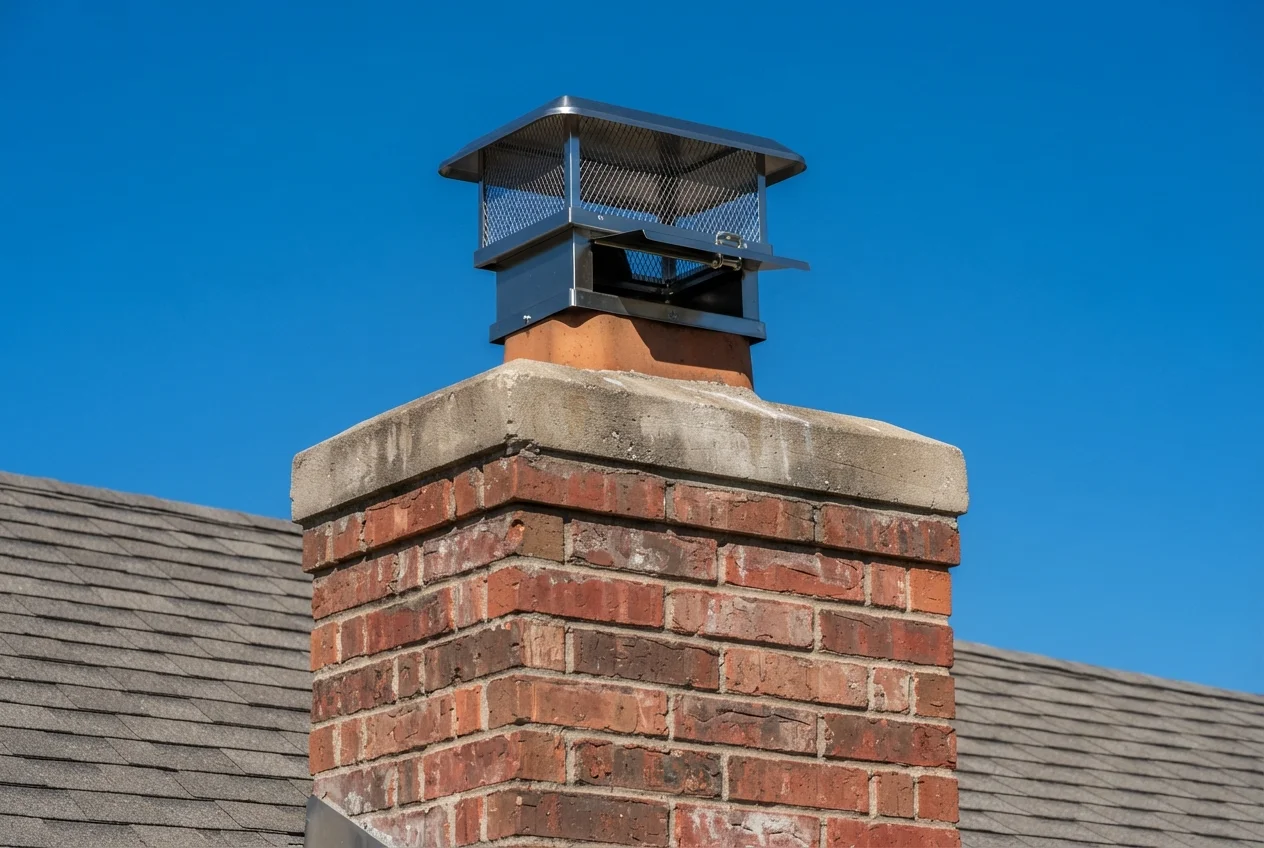
Our guide to chimney cap types covers the hoods, and the screens have to pass the same sphere test as any other spark-arrestor mesh.
How does a top-sealing damper work?
A top-sealing damper has a lid on the flue, a spring that opens it, and a cable or chain that runs down to a bracket in the firebox. Pulling the cable closes the lid, and releasing the cable lets the spring open it.
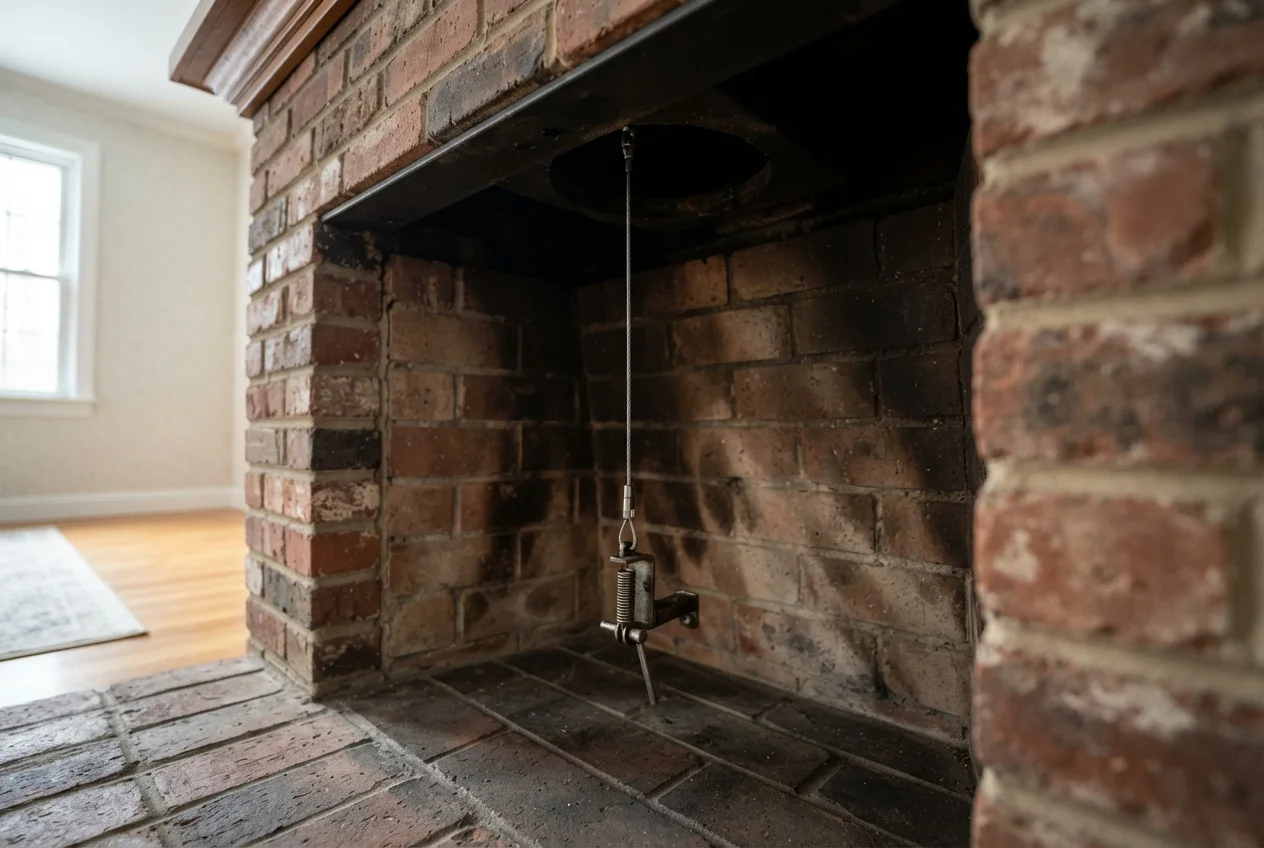
The spring opens the lid, so the damper defaults to open. That keeps smoke moving up the flue if the cable is released.
When should a top-sealing damper be opened and closed?
Open a top-sealing damper fully before every fire, and close it only when the fire is completely out and the ashes are cold. Even a smoldering fire still makes carbon monoxide.
Carbon monoxide is an odorless gas that comes from burning fuel. Closing the damper over smoldering ashes can push it into the house.
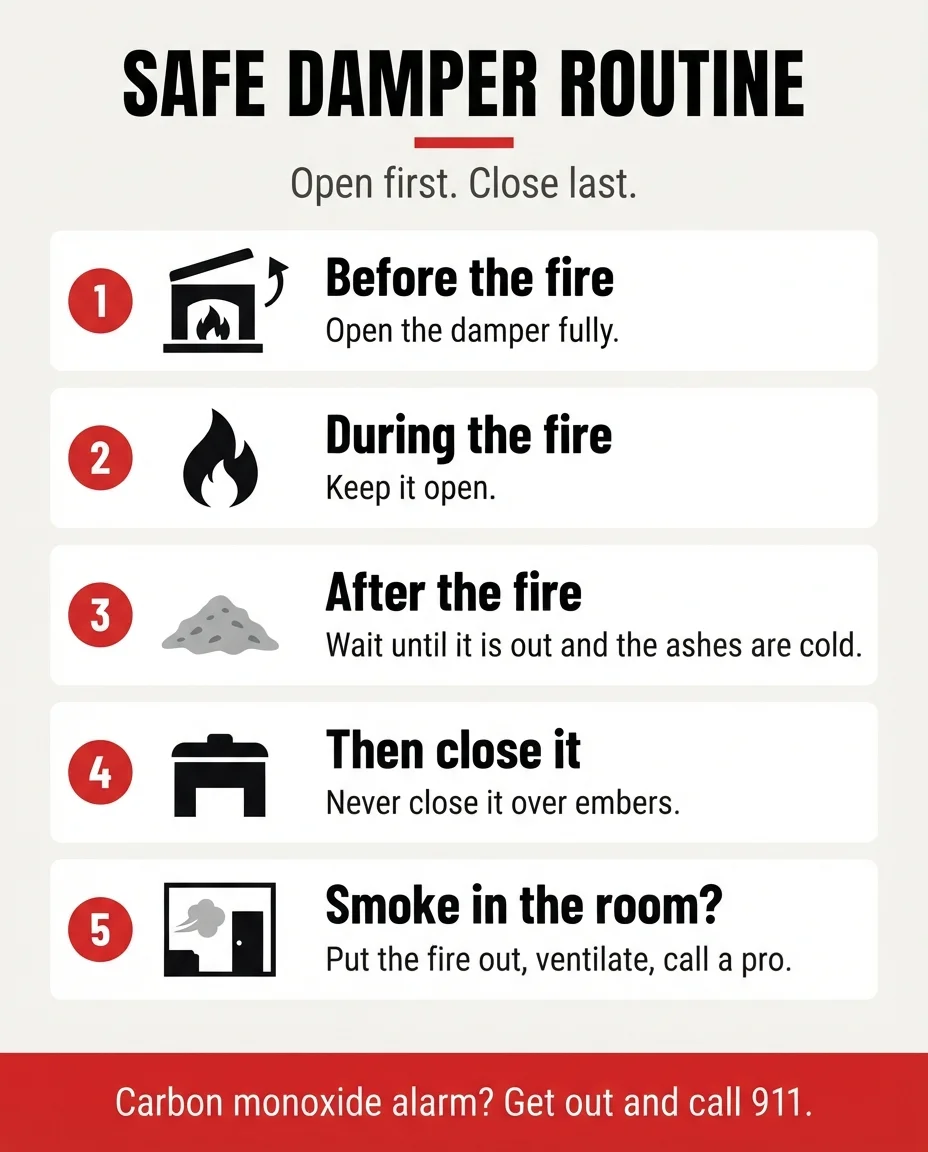
- Before lighting a fire: release the cable so the lid is fully open.
- While the fire burns: leave the lid open.
- After the fire: wait until the fire is completely out and the ashes are cold, then close the lid.
- If smoke enters the room after you light a fire: put the fire out safely, ventilate the room, and call a professional before you relight it.
- If a carbon monoxide alarm sounds: get everyone outside and call 911 before calling anyone else.
Every home with gas appliances should have a carbon monoxide detector, and a fireplace is a good reason to have one for wood too.
Which fireplaces should not use a top-sealing damper?
Fireplaces with vented gas logs should not use a top-sealing damper, because the damper must stay open or be fixed open while the logs burn. One maker also excludes inserts, wood stoves, and furnaces, and allows vent-free logs only with approval from the appliance maker and the local authority.
Vented gas logs produce carbon monoxide that must leave through the chimney. A closed damper traps it in the house.
If you burn gas, ask your appliance maker and a professional before adding a top damper.
What happens to the old throat damper?
A professional decides whether the old throat damper stays, comes out, or is fixed open, because the right answer depends on the fuel you burn and the appliance. Sources disagree on a single rule.
Do not remove or wire open a damper on your own.
What can go wrong with a top-sealing damper?
The cable, the spring, and the lid can wear out or get damaged, and any of them can stop the damper from sealing or opening. Because the spring opens the lid when the cable is released, a broken cable usually leaves the damper open and the flue unsealed.
- Cable: it can fray, kink, or snap.
- Spring: it can weaken, so the lid opens slowly or only partway.
- Lid and seal: hail can dent the lid, and wear can leave gaps when it closes.
A lid that opens only partway is a smoke risk when you light a fire. Stop, put the fire out safely, and call a professional.
Who benefits most from a top-sealing damper, and who should skip one?
A top-sealing damper helps most on a wood-burning fireplace you use now and then, where an old throat damper leaks. It does not suit vented gas logs, inserts, or stoves, and it needs a cap or screen if animals are a concern.
- Good fits: wood-burning fireplaces with a leaky throat damper, drafts, or soot odors, and chimneys where animals have been a problem.
- Poor fits: fireplaces with vented gas logs, inserts, wood stoves, and furnaces.
If you are unsure which group you are in, a professional can tell you from the appliance and the flue.
Top-sealing damper vs chimney cap in Fort Worth homes
Fort Worth weather works on both parts, and the damper’s job changes with the season.
Hot summers
Fort Worth summers run air conditioners hard. An open or leaky flue lets cooled air escape.
Winter cold snaps
A cold snap can pull cold air down an unsealed flue. A closed top seal blocks that path.
Humid days
Humid days make soot odors stronger in an unused fireplace. A sealed flue can reduce them.
Hail
Hail dents caps and damper lids. A dented lid may no longer open or seal right.
Older homes in Fairmount
Older homes in Fairmount more often have old throat dampers that leak. Those fireplaces are common candidates for a top seal.
What does a chimney professional check and install?
A professional checks the flue, the existing damper, the cap, and the appliance before choosing a damper. The technician then matches the unit to the flue size and mounts it at the top.
Installing a damper at the top of the flue is roof work. Ask any chimney company whether its technicians hold CSIA certification, and see CSIA, the Chimney Safety Institute of America, a nonprofit that certifies chimney sweeps.
A chimney inspection is the usual first step.
How often should you check a top-sealing damper?
Check it at the start of each burning season and after storms. Before the first fire, work the cable and confirm the lid opens fully and seals when closed.
Look at the lid and cap from the ground with binoculars or a phone zoom, and never climb up to check. Look for dents, rust, and gaps, and listen for animals in the flue.
Damage, animals, or a cable that will not move are reasons to call. Our guide to the signs a chimney cap needs replacing lists the cap problems to watch for.
When to call a chimney professional
Call a professional when the damper will not open or close, the cable is broken, smoke enters the room when you light a fire, or animals, odors, or drafts show up.
- Emergency: If a carbon monoxide alarm sounds, get everyone outside and call 911 before calling anyone else. Do the same for smoke or fire inside the house.
- Soon: A damper that will not open, a broken cable, smoke entering when you light a fire, and animal sounds belong here. Do not light a fire until a professional checks the flue. See chimney animal removal if animals are the problem.
- Can wait: A faint odor on a humid day with the damper closed can wait until your next inspection.
Opening and closing the damper from the fireplace is a job you can do. Installing or repairing one at the top of the flue is roof work, and the fall risk makes it a job for a professional.
Price depends on the unit, the flue size, and the labor, and the factors are laid out in our post on chimney cap installation cost.
Chimney Sweep Pro handles chimney cap installation in Fort Worth and nearby cities such as Keller and Saginaw. For a top-sealing damper vs chimney cap question on your fireplace, call (682) 354-6644 and we will look at both.