
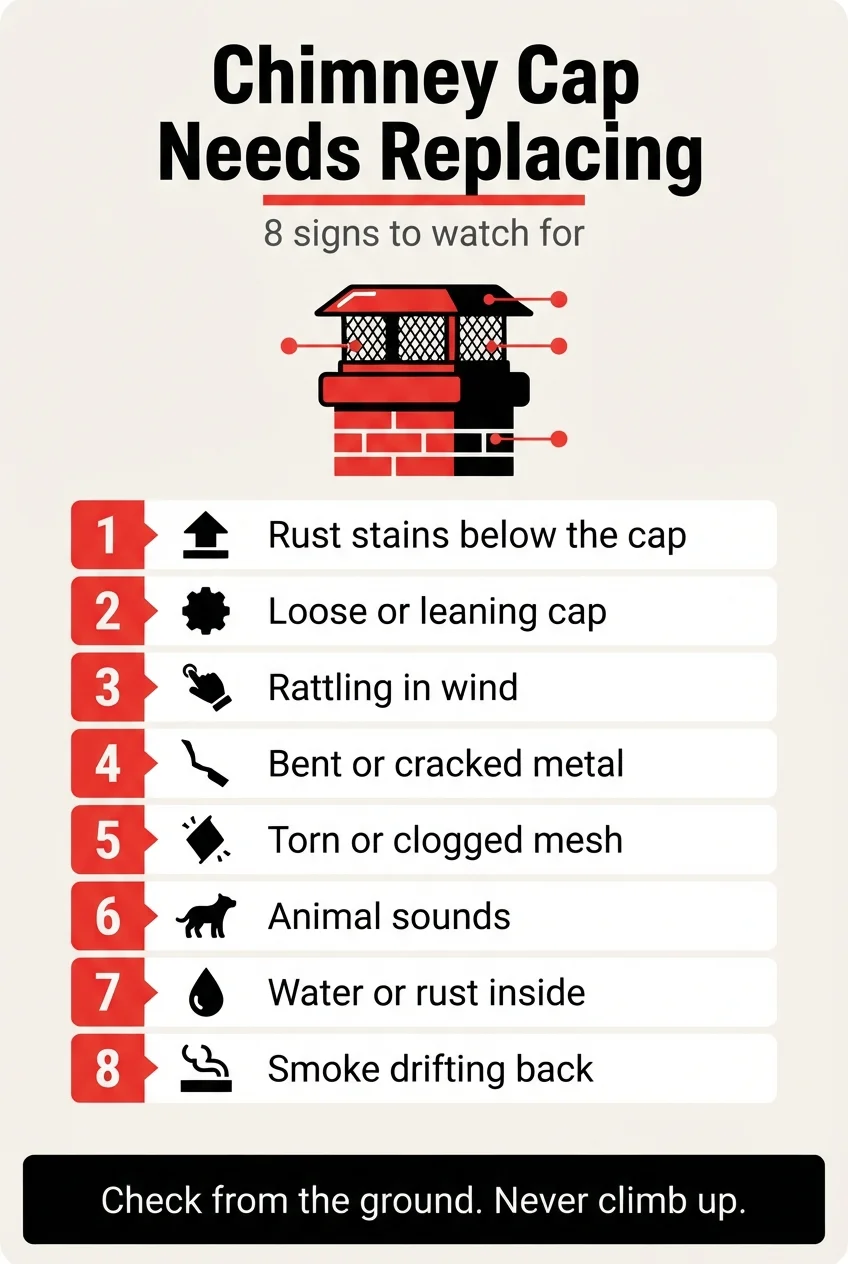
A chimney cap needs replacing when it shows rust stains, sits loose or crooked, rattles in wind, has bent metal or torn mesh, lets animals in, or lets water or smoke into the house. Fort Worth hail, heat, and storm winds wear caps out in ways you can often spot from the ground.
Not sure your cap is still doing its job? Chimney Sweep Pro can check it. Call (682) 354-6644.
How do I know if my chimney cap needs replacing?
Look for rust stains running down the chimney, a cap that sits loose or leaning, rattling or banging in wind, bent metal or torn mesh, animal sounds, water or rust inside the fireplace, and smoke drifting back into the room. Any one of these means the cap needs a closer look.
A chimney cap is the metal hood over the flue, the passage that carries smoke out of the house. It keeps out rain, animals, and debris.
The Chimney Safety Institute of America (CSIA) is a nonprofit that certifies chimney sweeps. Its director of education told Family Handyman that wind or a fallen limb can damage a cap, and you can usually tell from the ground.
Chimney cap needs replacing: 8 signs at a glance
The table sorts eight signs by likely cause and urgency. Each sign gets its own section below.
| Sign | Likely cause | Urgency |
|---|---|---|
| Rust stains below the cap | Galvanized or painted metal has lost its coating | Can wait; soon if the metal is rusting through |
| Loose, leaning, or shifted cap | Corroded fasteners or a poor fit | Soon |
| Rattling or banging in wind | Loose fasteners or worn parts | Soon |
| Bent, dented, or cracked metal | Hail, wind, or a fallen limb | Soon |
| Torn, bent, or clogged mesh | Hail, rust, or soot buildup | Soon |
| Animal sounds or nesting debris | A gap in the mesh or a missing cap | Soon |
| Water or rust inside the fireplace | Rain getting past a damaged cap | Soon |
| Smoke drifting back into the room | A damaged, clogged, or missing cap | Soon; emergency if smoke fills the room or an alarm sounds |
Why is there rust on my chimney cap?
Rust on a chimney cap means its coating or finish has worn through and moisture has reached the steel underneath. Galvanized and painted caps show it first, and rust stains running down the chimney are the usual sign, while stainless steel and copper resist rust far better.
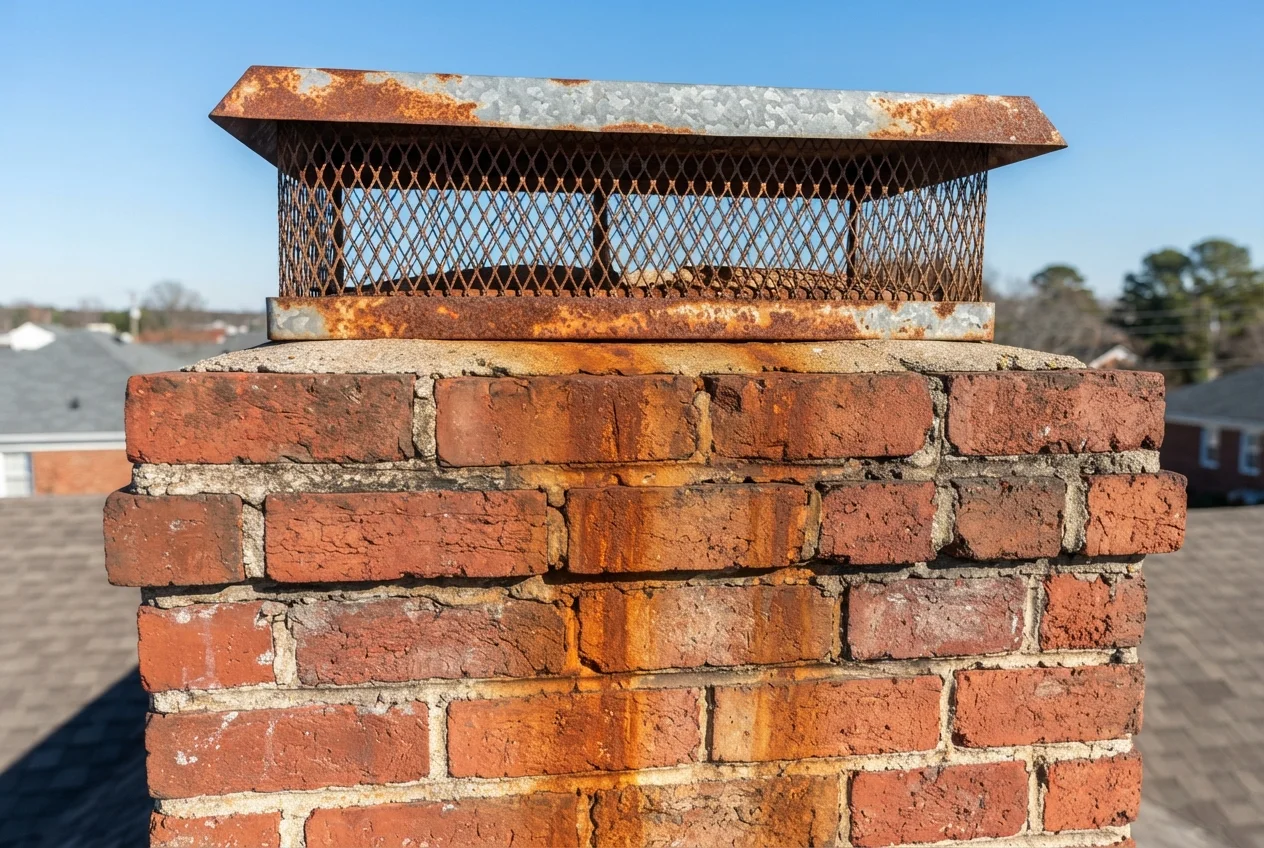
Galvanized steel is steel coated in zinc, and painted caps rely on their paint. Once the coating fails in one spot, rust spreads from there.
CSIA’s director of education told Family Handyman that a galvanized or painted cap shows rust stains coming down the chimney when it needs replacing. He also said stainless steel and copper caps need very little upkeep.
On a prefab chimney, rust streaks on the siding more often come from the chase cover. Our guide to chimney cap vs chase cover shows how to tell which part is failing.
What does a loose, leaning, or shifted chimney cap mean?
A loose or leaning cap has lost its hold on the chimney. Fasteners corrode, heat loosens them, and a cap that never fit snugly shifts first.
A cap that sits crooked no longer seals the flue opening. Rain and animals get in through the gap.
A cap that has already come off needs fast action. Our guide to a chimney cap that blew off covers the steps.
A chimney with no cap at all faces a different set of risks, covered in our guide to a chimney without a cap.
What causes a chimney cap to rattle?
A rattling chimney cap usually has loose fasteners, a poor fit on the flue tile, or worn moving parts, and wind then shakes the loose metal against the chimney. A loose cap can also bang loudly in high winds before it comes off.
Loose or worn fasteners
Bolts and screws back out as the metal heats and cools. A loose fastener lets the cap shake against the flue tile or crown.
Sounds that come from somewhere else
Noise that rises and falls with the wind points to metal parts. Scratching, chirping, or thumping inside the flue points to animals.
InspectAPedia lists other sources of chimney noise, including wind moving loose chimney components.
Why a rattle is a warning
A cap that bangs in wind today can come off in a stronger gust. Treat the noise as an early warning, not a nuisance.
What does bent, dented, or cracked metal on a chimney cap mean?
Bent or cracked metal means the cap took a hit and may no longer seal. Hail, wind, and falling limbs cause most of it.
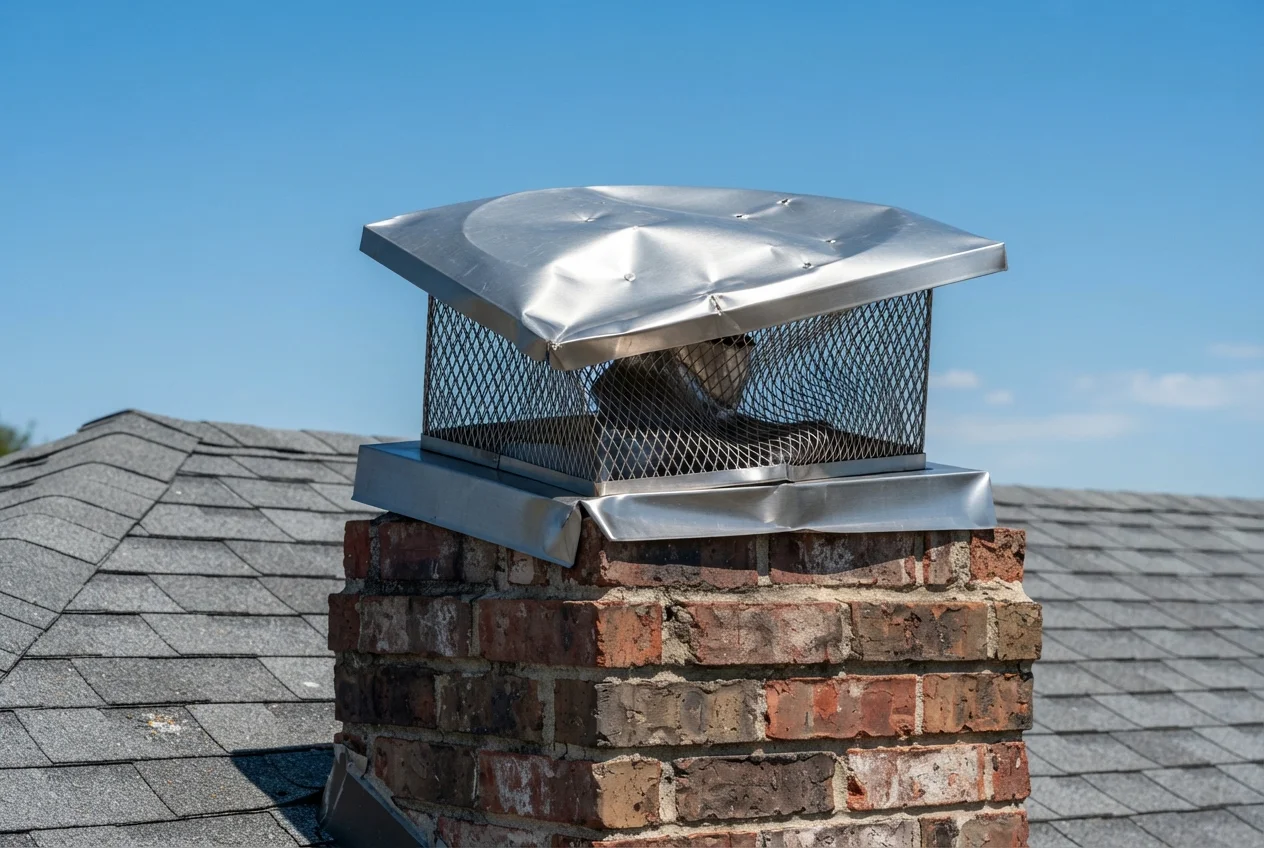
A dented hood can pool water and rust at the dent. A cracked seam lets rain reach the flue.
What does torn, bent, or clogged mesh on a chimney cap mean?
The mesh is the cap’s barrier against animals and embers, so any tear or bend weakens that barrier. A clogged screen causes the opposite problem by slowing smoke.
Soot is the black residue wood smoke leaves behind. It collects on mesh and narrows the openings.
The code’s sphere test sets the mesh opening size a spark-arrestor screen has to meet, and that same opening is what soot narrows as it clogs.
Seeing damage you cannot judge from the ground? Chimney Sweep Pro can look at it. Call (682) 354-6644.
What do animal sounds in a chimney mean for the cap?
Animal sounds mean something found a way past the cap or into an uncapped flue. A torn screen, a gap at the base, or a missing cap gives them the opening.
Twigs, leaves, or nesting material falling into the fireplace are another sign.
Do not seal the flue while animals are inside, and do not light a fire. Call a professional for chimney animal removal first.
What does water or rust inside the fireplace mean?
Water or rust inside the fireplace means rain is getting past the cap or another part above it. A damaged cap is one cause, and the crown and flashing are others.
The firebox is the part of the fireplace where the fire burns. Rust on the damper, the movable plate that opens and closes the flue, is a sign of moisture too.
Stains on a ceiling or wall near the chimney can follow. Schedule chimney leak repair to find the source.
What does smoke drifting back into the room mean?
Smoke drifting back into the room can mean a damaged, clogged, or missing cap is disturbing the draft. Draft is how air and smoke move up the flue.
Other parts can cause the same problem, so a chimney inspection finds the real source.
If smoke fills the room or a carbon monoxide alarm sounds, get everyone outside and call 911.
Other things that make a chimney cap fail
Three less obvious problems end a cap’s life early. Each can look fine until the cap fails.
A wind-directional cap that no longer turns
A wind-directional cap is built to rotate so it faces away from the wind. CSIA’s director of education says to make sure any moving parts still work as they should.
A cap that never fit
A wrong-size cap is more likely to come off in wind, according to one chimney contractor. A professional measures the flue before choosing a replacement, as our guide to how to measure for a chimney cap explains.
A cracked crown under the cap
The crown is the concrete or mortar slab that tops the masonry. A cap should sit flat on a sound crown, and a cracked crown undermines the fit.
A cracked crown should be repaired before or along with a new cap.
When does a chimney cap need replacing instead of repair?
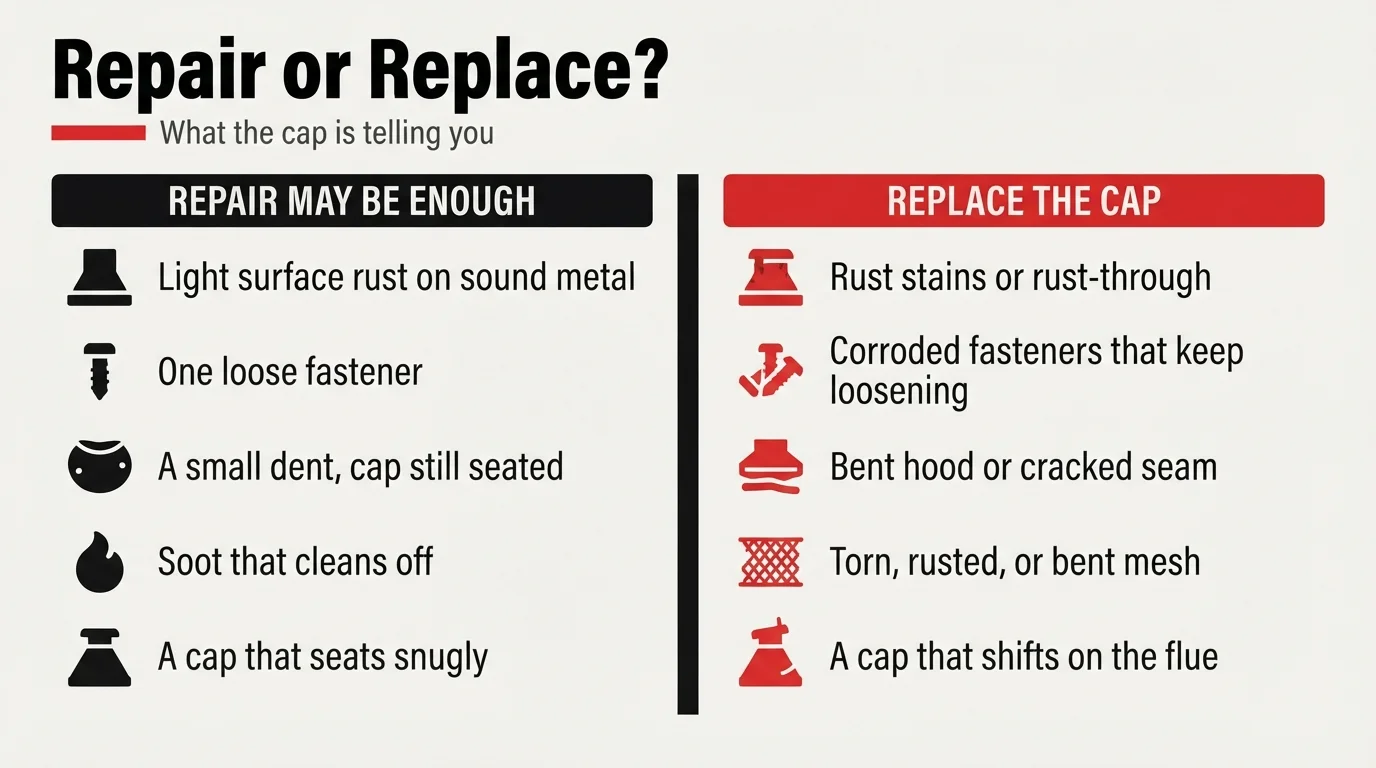
A chimney cap needs replacing instead of repair when rust has eaten through the metal, the hood or mesh is bent or torn, fasteners keep loosening, or the cap never fit the flue. Tightening or cleaning is enough only when the metal is sound and the cap still seats snugly.
| Problem | Repair may be enough | Replace the cap |
|---|---|---|
| Rust | A professional judges light surface rust on a sound cap | Rust stains running down the chimney, or any rust-through |
| Fasteners | One loose fastener on a sound cap | Corroded or stripped fasteners, or a cap that keeps loosening |
| Metal | A small dent that leaves the cap sealed and seated | A bent hood, a cracked seam, or damage that opens a gap |
| Mesh | Soot that cleans off | Torn, rusted, or bent mesh |
| Fit | The cap seats snugly | A cap that never fit or shifts on the flue |
Waiting lets rain and animals into the flue, where they cause damage a new cap would have prevented. Price depends on the metal, the size, and the labor, and the factors are laid out in our post on chimney cap installation cost.
How long does a chimney cap last?
A chimney cap lasts as long as its metal, coating, fasteners, and weather exposure allow. Stainless steel and copper need little upkeep while galvanized and painted caps show rust sooner, and published lifespans vary too widely to rely on, so check the cap before cold weather each year.
What shortens a cap’s life
- Thin metal or a worn coating
- Paint that wears off galvanized steel
- Fasteners that corrode or work loose
- Hail dents and bent mesh
- A poor fit on the flue
- Soot and moisture trapped on the mesh
What extends a cap’s life
- A metal such as stainless steel or copper, compared in our guide to chimney cap types
- A cap sized to the flue
- Fasteners that stay tight
- A check before cold weather and after storms
- Prompt repair of small damage
How should you inspect a chimney cap from the ground?
Look at the cap from the yard with binoculars or a phone zoom, before cold weather and after storms. Check the chimney below it for rust stains, the cap for level and shape, and the mesh for gaps, and never climb up to look.
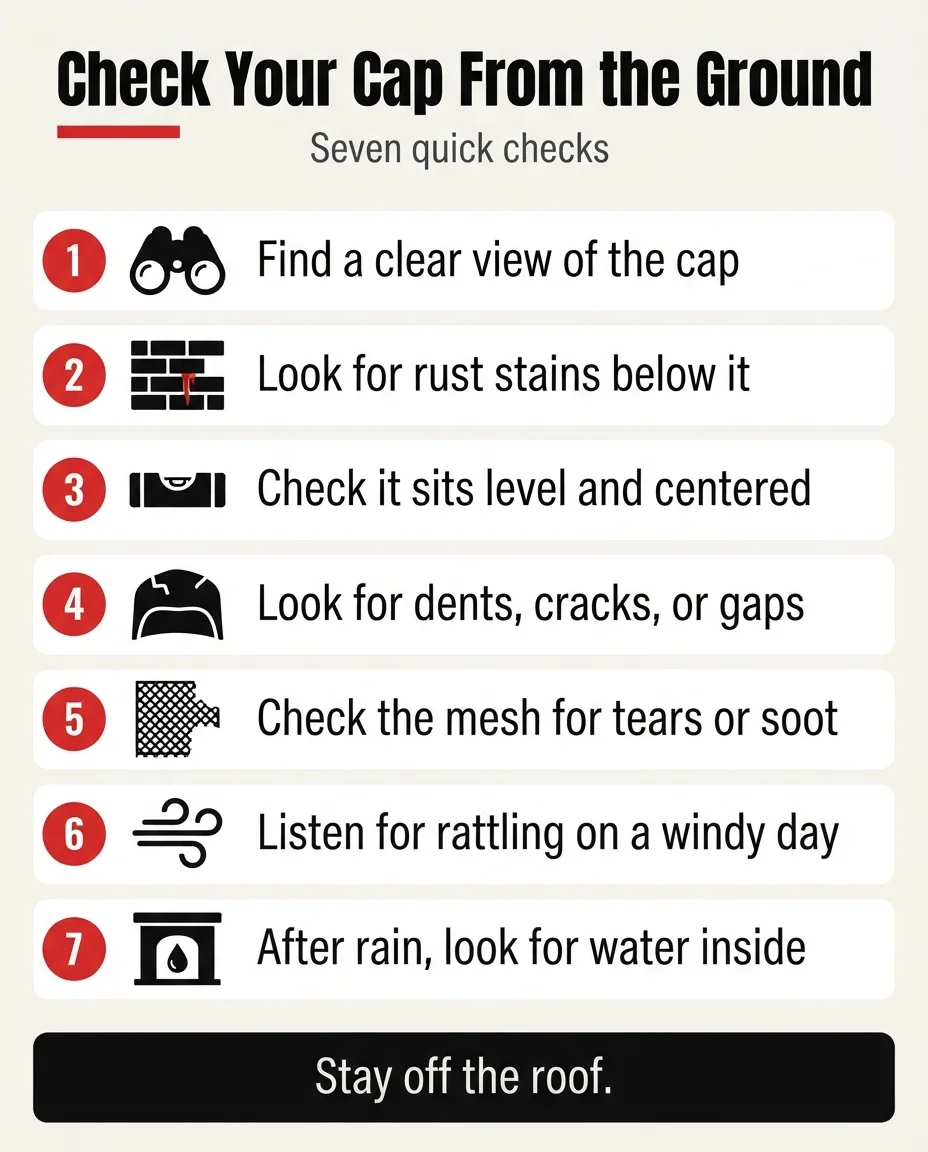
Checking before cold weather leaves time for repairs. Use this sequence:
- Pick a spot with a clear view of the cap.
- Look at the brick or siding below it for rust stains.
- Check that the cap sits level and centered on the flue.
- Look for dents, cracks, or a missing piece.
- Look at the mesh for tears, bends, or heavy soot.
- Listen on a windy day for rattling.
- After a heavy rain, look into the fireplace for water or rust.
Chimney cap problems in Fort Worth
Fort Worth hail, heat, and storm winds each wear a cap in a different way, and older homes add their own pattern.
Hail
Hail dents hoods and bends mesh. Check the cap after a hailstorm even when the roof looks fine.
Summer heat
Heat expands the metal every day and cools it at night. That cycle works fasteners loose, which is where rattling often starts.
Storm winds
Spring storm winds find loose caps. A cap that rattles in wind today is the one that may blow off in the next storm.
Older homes in Fairmount
Older homes in Fairmount often still carry original galvanized or painted caps. Those caps show rust stains before stainless caps show anything.
What does a chimney professional check and do when replacing a cap?
A professional checks the cap, the mesh, the fasteners, the flue tile or liner, and the crown. The technician also measures the flue before choosing a replacement.
If the crown is cracked or the tile is damaged, that repair comes with or before the new cap.
When to call a chimney professional
Call a professional when the cap is loose, leaning, missing, rusted through, or bent, when it rattles in wind, or when animals, water, or smoke show up inside the house.
- Emergency: If a carbon monoxide alarm sounds, get everyone outside and call 911 before calling anyone else. Do the same for smoke or fire inside the house.
- Soon: A loose, leaning, missing, bent, or rusted-through cap, animal sounds, and water inside the fireplace belong here. Do not light a fire until a professional checks the flue.
- Can wait: Surface rust and light discoloration with no leak and no loose parts can wait until your next inspection.
Checking the cap from the ground is a job you can do. Climbing a roof to remove or fasten one is a fall risk, so leave it to a professional.
Ask any chimney company whether its technicians hold CSIA certification.
Chimney Sweep Pro handles chimney cap installation in Fort Worth and nearby cities such as Keller and Saginaw. If you think your chimney cap needs replacing, call (682) 354-6644 and we will find out.