
A chimney without a cap lets rain, snow, animals, leaves, and wind straight into the flue. This post shows which part of a Fort Worth chimney each risk damages and what to do about it.
Not sure whether your chimney has a cap? Chimney Sweep Pro can check. Call (682) 354-6644.
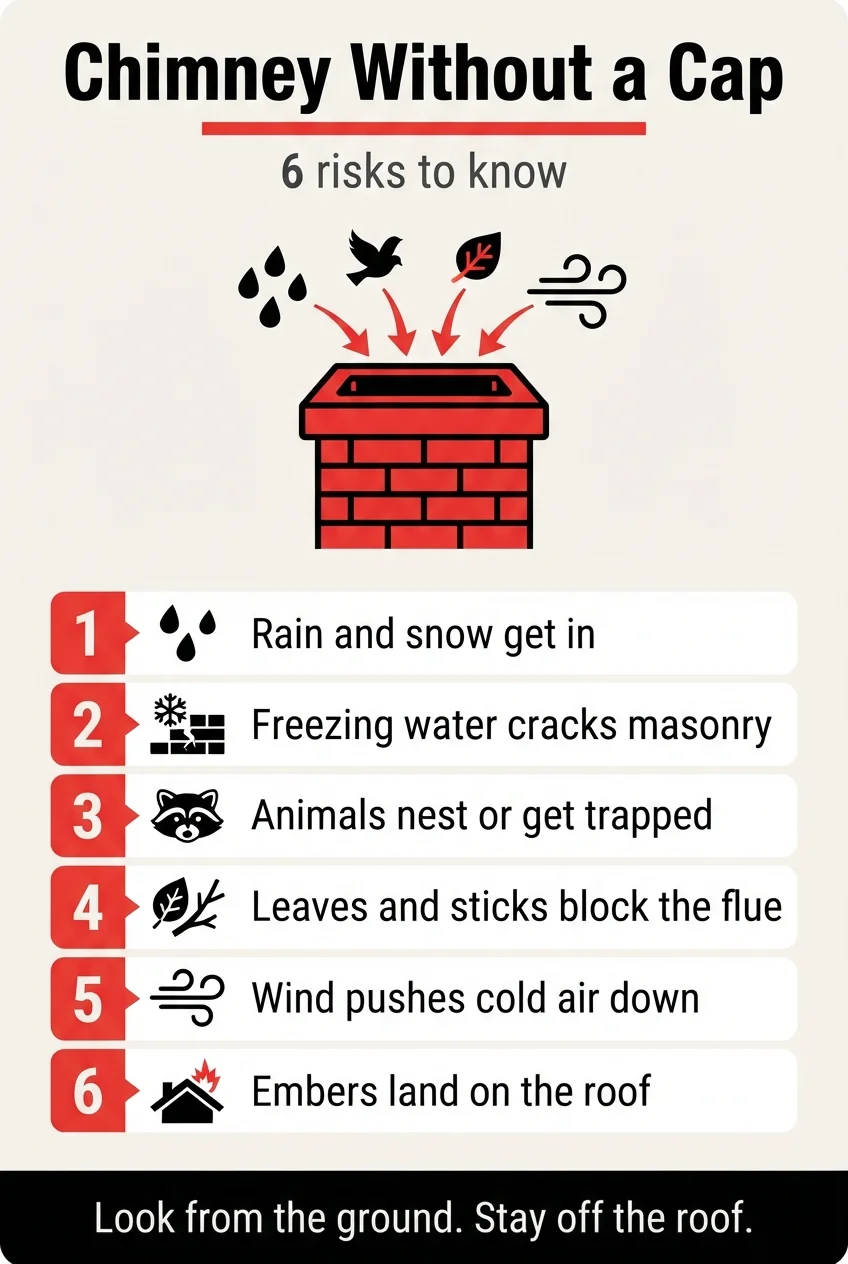
What happens if you don’t have a chimney cap?
Without a chimney cap, rain and snow fall straight down the flue, animals and debris drop in, and wind pushes cold air down the chimney. Water rusts metal parts and weakens masonry, animals nest or get trapped, and debris can block the flue.
A chimney cap is the metal hood with mesh sides that covers the flue opening. The flue is the passage that carries smoke out of the house.
What parts of the chimney are exposed without a cap?
An uncapped flue exposes everything below it: the flue liner, the smoke chamber, the damper, the firebox, and the masonry around them. Water and animals can reach each one.
- Flue liner: the clay tile or metal pipe that lines the flue.
- Smoke chamber: the sloped space above the damper that funnels smoke into the flue.
- Damper: the movable plate that opens and closes the flue.
- Firebox: the part of the fireplace where the fire burns.
- Masonry: the brick, stone, and mortar that form the chimney.
On a brick chimney, the crown, the concrete or mortar slab at the top, sheds water off the masonry. It does not cover the flue opening.
Chimney without a cap: 6 risks at a glance
A cap blocks six things that an open flue lets in. The table shows what each one damages and what you may notice.
| Risk | What it damages | What you may notice |
|---|---|---|
| Rain and snow | Liner, mortar, damper, firebox | Rust, water in the firebox, stains on nearby walls |
| Freezing water | Masonry and liner | Cracks and crumbling mortar |
| Animals | Flue and firebox | Scratching sounds, odors, droppings or nesting material |
| Leaves and sticks | Airflow through the flue | Smoke spilling into the room, poor draft |
| Wind | Draft | Cold air coming down the chimney |
| Embers | Roof, gutters, dry vegetation | Often nothing visible |
Where does the water go in a chimney with no cap?
Water in an uncapped chimney runs down the flue, wets the liner and the mortar joints, rusts the damper, and can reach the firebox. Rain and snow have a straight path because nothing covers the opening.
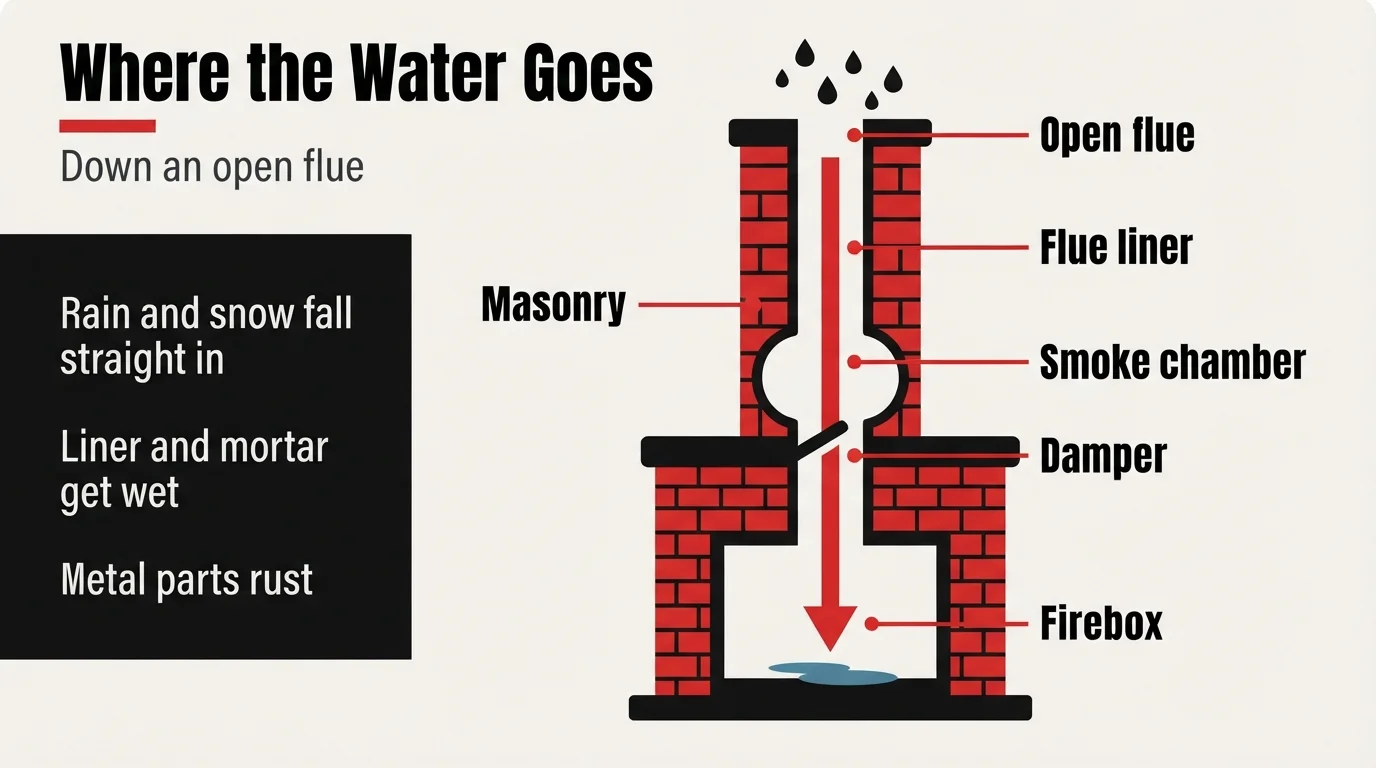
Mortar joints are the seams of mortar between bricks. Water wears them away over time.
Metal parts rust. The damper and any metal liner wear out sooner.
Water can also stain walls and ceilings near the chimney, and damp walls can grow mold. Other leak sources are covered in our guide to water dripping from a chimney, and repairs are covered under chimney leak repair.
Freeze and thaw
Water that freezes inside masonry expands and cracks it. CSIA’s director of education told Family Handyman that water coming down a chimney can cause freeze and thaw damage and reach nearby walls, ceilings, and wood framing.
CSIA is the Chimney Safety Institute of America, a nonprofit that certifies chimney sweeps. Fort Worth winters swing above and below freezing, so the cycle can repeat.
Why doesn’t a closed damper keep the water out?
A closed damper may keep rain out of the fireplace, but it does not protect the rest of the chimney. The liner, the smoke chamber, and the masonry above it stay exposed.
A damper is built to control airflow, not to shed rain. Caps that combine a damper with the cap also exist, and our guide to top-sealing damper vs chimney cap compares them.
What animals get into a chimney without a cap?
Raccoons, squirrels, birds, and bats use open flues as dark, sheltered nesting spots. Some climb in on purpose, and others fall in and cannot climb out.
Droppings and nesting material pile up in the flue. A trapped animal adds odors.
If you hear animals, call for chimney animal removal. Do not seal the flue while animals are inside, and do not light a fire.
How do leaves and debris affect a chimney without a cap?
Leaves, sticks, and nesting material fall into an open flue and can block it. A blocked flue can push smoke and carbon monoxide back into the house.
Carbon monoxide is an odorless gas that comes from burning fuel. If a carbon monoxide alarm sounds, get everyone outside and call 911 before calling anyone else.
Wind can also push leaves and twigs into an open flue, where they trap moisture against the liner.
Wondering what is already in your flue? Chimney Sweep Pro can look. Call (682) 354-6644.
Why do chimneys without caps get cold drafts?
Wind blowing across an open flue can push cold air down the chimney and into the room. A cap shields the opening from that wind.
That effect is called a downdraft. Downdrafts can also push smoke back into the room when you light a fire.
Caps built for wind-exposed chimneys exist, as covered in our guide to chimney cap types.
Where do embers go when a chimney has no cap?
A wood fire sends hot embers up the flue, and with no screen they can land on the roof, the gutters, or dry vegetation. A cap’s mesh screen acts as a spark arrestor to stop them.
A screen only does that job when its openings meet the code’s sphere test for spark-arrestor mesh. Gas logs send no embers up the flue.
Why does an unused chimney still need a cap?
A chimney needs a cap whether or not you use the fireplace, because rain, animals, and debris do not wait for a fire. A decorative fireplace still has a liner, a damper, and masonry that water can damage, and an open flue still invites nesting.
A fireplace can still burn without a cap, which is why so many homes go without one. The cap protects the chimney, not the fire.
Problems in an unused chimney often show up on the first fire of the season. Have the flue checked before you light it.
When is a chimney cap required?
Whether a chimney cap is required depends on the chimney type and local rules. A factory-built chimney follows its manufacturer’s instructions, and a masonry chimney follows the rules your building official enforces. Ask the Fort Worth Building Inspection Division what applies to yours.
The city lists its adopted codes on its building and energy codes page.
Which homes end up with no cap?
Older masonry homes, chimneys that lost their caps in storms, and chimneys that never got one are the usual uncapped cases. A missing cap is easy to miss because it sits out of sight from most spots in the yard.
A bare flue tile sticking out of a crown can look finished from the street. Look from the yard with binoculars or a phone zoom: a metal hood over the flue means a cap, and an open square or round tile means none.
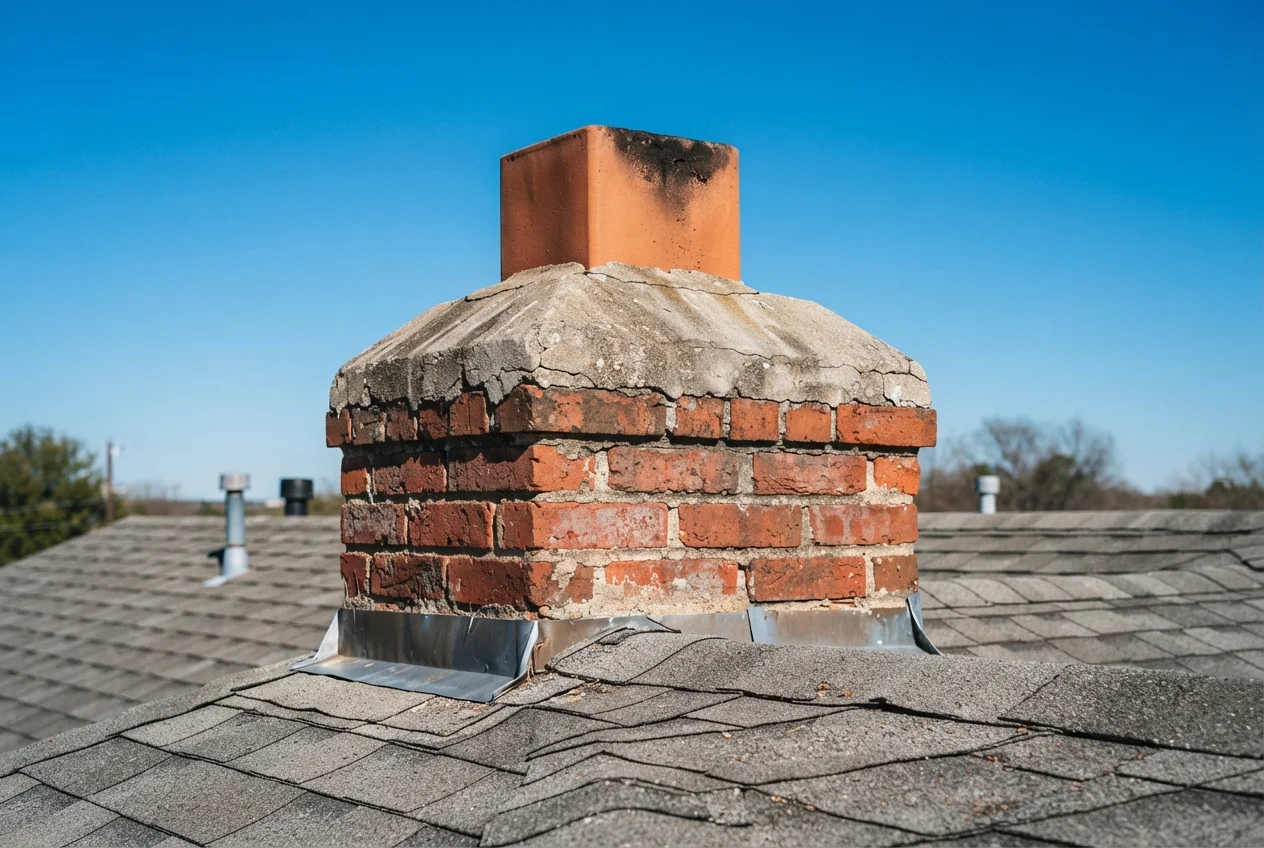
A cap that blew off is a different situation with its own steps. See our guide to a chimney cap that blew off.
What are the signs damage has already started?
Water or rust in the fireplace, stains on walls near the chimney, animal sounds, debris in the firebox, and smoke drifting back into the room all mean the open flue is already causing trouble.
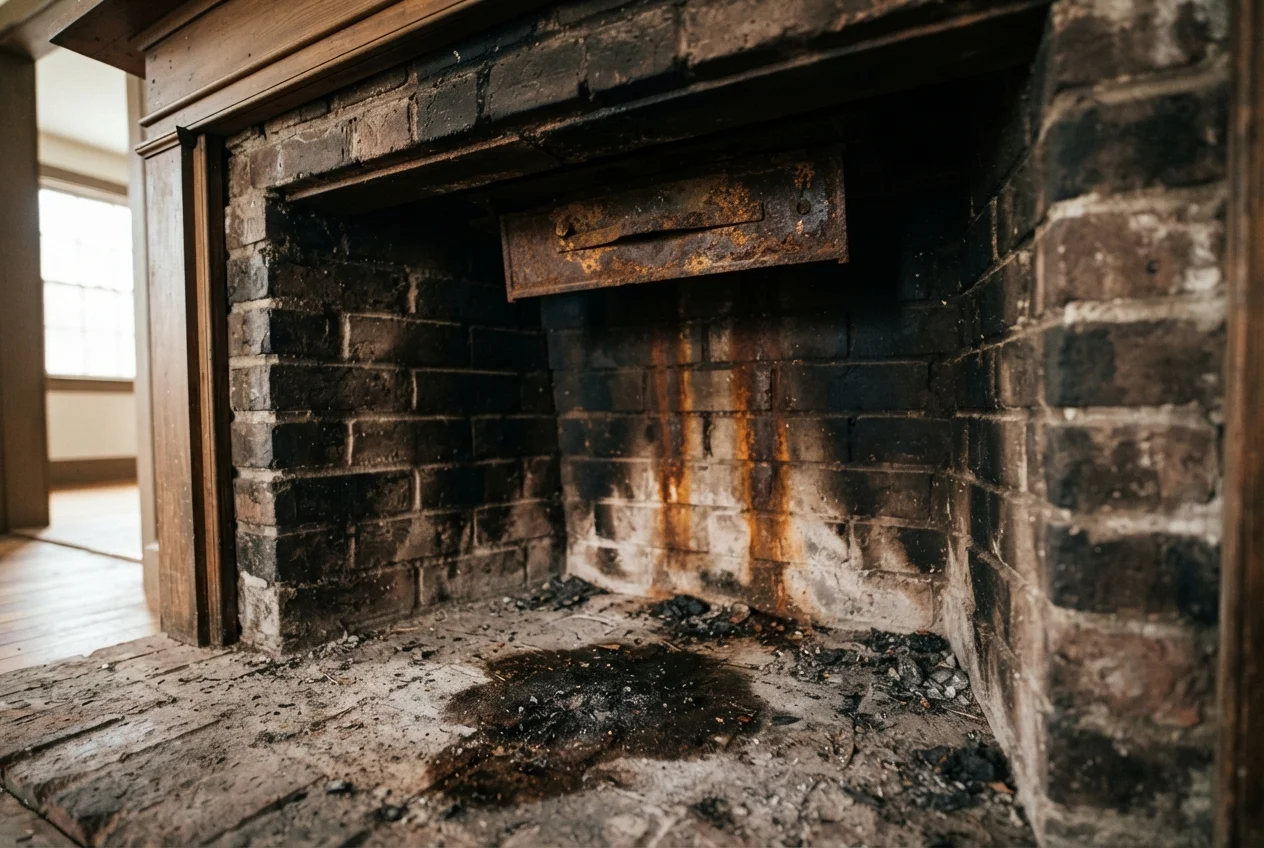
- Water or rust inside the fireplace
- Stains on the ceiling or wall beside the chimney
- Scratching or chirping in the flue, or nesting material in the firebox
- Leaves, sticks, or soot falling into the fireplace
- Smoke drifting back into the room
A chimney inspection finds the source. For signs that a cap you do have is failing, see our guide to the signs a chimney cap needs replacing.
What should you do if your chimney has no cap?
Confirm from the ground that no cap is there, check for animals, hold off on fires, and have a professional inspect the flue before a new cap goes on. Install a cap soon, because the open flue keeps taking in water.
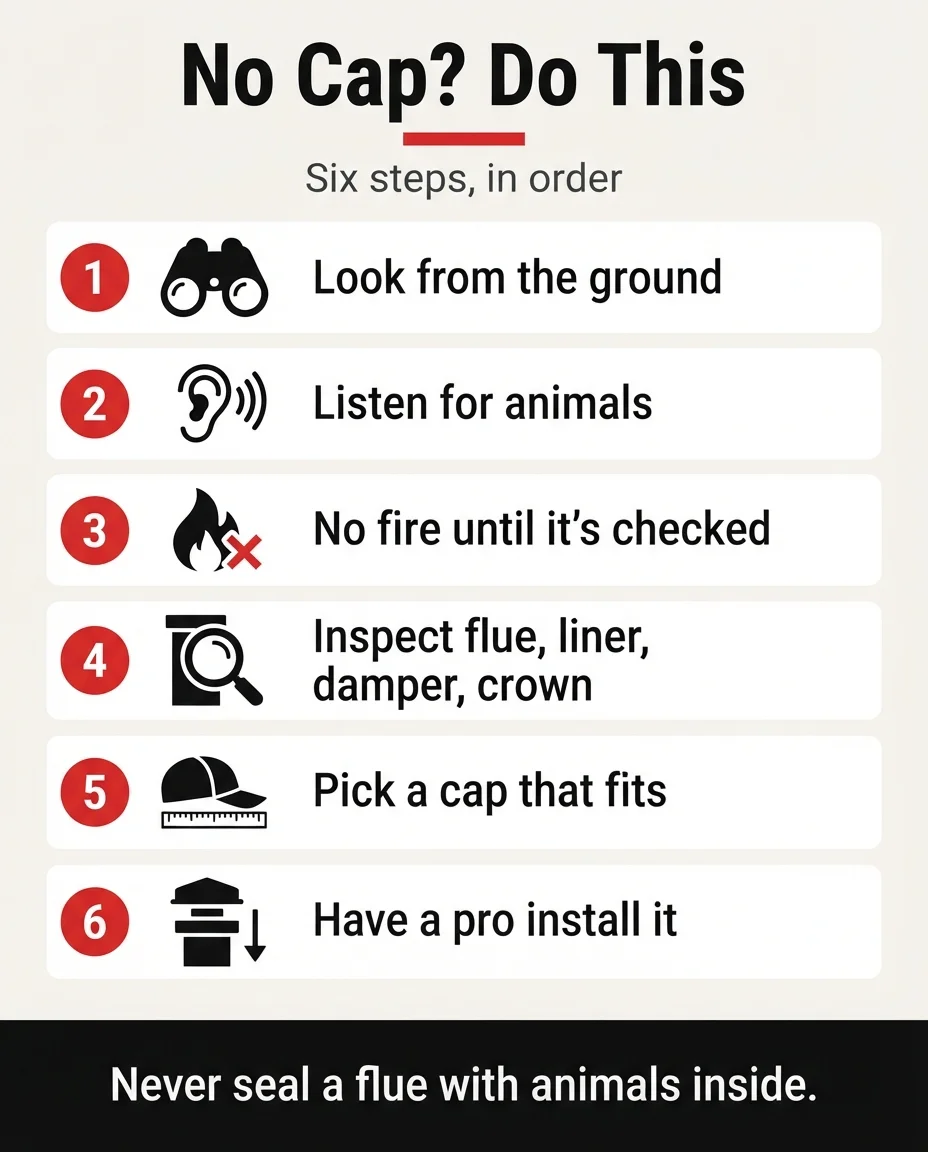
- Look from the yard with binoculars or a phone zoom, and stay off the roof.
- Listen for scratching or chirping in the flue. If you hear animals, do not seal the flue, and call a professional first.
- Do not light a fire until a professional has checked the flue.
- Have the flue, liner, damper, and crown inspected.
- Choose a cap that fits the flue and the fuel you burn.
- Have the cap installed by a professional.
How do you choose a cap when your chimney has none?
Match the cap to your chimney type, the metal to your weather, and the screen to your fuel and local code. A professional measures the flue so the cap fits, and our guide to how to measure for a chimney cap explains the measurements.
This Old House explains how the common cap styles attach. Price depends on the metal, the size, and the labor, and the factors are laid out in our post on chimney cap installation cost.
Chimney without a cap in Fort Worth: what local weather adds
Fort Worth rain, hail, and older neighborhoods each make an open flue riskier.
Heavy rain
Heavy rain sends a lot of water to the open flue in a short time. With no cap, all of it has a straight path to the liner and damper.
Hail and storm winds
Hail and storm winds can dent a cap loose or blow it off. After a storm, look at the chimney top from the ground.
Older homes in Fairmount
Older homes in Fairmount often have older masonry chimneys with uncovered flues. Raccoons can climb onto the roof and drop straight into one, as our guide to a raccoon in your chimney explains.
What does a chimney professional do for a chimney with no cap?
A professional looks at the whole flue before capping it, because an open top may already have let damage in. The technician checks the liner, damper, firebox, and crown, clears debris or animals, and then measures the flue for a cap.
If the liner or crown is damaged, that repair comes with or before the new cap.
When to call a chimney professional
Call a professional when you find no cap, hear animals, see water or rust inside the fireplace, or notice debris or draft problems.
- Emergency: If a carbon monoxide alarm sounds, get everyone outside and call 911 before calling anyone else. Do the same for smoke or fire inside the house.
- Soon: A chimney with no cap, animal sounds, water inside the fireplace, and debris in the flue belong here. Do not light a fire until a professional checks the flue.
- Can wait: A capped chimney with light discoloration and no leaks can wait until your next inspection.
Looking from the ground is a job you can do. Roof work belongs to a professional because of the fall risk.
Ask any chimney company whether its technicians hold CSIA certification.
Chimney Sweep Pro handles chimney cap installation in Fort Worth and nearby cities such as Keller and Saginaw. A chimney without a cap keeps taking in water and animals, so call (682) 354-6644 and we will check the flue and fit one.