
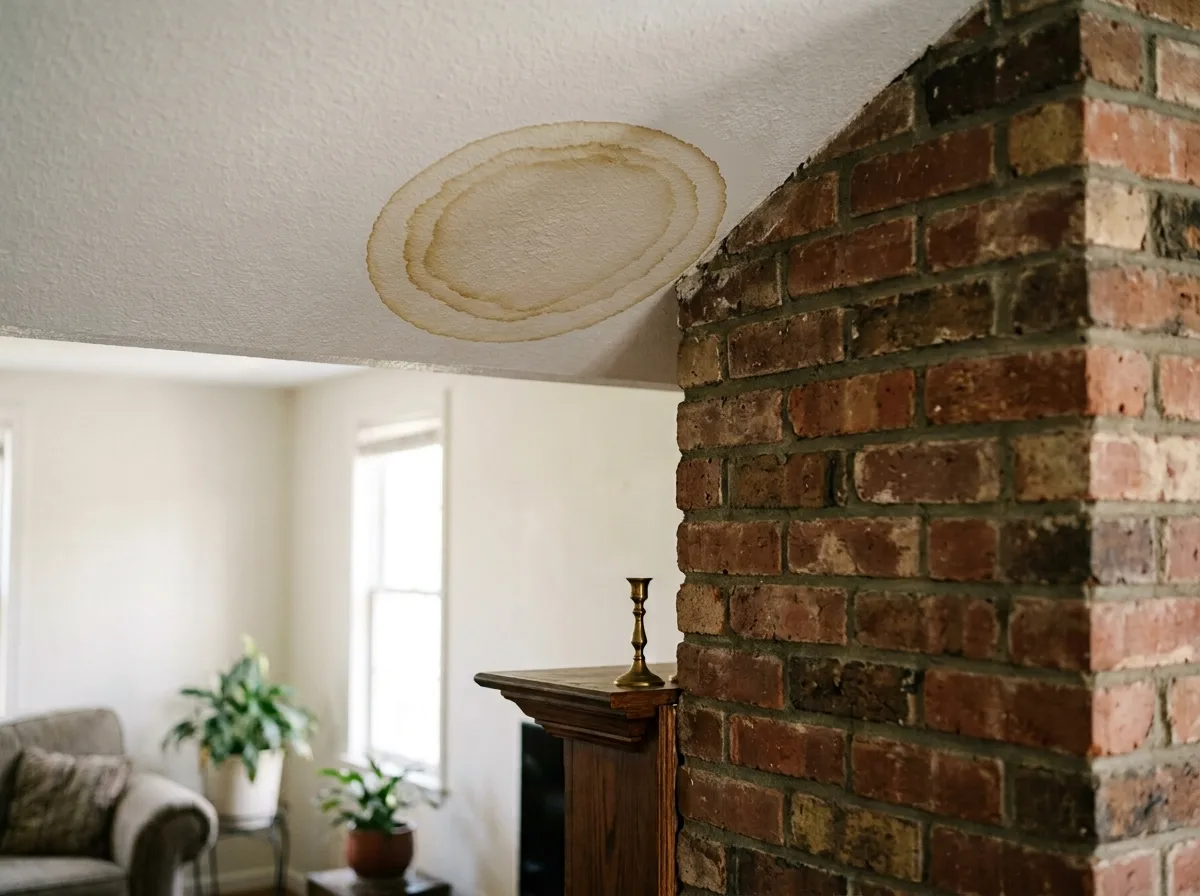
A water stain on the ceiling next to a chimney usually means water is entering at the flashing, the crown or cap, the masonry, or the roof around the chimney. The stain rarely sits under the entry point. Water can travel several feet before it shows in your Fort Worth home.
Start with the safety steps below. Then use the stain’s clues to narrow down the source.
Want the entry point found? Chimney Sweep Pro can help. Call (682) 354-6644.
What to Do Right Now
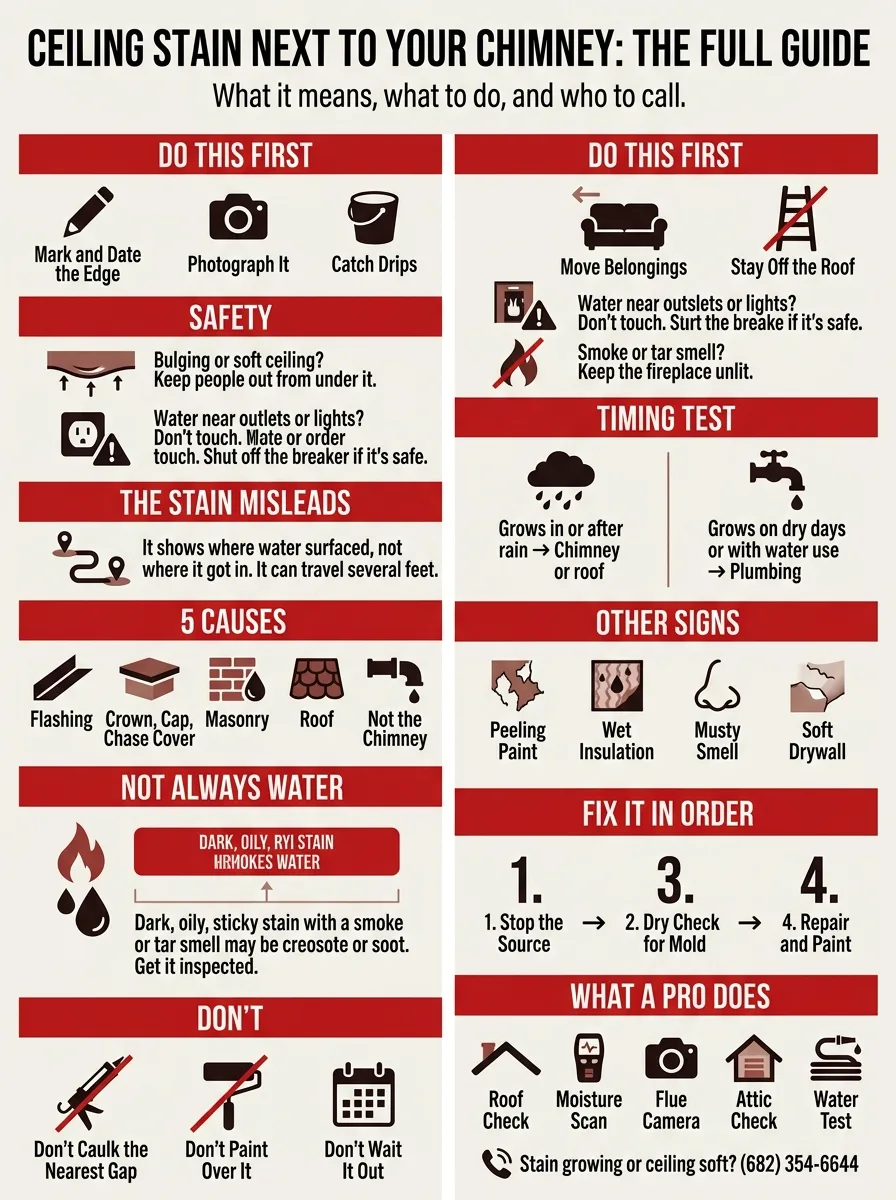
- Mark the edge of the stain with a pencil and write the date. Later you can see whether it’s growing.
- Photograph the stain and any damp or bubbling paint.
- Catch any drips with a bucket or towels.
- Move furniture and belongings out from under the area.
- Stay off the roof.
Keep people out from under a bulging, sagging, or soft ceiling. It can give way.
If water is near a light fixture, outlet, or switch, don’t touch it. Shut off power to that area at the breaker, if it’s safe to reach.
If the stain comes with a smoke or tar smell, keep the fireplace unlit until it’s been checked.
What the Stain Tells You
A brown or yellow stain with a ringed edge is the classic sign of a roof or chimney leak. Rings often form as the wet area grows and dries. Several rings can mean the spot has gotten wet more than once.
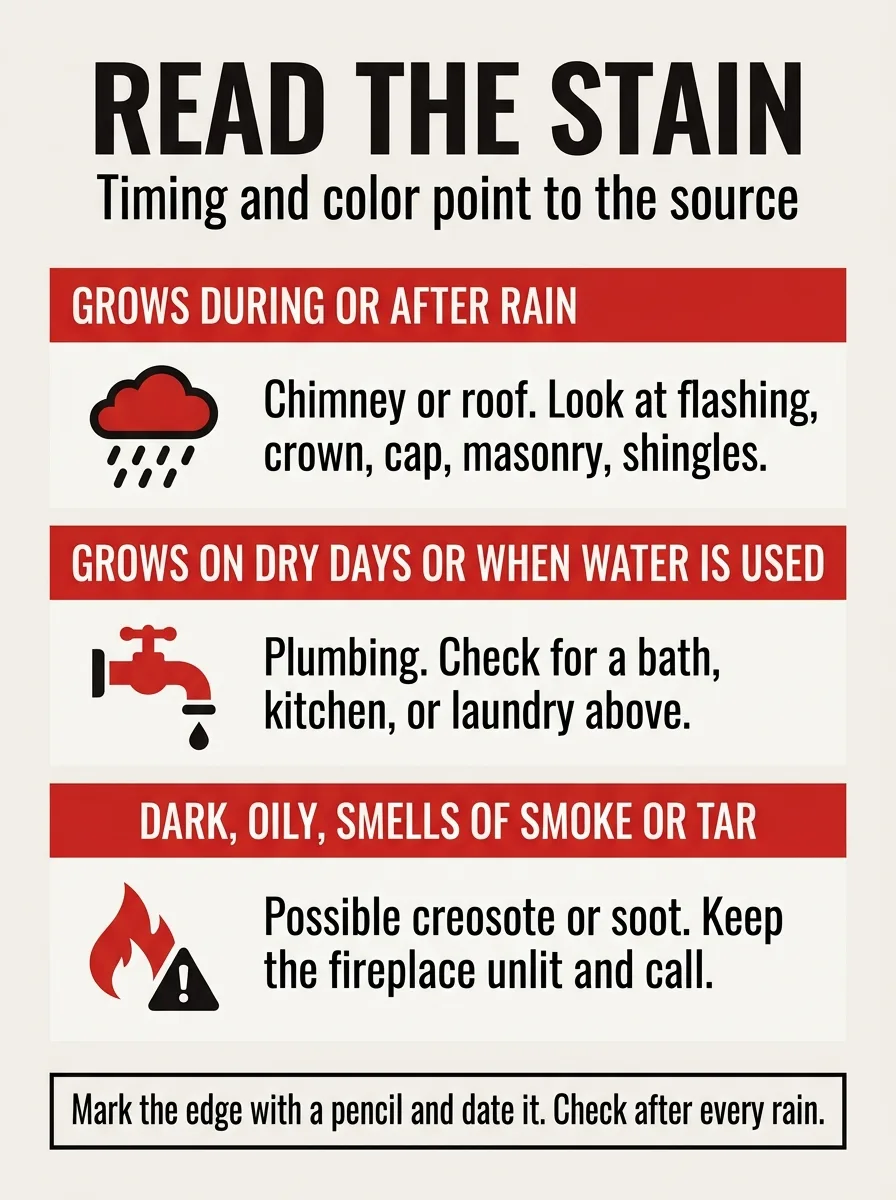
A stain that’s darker, oily, or sticky, or that smells like smoke or tar, may not be water. See the creosote section below.
Color alone doesn’t identify the source. Timing and location help more.
Active Leak or Old Stain?
A stain that grows, darkens after rain, or feels damp points to an active leak. A dry stain that hasn’t changed may be from an old leak that has stopped.
Use your pencil mark. Check it after each rain. Don’t press hard on a wet or soft ceiling.
A stain that stays the same still deserves a look. The source may still be open.
The Timing Test
A chimney or roof leak reacts to rain. The stain grows or darkens during or after a storm, and it may stay dry the rest of the time.
A plumbing leak doesn’t follow the weather. Its stain grows on dry days, or when someone runs a shower, tub, or sink.
Some leaks open only in wind-driven rain from one direction. That’s why a roof can look fine and still leak in the next storm.
Location Clues
Roof-related stains usually appear on a top-floor ceiling. A stain near the chimney wall, above or beside the fireplace, points toward the chimney.
Water enters high and runs along masonry, framing, and rafters. It can surface several feet from the entry point, even a floor down.
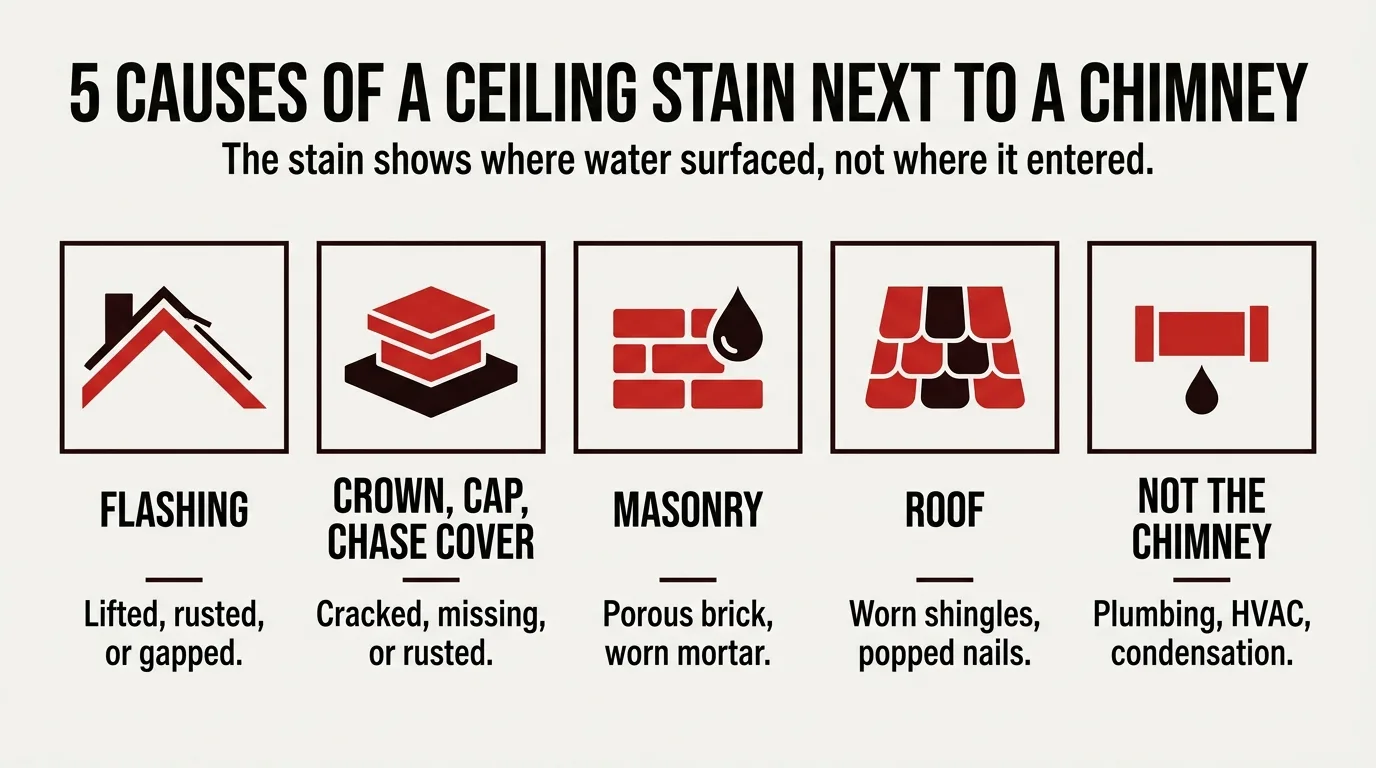
The stain marks where the water surfaced. It doesn’t mark where the water got in. See water dripping from chimney for where else water shows up, such as the firebox, the attic, and the ash dump.
Likely Sources at a Glance
| Clue | Likely source | What to check |
|---|---|---|
| Stain near the chimney that grows after rain | Flashing | Look for lifted, rusted, or gapped metal from the ground |
| Stain plus damp walls around the fireplace, or water in the firebox during rain | Crown, cap, or chase cover | Check that the cap is in place. Look for a dark, wet band near the top after rain |
| Stain plus crumbling mortar or flaking brick outside | Masonry | Look for missing mortar and flaking brick from the ground |
| Stain on a top-floor ceiling, with damaged shingles visible | Roof around the chimney | Look for missing or lifted shingles from the ground |
| Stain that grows on dry days or when water is used | Plumbing | Check for a bathroom, kitchen, or laundry above |
| Diffuse damp patch with no drips, worse in humid weather | Condensation | Check ventilation over baths and kitchens |
| Dark, oily, sticky stain with a smoke or tar smell | Creosote or soot | Keep the fireplace unlit and call for an inspection |
Cause 1: Failed Flashing
Flashing is the metal seal where the chimney meets the roof. It can rust, lift, or separate. The sealant around it can crack.
When flashing fails, water runs between the chimney and the roof deck. That’s why flashing leaks usually show as a ceiling stain near the chimney and not inside the firebox.
A wide chimney needs a cricket, a small peaked structure behind it that sheds water around the chimney. Missing cricket flashing is a common source. See how to repair a leaking chimney for how flashing gets repaired.
Cause 2: Cracked Crown, Missing Cap, or Rusted Chase Cover
The crown is the concrete slab at the top of the chimney. The cap is the metal cover over the flue. A chase cover is the metal lid over a prefabricated chimney’s enclosure.
When any of these fails, water runs down inside the chimney structure. It often shows as a ceiling stain near the chimney or as damp walls around the fireplace.
From the ground, look for a dark, wet band near the top of the chimney after rain. See chimney cap installation if the cap is missing or damaged.
Cause 3: Porous Masonry and Failed Mortar
Brick isn’t waterproof. Old brick and worn mortar absorb water like a sponge. Cracked joints let in more.
Water that freezes inside the masonry expands and pops the faces off bricks. That damage is called spalling.
Even when the crown and flashing look fine, a soaked chimney can pass moisture into the attic and living space.
Cause 4: A Roof Leak Around the Chimney
Worn shingles, popped nails, and cracked pipe boots can all leak near a chimney. A pipe boot is the rubber collar around a plumbing vent pipe.
Water runs along the underside of the roof deck or down a rafter before it drips onto the drywall. Roofs older than about 20 years are more prone to leaks.
See how to repair a leaking chimney for how to tell whether the chimney or the roofing is the source.
Cause 5: Not the Chimney
Plumbing above the ceiling can cause the same stain. Supply lines, drain pipes, a failed shower pan, or a worn toilet wax ring can all release water into the floor cavity.
An HVAC system can too. A leaky duct, a cracked drip pan, or a clogged drain line can drip onto a ceiling. Condensation from poor ventilation over baths and kitchens can do it as well.
The timing test separates these from chimney leaks. Call a plumber or HVAC technician for these causes.
Stains That Aren’t Water
Creosote is the tar-like residue from burning wood. If a flue cracks or a connection leaks, creosote or soot can seep out and stain nearby surfaces. These stains are often darker, and oily or sticky, with a smoke or tar smell.
Efflorescence is white chalky powder left when water moves through masonry. It usually shows on exterior brick, but it can also appear inside.
These stains can signal a safety hazard. Keep the fireplace unlit until it’s checked. InspectAPedia’s guide to chimney-caused stains covers the differences in more detail.
Other Signs of Moisture
A ceiling stain often comes with other signs.
- Peeling or bubbling paint near the chimney.
- Wet insulation around the chimney base in the attic.
- A musty smell near the fireplace. See fireplace smells wet for that symptom.
- Soft, spongy, or swollen drywall.
- Crumbling mortar outside.
Fuzzy growth in the firebox means mold. See mold in fireplace for what to do.
Checking the Attic Safely
Look from the attic hatch with a flashlight. Check for wet insulation around the chimney base, dark trails on rafters or the roof deck, and damp wood.
Follow any wet trail upward. It often leads toward the penetration where the water enters, such as the chimney or a vent.
Don’t step on the insulation or between the joists. Photograph what you see.
When a Ceiling Is Unsafe
A sagging, bulging, soft, or dripping ceiling is a safety hazard. Keep people away and call a professional.
Signs of mold on the ceiling also need a professional. Wet drywall and insulation can reach wiring too, so treat any wet area near lights or outlets as an electrical hazard.
Fix the Source First, Then Repair the Ceiling
The order matters.
- Find and stop the source.
- Dry the area, including insulation and framing.
- Check for mold.
- Repair the drywall, prime, and paint.
Painting over a stain without fixing the source lets it return. The ceiling repair itself is a drywall and painting job. Bob Vila’s ceiling stain guide covers repair once the leak is fixed.
What a Professional Does
A technician goes on the roof to check the cap, crown, flashing, cricket, and masonry. A moisture meter scan of the walls, ceiling, and framing maps where the water has traveled. A camera scan of the flue and an attic check add to the picture.
If the source isn’t obvious, a water test isolates one area and runs water on it. A good quote starts with a diagnosis, not with caulk.
Chimney Sweep Pro is CSIA certified. See chimney inspection for what an inspection includes.
What Not to Do
- Don’t caulk the nearest visible gap. It may not be the source.
- Don’t paint over the stain.
- Don’t go on the roof.
- Don’t wait it out. A small leak can leave a large stain over time, because water travels along framing before it drips.
How Urgent Is It?
Same day: a bulging, sagging, or dripping ceiling, or water near lights or outlets.
Soon: a growing stain, or new stains after rain.
Schedule a visit: an old, dry stain that hasn’t changed.
See water dripping from chimney for the full urgency levels. Active water or a growing stain? Call (682) 354-6644.
Insurance and Documentation
Sudden storm damage is more likely to be covered than gradual wear. Coverage depends on your policy.
Photograph the stain before any repair or repaint. Keep the dated pencil marks, the storm date, and any inspection report. See chimney leaking after hail for how to document storm damage.
Preventing New Stains
- Have the chimney inspected every year.
- Keep the cap, crown, and flashing in good condition.
- Have the roof around the chimney checked as it ages.
- Keep gutters near the chimney clear.
- Trim branches that drop debris on the roof.
Why This Shows Up More in Fort Worth
Spring storms and hail can lift flashing edges and loosen shingles. A leak that starts then can take weeks to show as a stain. See chimney leaking after hail for storm damage signs.
Freeze-thaw cycles and clay soil that shifts with moisture add stress over time.
Older masonry chimneys in neighborhoods like Fairmount, Ryan Place, and Mistletoe Heights see the most wear. Age makes each of these factors more likely to cause a stain.
When to Call a Professional
Call if the stain grows, appears after rain, or comes with a soft ceiling, a musty smell, or a smoke or tar smell. Call the same day if the ceiling bulges or drips.
A chimney inspection finds the entry point. Chimney leak repair fixes it.
Ready to find the source? Call (682) 354-6644.